Dhaka 9:08 am, Friday, 6 February 2026

Is This the Right Time to Sell Gold?

Staff Correspondent :
  • Update Time : 04:16:12 am, Tuesday, 27 January 2026
  • / 101 Time View

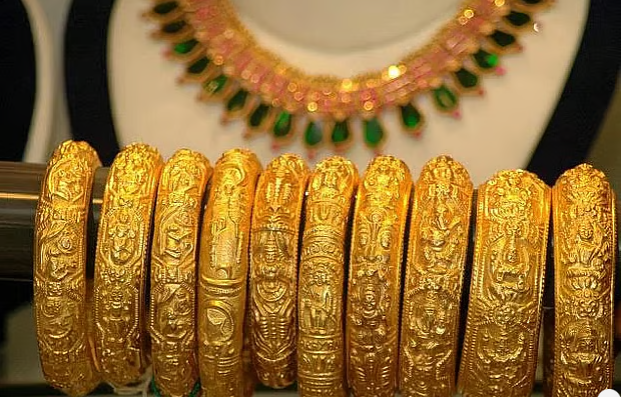
Gold prices have climbed so sharply that many observers say the metal is now close to its “peak.” To understand how dramatic the rise has been, it helps to look back just one year. At this time last year, the price of one bhori of 22-carat gold in Bangladesh was around Tk 141,000. Over the past 12 months, the price has surged by roughly Tk 121,000, pushing the current rate to about Tk 262,000 per bhori.

There is virtually no financial product in Bangladesh—whether in banks, insurance, or other institutions—where an investment of Tk 141,000 could generate a profit of more than Tk 115,000 in just one year. This extraordinary rise has naturally turned gold into one of the most attractive investment options. Although there is no formal mechanism to invest directly in gold in the country, people usually buy jewellery instead. Making gold jewellery involves additional costs of around 11 percent for VAT and craftsmanship. Even after accounting for these charges, gold has remained highly profitable.

That said, gold is not free from uncertainty. Its price moves closely with global economic and political conditions. Periods of instability often push gold prices higher, and this time has been no exception. Recent geopolitical tensions—including unrest in Iran and developments involving Venezuela’s leadership—have renewed uncertainty in global markets. In such situations, investors typically turn to gold and other precious metals as safe-haven assets. As a result, global gold prices have continued to rise, and for the first time in history, the price per ounce crossed the USD 5,000 mark on Monday.

This global surge has quickly translated into higher prices at home. The price of gold rose by Tk 1,500 per bhori today, and from Tuesday it is set to increase further by Tk 5,249 per bhori. This will take the price of 22-carat gold to Tk 262,440 per bhori. With prices at such elevated levels, many people are now considering selling their old gold jewellery. Some have already calculated potential profits, though the numbers keep changing as prices continue to rise.

So, is this the right time to sell old gold jewellery, or would waiting longer bring even greater returns? Before addressing that question, it is worth looking at how much profit one could make by selling now.

Typically, when old jewellery is sold at a jewellery shop, the item is first weighed and its purity verified. The final price is calculated after deducting about 17 percent from the current market value. For example, if someone bought one bhori of 22-carat gold jewellery about ten years ago for roughly Tk 70,000, selling it today would fetch around Tk 217,000. That would mean a profit of approximately Tk 147,000. The return would differ for 21-carat or 18-carat gold.

Expectations of rising gold prices were already widespread, but the pace of the increase has exceeded most forecasts. Investment bank Goldman Sachs now predicts that gold could reach USD 5,400 per ounce by December 2026, revising its earlier estimate of USD 4,900. Analysts surveyed by the London Bullion Market Association suggest that gold prices in 2026 could peak as high as USD 7,150 per ounce, with an average price of around USD 4,742. Independent analyst Ross Norman believes prices could climb to USD 6,400, with an average of about USD 5,375.

These forecasts can no longer be dismissed lightly. During the COVID-19 period, gold touched USD 2,000 per ounce, and few imagined it would cross USD 5,000 within five years. Yet that is exactly what has happened. Given the current global geopolitical climate, further price increases in the near future remain possible—though a decline cannot be ruled out entirely.

Local traders say that for anyone who needs cash, this is a favourable moment to sell old gold jewellery and lock in profits. Others believe waiting a bit longer could still prove beneficial. Ultimately, the choice—sell now or hold on—depends entirely on the individual investor.

Tag :

Please Share This Post in Your Social Media

Is This the Right Time to Sell Gold?

Update Time : 04:16:12 am, Tuesday, 27 January 2026

Gold prices have climbed so sharply that many observers say the metal is now close to its “peak.” To understand how dramatic the rise has been, it helps to look back just one year. At this time last year, the price of one bhori of 22-carat gold in Bangladesh was around Tk 141,000. Over the past 12 months, the price has surged by roughly Tk 121,000, pushing the current rate to about Tk 262,000 per bhori.

There is virtually no financial product in Bangladesh—whether in banks, insurance, or other institutions—where an investment of Tk 141,000 could generate a profit of more than Tk 115,000 in just one year. This extraordinary rise has naturally turned gold into one of the most attractive investment options. Although there is no formal mechanism to invest directly in gold in the country, people usually buy jewellery instead. Making gold jewellery involves additional costs of around 11 percent for VAT and craftsmanship. Even after accounting for these charges, gold has remained highly profitable.

That said, gold is not free from uncertainty. Its price moves closely with global economic and political conditions. Periods of instability often push gold prices higher, and this time has been no exception. Recent geopolitical tensions—including unrest in Iran and developments involving Venezuela’s leadership—have renewed uncertainty in global markets. In such situations, investors typically turn to gold and other precious metals as safe-haven assets. As a result, global gold prices have continued to rise, and for the first time in history, the price per ounce crossed the USD 5,000 mark on Monday.

This global surge has quickly translated into higher prices at home. The price of gold rose by Tk 1,500 per bhori today, and from Tuesday it is set to increase further by Tk 5,249 per bhori. This will take the price of 22-carat gold to Tk 262,440 per bhori. With prices at such elevated levels, many people are now considering selling their old gold jewellery. Some have already calculated potential profits, though the numbers keep changing as prices continue to rise.

So, is this the right time to sell old gold jewellery, or would waiting longer bring even greater returns? Before addressing that question, it is worth looking at how much profit one could make by selling now.

Typically, when old jewellery is sold at a jewellery shop, the item is first weighed and its purity verified. The final price is calculated after deducting about 17 percent from the current market value. For example, if someone bought one bhori of 22-carat gold jewellery about ten years ago for roughly Tk 70,000, selling it today would fetch around Tk 217,000. That would mean a profit of approximately Tk 147,000. The return would differ for 21-carat or 18-carat gold.

Expectations of rising gold prices were already widespread, but the pace of the increase has exceeded most forecasts. Investment bank Goldman Sachs now predicts that gold could reach USD 5,400 per ounce by December 2026, revising its earlier estimate of USD 4,900. Analysts surveyed by the London Bullion Market Association suggest that gold prices in 2026 could peak as high as USD 7,150 per ounce, with an average price of around USD 4,742. Independent analyst Ross Norman believes prices could climb to USD 6,400, with an average of about USD 5,375.

These forecasts can no longer be dismissed lightly. During the COVID-19 period, gold touched USD 2,000 per ounce, and few imagined it would cross USD 5,000 within five years. Yet that is exactly what has happened. Given the current global geopolitical climate, further price increases in the near future remain possible—though a decline cannot be ruled out entirely.

Local traders say that for anyone who needs cash, this is a favourable moment to sell old gold jewellery and lock in profits. Others believe waiting a bit longer could still prove beneficial. Ultimately, the choice—sell now or hold on—depends entirely on the individual investor.