Dhaka 5:50 pm, Saturday, 21 March 2026

A Journey on the “Eid Train” from Dhaka to Jamalpur

Staff Correspondent:
  • Update Time : 06:40:44 am, Friday, 20 March 2026
  • / 27 Time View

I had a seat booked in coach “T” of the Teesta Express bound for Dewanganj, Jamalpur. It was the day before Eid, one of the busiest travel times of the year. According to the train layout, my coach was supposed to be near the rear, and I didn’t have much trouble locating it at Kamalapur Railway Station. I even had plenty of time in hand.

But everything changed the moment I reached the coach door.

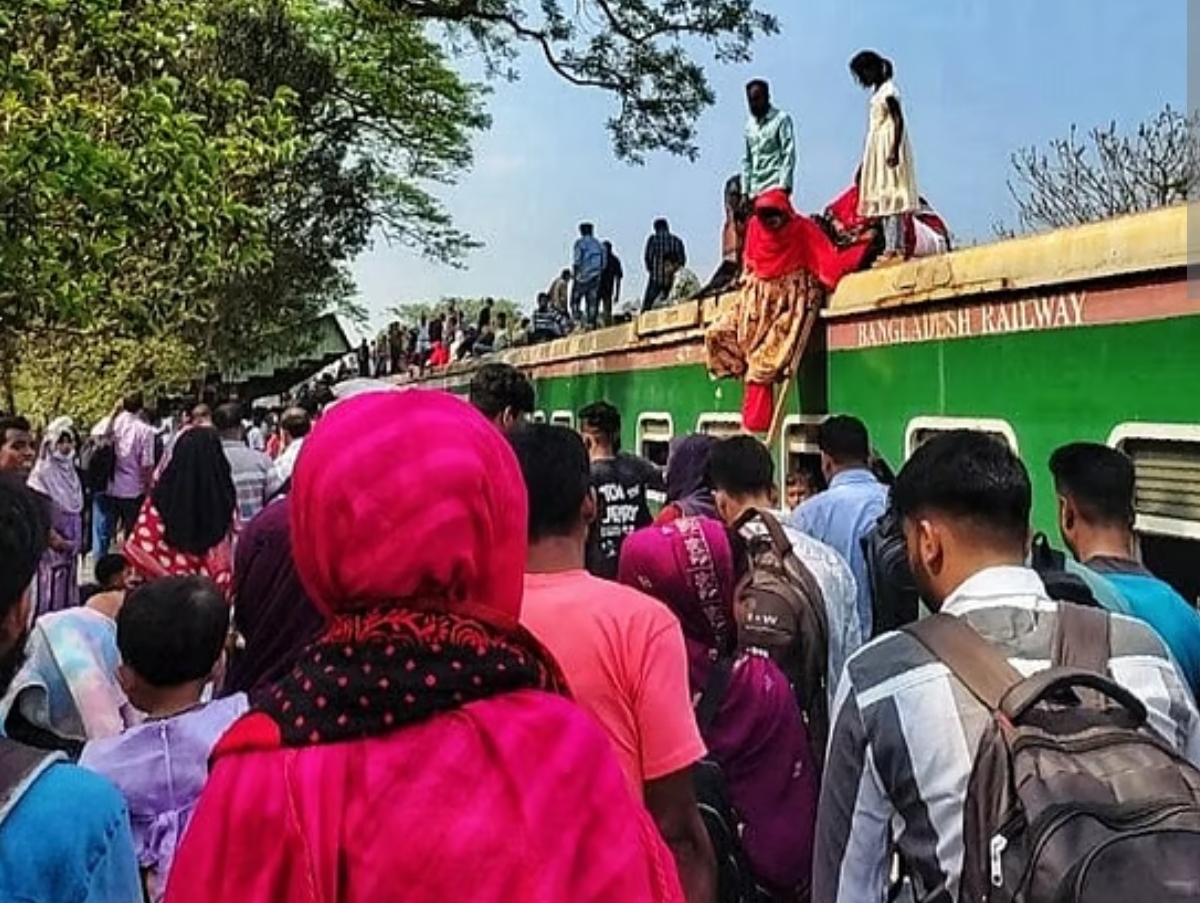
There wasn’t even space to place a foot. Men, women, children, elderly—everyone was crammed together beyond imagination. Reaching my assigned seat felt nearly impossible.

After a long struggle, I managed to place one foot on the train, though the other was still outside. Eventually, I squeezed my body inside, but my backpack was left hanging out. Suddenly, someone tugged it hard from behind. Two desperate passengers on the platform pleaded with me to let them board—they had tickets too.

I was already helpless myself. What could I possibly do for them? The railway staff nearby simply watched, as if there was nothing to say or do. One of the stranded passengers sighed in frustration, saying he had paid a high price for the ticket, yet still couldn’t get on the train.

Eventually, the two passengers gave up and moved toward a window near their seats. One pushed the other inside through the window. A kind passenger inside helped pull the second one in.

Meanwhile, I was still hanging onto a handle near the toilet, witnessing all of this.

Suddenly, two women who had been sitting near the toilet stood up. One of them, in a desperate tone, begged the crowd to let them get off. She said they couldn’t breathe in such conditions and would rather take a bus, even if it meant enduring traffic.

Once they got down, I noticed my seat number was just a few steps away. I decided I had to reach it somehow. But when I asked others to make way, someone replied, “We’re already crushed here—how do you expect to get through?”

By then, the train had already departed, around 8 AM, even though it was scheduled to leave earlier.

From conversations around me, I realized many of the passengers protesting didn’t even have tickets. They had boarded hoping for luck. Some had climbed onto the roof, where conditions were equally dangerous. Inside, people tried to comfort themselves by thinking at least they weren’t risking falling off the roof. Even standing near the toilet seemed acceptable under the circumstances. At one point, three women were squeezed inside the toilet just to have some space.

After a lot of pleading and negotiation, I finally managed to move toward my seat—step by step, almost stepping over others. The crowd, luggage, and pressure made it exhausting. Still, my bag somehow made its way over people’s heads and reached me faster than I did.

By the time I reached my seat, I was completely drained. But even sitting peacefully wasn’t easy. A man without a ticket was occupying my seat, and convincing him to move turned into another battle. I had to prove repeatedly that the seat was actually mine.

Finally, I sat down—but there was no space to keep my bag. My lap was the only option. I tried to open the window beside me for some relief, but it was jammed shut. Even with help, it wouldn’t budge.

An elderly man behind me jokingly said, “You’re lucky the window doesn’t open—otherwise more people would have climbed in from outside.”

His words soon proved true.

Just before reaching the airport station, a passenger closed the window shutter tightly. After the train stopped, a woman with a young girl knocked on that very window, trying to get in. The person inside refused to open it at first. But after pressure from a male member of their group, the shutter was finally lifted. Despite the risk of the train starting again, the woman and the girl climbed in through the window.

People on the platform were even recording the chaos on their phones.

After leaving the airport station, many passengers felt relieved, thinking no more people would board. But as time passed, the crowd, suffocation, and frustration only increased. Voices grew louder, tempers flared, and children began to cry.

After nearly a two-hour delay, we finally reached Islampur station in Jamalpur around 2:30 PM.

As I stepped off and looked back at the train, one thought came to mind—this didn’t feel like my train at all. If it truly were, perhaps the journey wouldn’t have been filled with such hardship and bitter experiences.
Tag :

Please Share This Post in Your Social Media

A Journey on the “Eid Train” from Dhaka to Jamalpur

Update Time : 06:40:44 am, Friday, 20 March 2026

I had a seat booked in coach “T” of the Teesta Express bound for Dewanganj, Jamalpur. It was the day before Eid, one of the busiest travel times of the year. According to the train layout, my coach was supposed to be near the rear, and I didn’t have much trouble locating it at Kamalapur Railway Station. I even had plenty of time in hand.

But everything changed the moment I reached the coach door.

There wasn’t even space to place a foot. Men, women, children, elderly—everyone was crammed together beyond imagination. Reaching my assigned seat felt nearly impossible.

After a long struggle, I managed to place one foot on the train, though the other was still outside. Eventually, I squeezed my body inside, but my backpack was left hanging out. Suddenly, someone tugged it hard from behind. Two desperate passengers on the platform pleaded with me to let them board—they had tickets too.

I was already helpless myself. What could I possibly do for them? The railway staff nearby simply watched, as if there was nothing to say or do. One of the stranded passengers sighed in frustration, saying he had paid a high price for the ticket, yet still couldn’t get on the train.

Eventually, the two passengers gave up and moved toward a window near their seats. One pushed the other inside through the window. A kind passenger inside helped pull the second one in.

Meanwhile, I was still hanging onto a handle near the toilet, witnessing all of this.

Suddenly, two women who had been sitting near the toilet stood up. One of them, in a desperate tone, begged the crowd to let them get off. She said they couldn’t breathe in such conditions and would rather take a bus, even if it meant enduring traffic.

Once they got down, I noticed my seat number was just a few steps away. I decided I had to reach it somehow. But when I asked others to make way, someone replied, “We’re already crushed here—how do you expect to get through?”

By then, the train had already departed, around 8 AM, even though it was scheduled to leave earlier.

From conversations around me, I realized many of the passengers protesting didn’t even have tickets. They had boarded hoping for luck. Some had climbed onto the roof, where conditions were equally dangerous. Inside, people tried to comfort themselves by thinking at least they weren’t risking falling off the roof. Even standing near the toilet seemed acceptable under the circumstances. At one point, three women were squeezed inside the toilet just to have some space.

After a lot of pleading and negotiation, I finally managed to move toward my seat—step by step, almost stepping over others. The crowd, luggage, and pressure made it exhausting. Still, my bag somehow made its way over people’s heads and reached me faster than I did.

By the time I reached my seat, I was completely drained. But even sitting peacefully wasn’t easy. A man without a ticket was occupying my seat, and convincing him to move turned into another battle. I had to prove repeatedly that the seat was actually mine.

Finally, I sat down—but there was no space to keep my bag. My lap was the only option. I tried to open the window beside me for some relief, but it was jammed shut. Even with help, it wouldn’t budge.

An elderly man behind me jokingly said, “You’re lucky the window doesn’t open—otherwise more people would have climbed in from outside.”

His words soon proved true.

Just before reaching the airport station, a passenger closed the window shutter tightly. After the train stopped, a woman with a young girl knocked on that very window, trying to get in. The person inside refused to open it at first. But after pressure from a male member of their group, the shutter was finally lifted. Despite the risk of the train starting again, the woman and the girl climbed in through the window.

People on the platform were even recording the chaos on their phones.

After leaving the airport station, many passengers felt relieved, thinking no more people would board. But as time passed, the crowd, suffocation, and frustration only increased. Voices grew louder, tempers flared, and children began to cry.

After nearly a two-hour delay, we finally reached Islampur station in Jamalpur around 2:30 PM.

As I stepped off and looked back at the train, one thought came to mind—this didn’t feel like my train at all. If it truly were, perhaps the journey wouldn’t have been filled with such hardship and bitter experiences.