Fresh Tensions Emerge Over the Constitutional Reform Council

- Update Time : 05:34:08 am, Sunday, 15 March 2026
- / 28 Time View

Political tensions are rising over the implementation of the constitutional reform proposals included in the July National Charter. An 11-party electoral alliance led by Bangladesh Jamaat-e-Islami has demanded that the government convene a session of the Constitutional Reform Council by Sunday. The alliance warned that if the session is not called, it will launch street protests.
Meanwhile, the ruling Bangladesh Nationalist Party (BNP) says the issue of forming the council could be discussed in parliament.
Deadline for convening the council
Under the order for implementing the July National Charter, Sunday is the final day to call the first session of the Constitutional Reform Council. According to the plan, those elected in the latest parliamentary election were supposed to take two oaths on the same day—one as members of parliament and another as members of the reform council.
Newly elected MPs took their oath on 17 February. The parliamentary secretariat had prepared arrangements for both oaths on that day. Members from opposition parties, including Jamaat-e-Islami and the National Citizen Party (NCP), took both. However, MPs from the BNP did not take the oath as members of the reform council, arguing that the constitution currently has no provision for such a pledge. They said the issue could be considered once it is formally incorporated into the constitution.
Since then, the formation of the council has become a subject of intense political debate. Differences had already surfaced earlier between the BNP and the Jamaat-NCP alliance during discussions at the National Consensus Commission on several major reform proposals.
Heated atmosphere in parliament
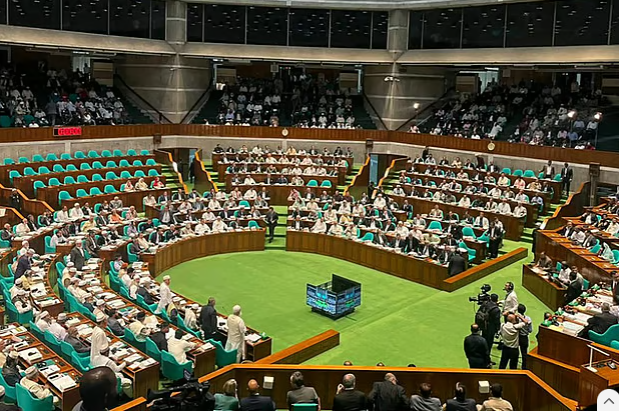
The first session of the 13th National Parliament began last Thursday. On the opening day, opposition lawmakers from Jamaat-e-Islami and the NCP staged protests and walked out during the address of President Mohammed Shahabuddin.
Sources from the opposition say tensions could escalate again during Sunday’s parliamentary session, particularly over the issue of forming the Constitutional Reform Council. Opposition members are considering raising the matter during an unscheduled discussion.
Purpose of the reform council
According to the implementation order of the July National Charter, the council is expected to complete constitutional reforms within 180 working days of its first session. These reforms are based on both the charter and the results of a national referendum.
After the referendum approved the proposals, the plan was to establish a Constitutional Reform Council consisting of the elected representatives from the 13th parliamentary election. The council would be responsible for implementing 48 constitutional reform proposals included in the charter.
However, the order also states that the first session of the council should be called within 30 calendar days after the official announcement of the election results—similar to the process used for convening parliament. The election was held on 12 February, and the Election Commission of Bangladesh published the official results shortly after midnight on 14 February. Under the order, the responsibility for calling the session lies with the president, but no such step has yet been taken.
Observers say that because of these complications, the broader reform initiative introduced by the previous interim government—particularly the effort to bring major constitutional changes—has stalled.
Legal challenges
The matter has also reached the courts. Petitions filed in the High Court challenge several aspects of the July Charter implementation order, including the oath process for reform council members and provisions of the referendum ordinance. A High Court bench issued separate rules on 3 March, asking the respondents to submit explanations within four weeks.
Opposition stance
At an emergency meeting on Saturday, the liaison committee of the 11-party alliance—comprising Jamaat-e-Islami, the NCP, and other groups—discussed the issue.
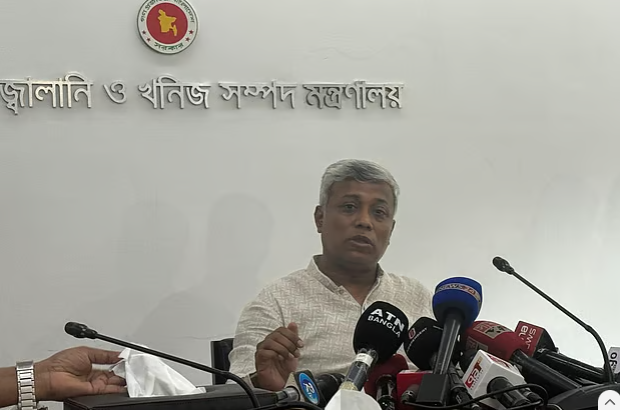
After the meeting, alliance coordinator Hamidur Rahman Azad, who is also an assistant secretary general of Jamaat-e-Islami, told reporters that the government would complete 30 days in office on 15 March. If the government fails to convene the council by then in accordance with the July Charter, he warned, it would have to take full responsibility.
Azad said the alliance would launch street protests with public support if swift steps were not taken to implement the charter. He also accused the ruling party of backtracking from its earlier position, saying BNP MPs took the oath as parliament members but refused the oath as reform council members.
Government party’s reservations
Of the 84 reform proposals in the July Charter, 48 relate directly to constitutional changes. Political consensus was reached on 30 of them. However, the BNP has expressed reservations about several key issues, including reducing the prime minister’s powers, expanding the president’s authority in certain areas, establishing an upper house based on proportional representation, and requiring its approval for constitutional amendments.
For instance, the BNP proposes that seats in the upper chamber should be distributed according to the number of seats each party wins in the lower house, rather than by the proportion of votes. The party also opposes making approval from the upper chamber mandatory for constitutional amendments.
Despite these disagreements, the BNP says it remains committed to implementing the July National Charter in line with the document signed by political parties that acknowledged differing opinions.
Speaking to journalists after a meeting of the parliamentary advisory committee, BNP standing committee member and Home Minister Salahuddin Ahmed said the matter of the Constitutional Reform Council could be discussed on the floor of parliament.