The outlook of Dhaka–Delhi relations remains positive — so far, so good.

- Update Time : 07:31:17 am, Tuesday, 17 March 2026
- / 82 Time View

After the political transition on August 5, 2024, India made it clear that discussions on normalizing bilateral ties would only take place with an elected government in Bangladesh. Following the festive elections held on February 12, that process has now begun.
Looking at developments over the past year and a half, it can be said that both governments are currently maintaining a positive outlook. Neither Dhaka nor New Delhi has made controversial remarks, and political leaders on both sides have avoided statements that could create mistrust. Instead, through both their comments and restraint, it appears that both countries are interested in moving forward constructively. In short, the post-election phase can be described as “so far, so good.”
India’s conduct during this period highlights several points. First, it has made clear that it will not respond to calls for the extradition of Sheikh Hasina. However, this does not mean that bilateral relations will remain stuck on that issue. Rather, India seems to be signaling that the Hasina chapter belongs to the past and that relations should now focus on the future.
Second, recent actions from India suggest that the relationship is rooted in history and people-to-people connections, not tied to any single government or political party. Implicitly, India appears to acknowledge that relying too heavily on one side in the past was a mistake and that efforts to correct this began earlier and gained momentum after the political changes.
Third, India has emphasized that, due to geopolitical and geographic realities, maintaining friendly relations is essential. Good neighborly ties, peaceful coexistence, and active cooperation are in the mutual interest of both countries.
For India, ensuring security is a key condition for its rise as a major economic force in the Global South. For Bangladesh, the priority is to restore strong economic growth, which has slowed from 6.1 percent in 2023, alongside significant job losses. Cooperation between the two countries is therefore crucial. Stability in Bangladesh and security in India’s northeastern region are interconnected priorities.
Bilateral relations cannot progress unilaterally. There are also signs of a pragmatic shift from the BNP. Having spent 17 years in London, Tarique Rahman has been closely exposed to Western democratic systems, which appears to have shaped a more measured and strategic approach. While some figures within the interim setup and activist groups have voiced strong anti-India sentiments, BNP leadership has avoided that path.
There are also indications of changing attitudes on both sides. For example, India had previously expressed concern over minority issues during the interim period, but the topic has not been emphasized after the BNP assumed power. Similarly, although India stressed the need for an inclusive election before February 12, it did not raise objections afterward.
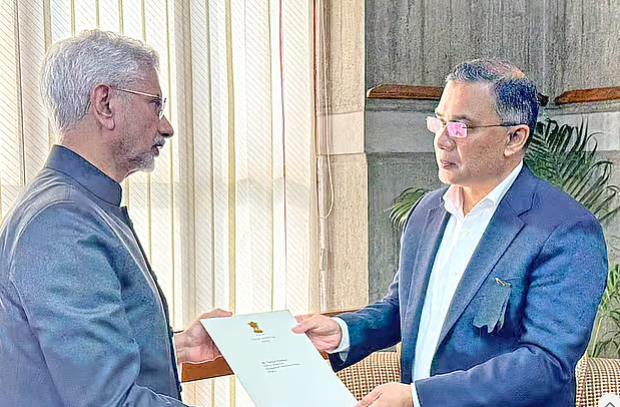
Several diplomatic gestures further reflect improving ties. India sent Foreign Minister S. Jaishankar to Dhaka to attend the funeral of former Prime Minister Khaleda Zia, along with a condolence letter from Prime Minister Narendra Modi addressed to Tarique Rahman. In the letter, Modi expressed hope that Rahman’s leadership would help usher in a new phase of partnership and prosperity between the two countries. Additionally, Lok Sabha Speaker Om Birla visited Dhaka for Rahman’s swearing-in ceremony.
India also demonstrated goodwill during its parliamentary budget session by adopting condolence motions in both houses in memory of Khaleda Zia.
On the Bangladeshi side, Tarique Rahman has emphasized that the country will not become a haven for terrorism and has spoken against religious extremism. He has also called for learning from past mistakes and building an inclusive national identity.
After the election, Prime Minister Narendra Modi quickly congratulated Tarique Rahman and even spoke with him by phone, indicating India’s comfort with the outcome.
Positive engagement has continued through official channels. Bangladesh’s newly appointed DGFI chief, Major General Mohammad Kaysar Rashid Chowdhury, visited India and held meetings with senior intelligence officials. Earlier, National Security Adviser Khalilur Rahman had also visited Delhi for talks with his Indian counterpart Ajit Doval and now serves as foreign minister.
Another sign of cooperation relates to energy. Due to disruptions caused by conflict in West Asia, Bangladesh has requested additional diesel supply from India’s Numaligarh refinery through an existing pipeline. India has said the request is under consideration, reflecting mutual dependence and practical cooperation.
Visa access for Bangladeshi citizens remains an important and sensitive issue. The economies of West Bengal and Tripura also benefit from Bangladeshi visitors. After about a year and a half of restrictions, India is now reconsidering easing visa procedures under the changed circumstances.
Overall, the trajectory appears positive. Diplomatic restraint and strategic realism from both sides will be key to sustaining progress. Whether this momentum continues will depend on the foresight and judgment of political leadership. For now, it can be summed up as: “so far, so good.