
Fuel Sales No Longer Rationed from Today; Buyers Can Purchase as Needed
Government Lifts Fuel Rationing as Supply Concerns Ease
After conflict spread across the Middle East, global fuel supply disruptions created concern about fuel availability in Bangladesh. Fearing shortages, people began purchasing fuel at nearly twice the normal rate, which prompted the government to impose limits on fuel sales. Supplies to filling stations were also reduced, resulting in long queues at pumps.
To ease public suffering during the upcoming Eid travel period and ensure sufficient diesel for irrigation, the government has now removed those restrictions.
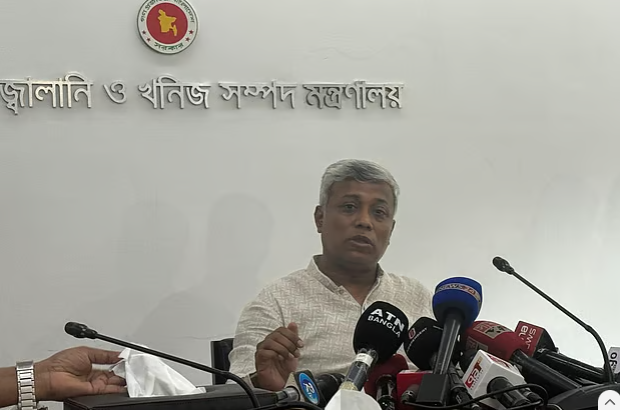
At a press briefing held at the Secretariat on Sunday, State Minister for Power, Energy and Mineral Resources Anindya Islam Amit announced that fuel sales would no longer be rationed. From today, customers will be able to buy fuel according to their needs.
Responding to a question, the minister said the government is in talks with friendly nations and other suppliers to increase imports and prevent any shortage.
Earlier, the government introduced limits on fuel sales starting March 6 to control abnormal demand. Later, on March 10, the limit for ride-sharing motorcycles was slightly increased—from 2 liters initially to a maximum of 5 liters. In addition, from March 7, filling stations were receiving about 25% less fuel than usual, though supply in divisional cities was raised by 10% starting March 11.
Fuel station owners had recently demanded supply according to market demand. In Khulna, station operators even stopped collecting fuel from the depot on Saturday, while owners in Rajshahi warned they might do the same if supplies were not increased.
According to the Bangladesh Petroleum Corporation (BPC), a total of 18 fuel tankers are scheduled to arrive this month. As of March 14, six vessels had already arrived, while six more are expected before March 27. The schedule for the remaining six has not yet been confirmed.
Each tanker typically carries 25,000 to 30,000 tonnes of fuel, mostly diesel. The final two vessels are expected to bring both diesel and jet fuel. Another tanker carrying furnace oil is expected to arrive around March 17 or 18. Authorities are also trying to purchase a shipment of octane from the open market. A tanker carrying octane is scheduled to arrive in the first week of next month, but discussions are underway to bring it earlier.
At filling stations, petrol, octane, and diesel are sold. Petrol is produced entirely within the country, while about half of the octane supply is domestically produced and the rest imported. Diesel remains the main concern, as it accounts for about 65% of the fuel supplied annually by BPC.
BPC sources say the country currently has around 200,000 tonnes of diesel in stock, along with an additional 60,000 tonnes reserved for emergency use. More supplies will continue to arrive with incoming vessels.
Stocks of petrol and octane each stand at about 16,000 tonnes. Domestic refineries add 600 to 700 tonnes daily, while daily demand ranges between 1,100 and 1,200 tonnes. Officials believe there will be no fuel shortage during March as supply increases.
However, authorities warned that if consumers start hoarding fuel beyond normal demand, it could create pressure on the supply system.
The Energy Division also said contracts are already in place to purchase refined fuels such as diesel and octane until June. However, disruptions in crude oil supply could affect refiners’ ability to process fuel, potentially causing delivery problems in May.
To address this risk, the government is considering additional purchases through government-to-government deals, open tenders, or direct procurement. Bangladesh has already requested India to provide extra fuel supplies beyond existing agreements.
Publisher: Mustakim Nibir
Copyright © 2026 The Times OF Dhaka. All rights reserved. প্রিন্ট করুন
 সেভ করুন