
Over 400 Garment Factories Shut Down in Bangladesh in Just Three Years
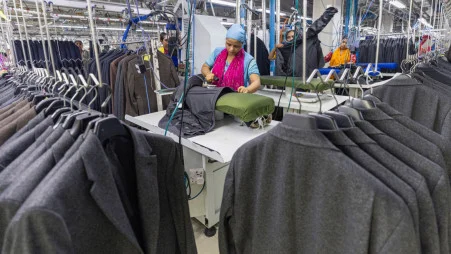 More than 400 garment factories have shut down in Bangladesh over the past three years, putting fresh pressure on the country’s vital ready-made garment (RMG) industry.
Commerce Minister Khandaker Abdul Muktadir disclosed the figures in Parliament on Thursday in response to a question from Chuadanga-2 lawmaker Md Ruhul Amin.
According to the minister, 282 of the closed factories were members of the Bangladesh Garment Manufacturers and Exporters Association (BGMEA), while 120 were affiliated with the Bangladesh Knitwear Manufacturers and Exporters Association (BKMEA).
The closures took place between July 2023 and June 2026. The government has yet to provide a complete list of the affected factories, as the process of collecting and compiling the information is still underway.
Multiple Factors Behind Factory Closures
The minister attributed the closures to a combination of global and domestic challenges.
The lingering impact of the COVID-19 pandemic, the Russia-Ukraine war, conflicts in the Middle East, and broader international economic pressures have created significant difficulties for Bangladesh's apparel exporters.
Domestic challenges have also intensified the pressure. These include political instability, liquidity shortages in the banking sector linked to illicit capital outflows, and growing competition in European markets from countries such as India and Vietnam, which benefit from free-trade arrangements.
Small and medium-sized factories have been particularly vulnerable. According to the minister, international buyers increasingly prefer larger factories because they are easier to monitor, leaving smaller manufacturers struggling to secure export orders.
Rising Production Costs Add to the Pressure
The BGMEA had also reported earlier this year that nearly 400 garment factories had closed during the past three years.
The association has pointed to severe gas shortages as one of the major challenges, saying many factories are unable to operate at full production capacity.
At the same time, higher fuel prices, increased lending costs and rising workers' wages have pushed up production expenses, weakening Bangladesh's competitiveness in international markets.
Government Announces Support Measures
Despite the difficulties, the government says it is continuing various policy measures and incentives to maintain export momentum.
The Commerce Minister said export-oriented domestic textile industries are receiving 1.5% alternative cash assistance in place of bonded warehouse and duty drawback facilities, along with an additional 0.5% incentive for exports to the eurozone.
Additional support is also being provided to small and medium-sized knit, woven and sweater manufacturers, while special incentives are available for the garment sector.
The government is also continuing facilities such as bonded warehouses, back-to-back letters of credit, tax holidays and special benefits in export processing zones.
LDC Graduation Poses Further Challenges
Bangladesh's upcoming graduation from the Least Developed Country (LDC) category could create another major challenge for exporters.
The Commerce Minister warned that the country could potentially face an estimated $17.5 billion loss in exports as preferential market access and Generalised Scheme of Preferences (GSP) benefits are reduced or withdrawn in some developed markets.
To address the challenge, the government is pursuing free trade and preferential trade agreements with multiple countries and regions.
Bangladesh has already completed an Economic Partnership Agreement (EPA) with Japan, while negotiations for a comprehensive economic partnership agreement with South Korea are underway. Similar trade arrangements are also being pursued with the European Union, ASEAN/RCEP, the UAE, Singapore, Indonesia and China.
Government Targets New Markets
The government is also seeking to reduce Bangladesh's dependence on traditional export destinations by expanding into new markets.
For the 2026–27 fiscal year, Bangladesh plans to participate in around 50 international trade fairs in promising markets around the world.
The country is particularly targeting Brazil, the Middle East, Japan, Canada, Australia, Africa and Latin America to strengthen the global branding of Bangladeshi apparel.
The government is also providing a 2% special cash incentive for exports of new products to new markets and has instructed Bangladeshi diplomatic missions abroad to strengthen economic diplomacy.
The Export Promotion Bureau (EPB) also plans initiatives such as the Global Sourcing Expo to attract new international buyers.
Publisher: Mustakim Nibir
Copyright © 2026 The Times OF Dhaka. All rights reserved. প্রিন্ট করুন
 সেভ করুন