
Bangladesh to Explore New Floating LNG Terminal Amid Rising Gas Concerns
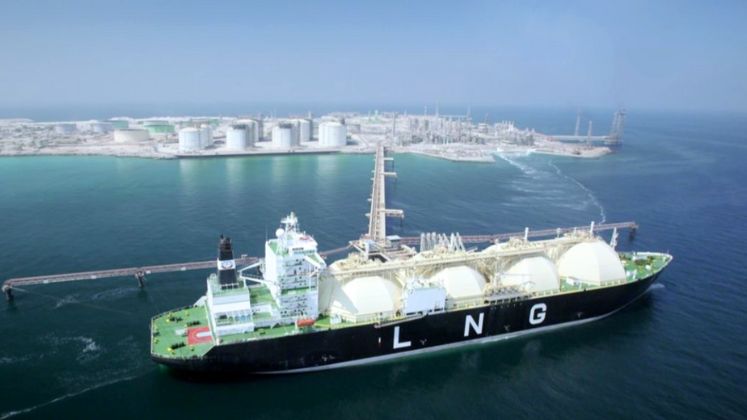 Bangladesh Plans Emergency Floating LNG Terminal to Tackle Gas Crisis
DHAKA, Sept. 9 — The Bangladesh government is conducting a feasibility study to establish a new floating liquefied natural gas (LNG) terminal on an emergency basis to address sudden gas shortages and protect industries from supply disruptions, Prime Minister Tarique Rahman told Parliament on Wednesday.
The proposed terminal could be located near Payra or Mongla ports, or at another suitable site along the southwestern coastal region, the prime minister said.
At the same time, work is progressing on another floating LNG terminal at Kutubjom in Maheshkhali and a land-based LNG terminal at Matarbari. The government expects the Kutubjom terminal to begin supplying regasified LNG in 2028, while the Matarbari terminal is expected to start supply by December 2030.
The prime minister disclosed the plans while responding to a written question from Sultana Ahmed, a lawmaker from reserved Women’s Seat-17, during the question-and-answer session of the 13th Parliament’s third session.
The parliamentary sitting began at 3:30 p.m. under the chairmanship of Speaker Hafizur Rahman.
Multiple Sources Planned for Industrial Gas Supply
To reduce the impact of sudden gas shortages on the industrial sector, the government is pursuing a combination of increased domestic gas exploration and production and expanded infrastructure for LNG imports.
Bangladesh currently has two floating LNG terminals, through which an average of around 935 million cubic feet of gas can be supplied daily, according to the prime minister.
To strengthen the country’s ability to cope with future shortages, the government is conducting feasibility studies for the new floating LNG terminal at Kutubjom while implementation of the land-based LNG terminal at Matarbari is underway.
The government expects the Kutubjom terminal to supply regasified LNG in 2028 and the Matarbari facility to begin supply by December 2030.
The government is also examining the feasibility of transporting gas from Bhola to the mainland in LNG form for supply to interested industrial consumers.
Industries will receive gas subject to availability, with priority given to establishments located in planned industrial areas such as economic zones, export processing zones and BSCIC industrial estates.
150 Gas Wells Targeted by 2030-31
To increase domestic gas supplies, the government plans to drill 150 wells by 2030-31, according to the prime minister.
As part of efforts to explore new domestic gas sources, authorities will conduct 4,500 line kilometres of 2D seismic surveys and 4,200 square kilometres of 3D seismic surveys.
An international bidding round was invited on May 24 to appoint companies for oil and gas exploration and extraction in 26 offshore blocks. The deadline for submitting bids has been set for November 2026.
The government is also working to formulate the Bangladesh Onshore Model Production Sharing Contract (PSC) 2026 to attract international investment in onshore oil and gas exploration.
Measures to Curb Project Cost and Time Overruns
Responding to another parliamentary question, Prime Minister Tarique Rahman outlined several measures aimed at preventing repeated increases in the duration and cost of government development projects.
He attributed project delays and cost overruns to several factors, including weak feasibility studies, inaccurate cost estimates, delays in land acquisition, lengthy procurement processes, inadequate monitoring and accountability gaps.
The prime minister said the problem is not generally caused by a single factor. Instead, weaknesses at different stages—including project formulation, approval, land acquisition, financing, procurement and management—often combine to cause delays and cost increases.
The government has taken steps to ensure more accurate feasibility studies before approving new projects and to accelerate implementation preparations after approval.
Existing guidelines governing project formulation, processing, approval and revision are also being updated.
Monitoring of Slow-Moving Projects to Be Strengthened
To strengthen monitoring of ongoing projects, dashboards are being established in relevant ministries and divisions. Regular project reviews and closer field-level supervision have also been intensified.
Coordination among relevant agencies is being strengthened to accelerate land acquisition and utility relocation.
The government has also ordered reviews of delayed projects to identify the causes of delays, irregularities, cost increases and revisions, with action to be taken against individuals or institutions responsible for delays in accordance with regulations.
Projects with less than 30 percent implementation progress are being reviewed based on their relevance and effectiveness. Depending on the findings, authorities may restructure such projects, modify their scope or decide whether they should continue.
The government has also instructed authorities to adopt grouped projects under integrated programmes rather than taking up projects in isolation.
The prime minister said the government is expanding the use of the electronic government procurement (e-GP) system and placing greater emphasis on professional qualifications, skills and practical experience when appointing project directors.
Steps are also being taken to ensure continuity in project leadership where necessary, while existing policies governing project director appointments are being updated.
The government is further encouraging the adoption of projects under the public-private partnership (PPP) model and has initiated steps to update the Public Procurement Rules 2025 to make public procurement more competitive and accountable.
Publisher: Mustakim Nibir
Copyright © 2026 The Times OF Dhaka. All rights reserved. প্রিন্ট করুন
 সেভ করুন