
Farmers Receive Only Half the Retail Price as Middlemen Push Up Vegetable Costs
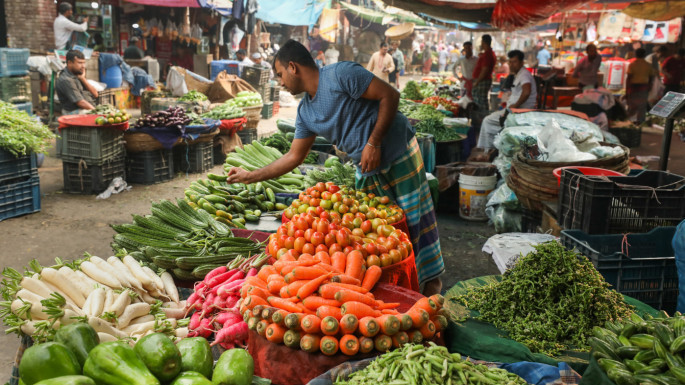 Farmers in northern Bangladesh are receiving only a fraction of the final retail price of vegetables, while consumers in urban markets continue to pay significantly higher rates, raising concerns about inefficiencies and excessive markups within the supply chain.
A market survey in Bogura found that pointed gourd (potol) purchased directly from farmers for Tk30 per kilogram was later sold for Tk40 at Mahasthan wholesale market before reaching Tk50 to Tk60 per kilogram in Bogura city markets. Cucumbers followed a similar pattern, with farmers receiving Tk30 to Tk35 per kilogram while consumers paid as much as Tk60.
Prices Double Before Reaching Consumers
The journey from farm to retail market often results in price increases of up to 100 percent, despite relatively small transportation costs.
Traders argue that transportation, labor, market fees, spoilage and handling expenses contribute to higher prices. However, field-level calculations suggest that even after recent fuel price hikes, the additional transport cost per kilogram is often less than Tk1.
This has intensified questions about why retail prices continue to rise sharply while farmers receive comparatively low returns.
Farmers Say Their Actual Earnings Are Even Lower
Farmers report that their effective earnings are often below the advertised selling price due to additional market charges and weight-related deductions.
Many growers are required to pay market fees and provide extra produce beyond standard weight measurements, reducing their actual income.
Farmer Abul Hossain explained that selling 40 kilograms of pointed gourd at Tk30 per kilogram should generate Tk1,200. However, if buyers demand 42 or 43 kilograms for the same payment, the effective price drops significantly.
Other farmers noted that labor costs, transportation expenses and market charges further reduce their profit margins.
Fuel Prices Up, But Transport Impact Remains Limited
Transport operators acknowledge that fuel price increases have raised operating costs, particularly for long-distance routes.
However, calculations from transport workers indicate that even significant increases in truck rental costs translate into only a few cents per kilogram when distributed across thousands of kilograms of produce.
For example, a truck carrying up to 5,000 kilograms of vegetables may see transport costs rise by roughly Tk0.20 per kilogram despite a Tk1,000 increase in freight charges.
Similarly, larger trucks transporting produce to Chattogram face additional costs of only Tk0.25 to Tk0.35 per kilogram after recent fuel adjustments.
Wholesale and Retail Margins Under Scrutiny
Consumer rights advocates argue that the gap between farm-gate and retail prices cannot be fully explained by transportation expenses alone.
They point out that vegetables purchased from farmers at Tk30 per kilogram are frequently sold in urban markets for Tk50 to Tk60, even when the added logistical costs remain relatively low.
The situation has fueled criticism of intermediaries and market practices that appear to benefit traders while leaving both farmers and consumers disadvantaged.
Consumers Feel the Pressure
Urban shoppers say they are struggling with rising food costs despite reports of lower prices at wholesale markets.
Many consumers believe greater transparency is needed to determine where and how prices increase throughout the supply chain.
Officials from the National Consumer Rights Protection Department have stated that while fuel price hikes can influence transportation expenses, businesses cannot use fuel costs as a blanket justification for excessive price increases.
As concerns grow over food affordability and farmer incomes, calls are increasing for stronger monitoring of agricultural supply chains and fairer pricing mechanisms to protect both producers and consumers.
Publisher: Mustakim Nibir
Copyright © 2026 The Times OF Dhaka. All rights reserved. প্রিন্ট করুন
 সেভ করুন