
GDP Grows, But Workers’ Wages Remain Stagnant
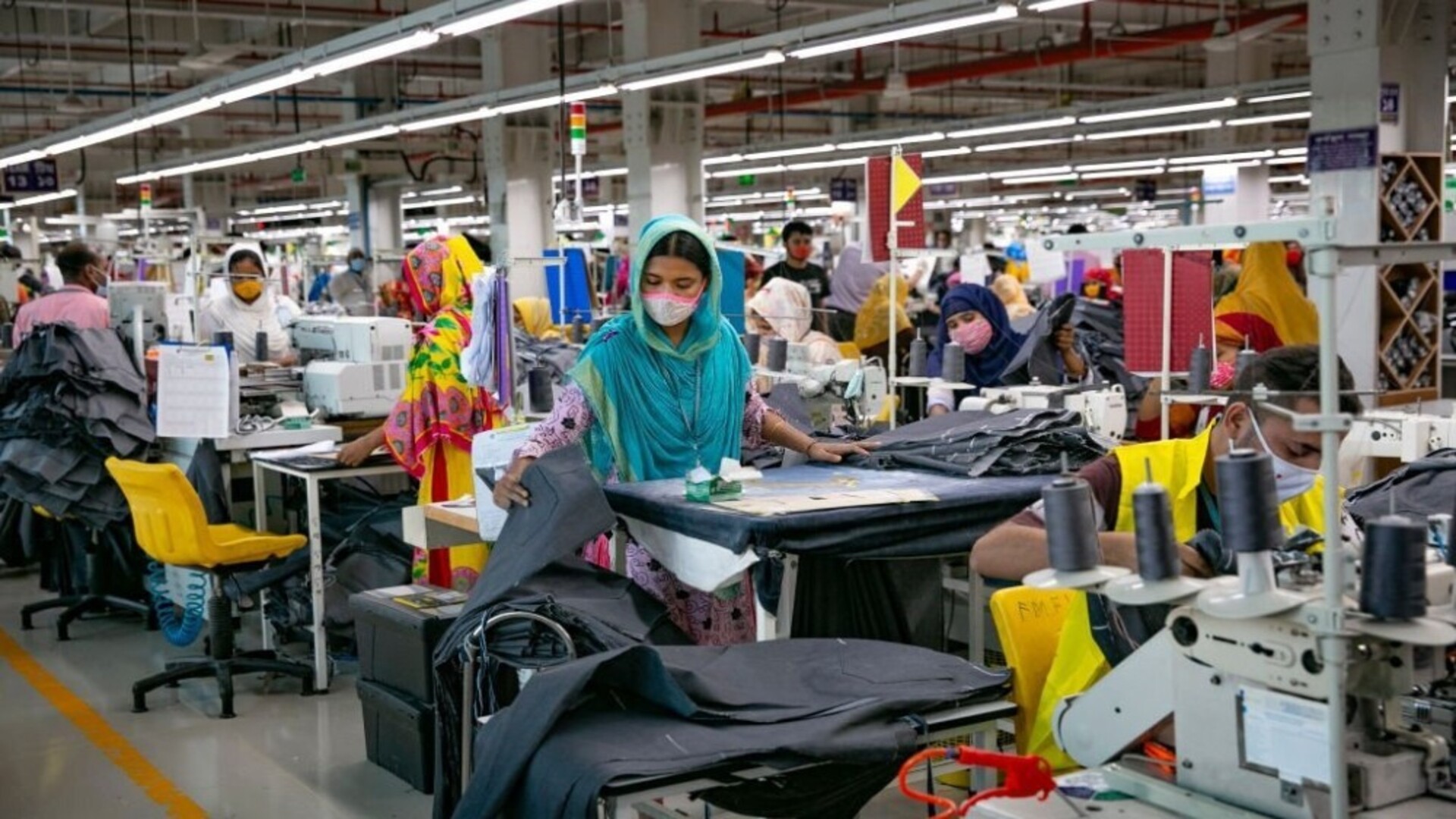
For years, policymakers in Bangladesh have proudly promoted two key factors to attract investment: a growing economy and cheap labor. While the economy continues to expand, the benefits seldom reach the workers who are its backbone. Agriculture, garments, and remittances form the core of Bangladesh’s economy, all heavily reliant on low-wage labor. However, those very workers now face dire conditions — low pay, poor workplace safety, health risks, and widening income inequality. Despite their critical role, these workers remain marginalized, with no lasting solutions in place. Each year on May Day, labor issues briefly draw attention, only to fade from public concern.
A glaring gap persists — in 54 years of independence, Bangladesh has never formed a National Wage Commission. Many workers struggle to survive on their earnings, and job insecurity is growing amid economic challenges. Of 142 sectors, 84 lack any official minimum wage. Global crises like the Russia-Ukraine war and unrest in the Middle East have worsened conditions for expatriate workers too. Though the government claims unemployment is only 2.6 million, private estimates suggest it is closer to 45 million.
According to the 2006 Labor Act, anyone working under formal terms in an organization or through contractors qualifies as a laborer. These workers are categorized into formal and informal sectors. Informal jobs include agriculture, small businesses, and domestic work, while formal jobs are in government offices, large industries, and services. Over half the population belongs to the labor force, with 2.2 million new entrants each year, yet only about 600,000 new jobs are created annually.
Despite this labor-driven growth, inequality is deepening. The World Bank warns that extreme poverty in Bangladesh could rise to 9.3% this year, with over 30 million people falling into this category due to declining real incomes and a weak labor market.
Former caretaker government adviser Dr. AB Mirza Azizul Islam notes that events like COVID-19, geopolitical tensions, and internal political uncertainty have drastically altered the economic landscape. He emphasizes that while the workforce is large, it lacks adequate skills, and the education system fails to produce employable graduates. Major investments are required to create jobs and prevent the labor force from becoming a burden.
Labor leaders argue that despite their immense contribution, workers are deprived of basic rights, safety, and fair wages. The Trade Union Center has demanded a minimum wage of Tk 30,000, labor law reforms aligned with ILO standards, and universal rationing for workers. Research from CPD shows that 85% of workers are in the informal sector, mostly without any legal wage protection. Meanwhile, a recent report by the Labor Reform Commission suggests 25 proposals, including setting a national minimum wage and revising wage structures every three years.
Casual laborers like rickshaw pullers, construction workers, and part-time domestic helpers dominate the informal sector, while formal jobs are held by only 13% of the labor force. The Bangladesh Bureau of Statistics reports a labor force of over 73 million, but around 46.9 million working-age people remain outside of official employment metrics, many of whom are functionally unemployed.
Bangladesh’s GDP for FY 2024–25 stands at Tk 55 trillion, with services contributing 56%, industry 33%, and agriculture 13%. Despite this, wage disparities are extreme — ranging from Tk 2,000 to over Tk 16,000 across sectors. The garment sector, for example, has a minimum wage of Tk 12,500. Employers admit that workers’ demands for rationing are justified, and trade unions must be respected — as long as they are responsible.
Over the past decade, 8,298 workers have died in workplace accidents, and many more have been injured, according to the Labor Reform Commission. Fires and other industrial disasters, especially in garment factories, have taken many lives. Yet, most victims have not received proper compensation. The Commission also notes growing income inequality: the richest 10% earn 44% of national income, while the bottom 50% share just 17.1%.
Experts like Dr. Mustafa K Mujeri, former director of BIDS, believe Bangladesh’s young workforce is a demographic bonus — but only if it is properly trained and employed. Without large-scale job creation and skills development, this "bonus" could turn into an economic liability.
Publisher: Mustakim Nibir
Copyright © 2026 The Times OF Dhaka. All rights reserved. প্রিন্ট করুন
 সেভ করুন