
Bangladesh’s Amar Ekushey Book Fair Moves Away From Its Language Movement Roots
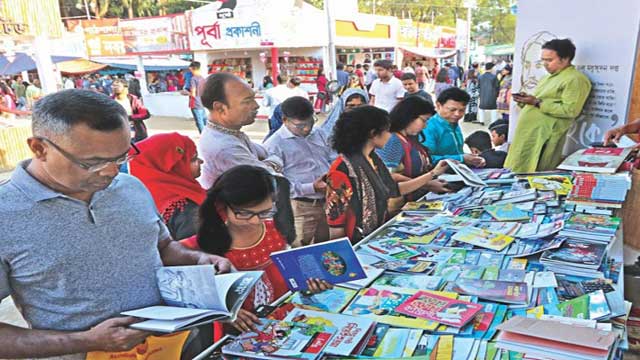 Bangladesh’s Amar Ekushey Book Fair is facing renewed debate over its identity and cultural significance after organisers decided to hold the 2027 edition from January 7 to February 6, moving the event away from its traditional February schedule.
The annual book fair, closely associated with International Mother Language Day and the history of Bangladesh’s Language Movement, is usually held throughout February. However, the expected start of Ramadan on February 8 next year prompted organisers to bring the event forward.
Critics involved with the fair argue that commercial considerations are increasingly influencing its scheduling, potentially weakening its connection with the Bengali language movement and the spirit of February 21.
The decision follows several years of changes to the fair’s schedule, including delays caused by elections, the COVID-19 pandemic, political uncertainty and Ramadan.
A History of Repeated Schedule Changes
In 2020, the fair began on February 2 because of elections to Dhaka’s north and south city corporations. The following year, the COVID-19 pandemic delayed its opening until March 18. Book sales that year fell to Tk 31.1 million, the lowest level in 12 years.
In 2022, the fair opened on February 15. Although it was initially scheduled to close on February 28, the event was extended until March 17. In 2024, heavy rain disrupted the first two days, prompting organisers to extend the fair until March 2. The fairs in 2023 and 2025 were held throughout February.
Uncertainty was particularly pronounced ahead of the 2026 edition. On September 18, 2025, organisers announced that the fair would take place from December 17, 2025, to January 17, 2026, in consideration of the national election and Ramadan. The decision was withdrawn just 10 days later following protests from publishers and writers.
After the election, organisers initially announced February 20 as the opening date. The fair ultimately opened on February 26 and continued until March 15, running for 18 days entirely during Ramadan.
Following that experience, the Bangladesh Book Publishers and Sellers Association (BAPUS) proposed an earlier schedule for 2027. In a letter to Bangla Academy on September 17, the association recommended holding the fair from January 7 to February 6.
The letter acknowledged the need to accommodate Ramadan but stressed that the emotional and historical connection between February and the Language Movement should remain intact.
The final schedule was agreed upon during a meeting between Bangla Academy and publishers’ representatives on October 13, chaired by Cultural Affairs Minister Nitai Roy Chowdhury. The decision was announced in an official notice signed by the academy’s director general on October 18.
Bangla Academy Director General Professor Mohammad Azam told Samakal that the institution was prepared to organise the fair in January, citing its annual experience and established preparation procedures.
From 32 Books on a Jute Mat to a Month-Long Festival
The fair’s origins date back to February 8, 1972, after Bangladesh gained independence. On that day, Chittaranjan Saha of Muktadhara Publishing House laid out a jute mat in front of the Bardhaman House on the Bangla Academy premises and displayed 32 books.
His initiative gradually attracted other publishers and laid the foundation for what became Bangladesh’s most prominent annual book fair.
Bangla Academy formally joined the event in 1978, followed by the Bangladesh Book Publishers and Sellers Association the following year. Initially lasting eight to 10 days, the fair was gradually extended in response to publishers’ requests and growing public attendance.
In 1980, a fair planned for February 14–21 was extended until February 29. Scheduling changes continued in 1981 and 1982, while political instability disrupted the event in 1983.
The following year established the tradition of a month-long event under the name Amar Ekushey Granthamela. Over time, holding the fair throughout February became standard practice.
In 2014, the event expanded into the nearby Suhrawardy Udyan grounds. In 2021, it was officially named the Amar Ekushey Book Fair.
Does Changing the Dates Weaken the Spirit of February 21?
Writer and researcher Saleq Khokon said repeatedly changing the fair’s dates was not merely a scheduling issue but also raised questions about preserving the spirit of the Language Movement.
“We call it the Amar Ekushey Book Fair, but if it takes place in April, March or January, why do we call it Amar Ekushey?” he asked.
Khokon argued that the event should not be treated like an ordinary commercial book fair. Its distinct identity comes from the history of the Language Movement and the significance of February 21.
He said the government, intellectuals, writers and publishers should play a more considered role in deciding the schedule, warning that excessive emphasis on commercial interests could weaken the fair’s cultural meaning.
However, Mahrook Mahmud, managing director of University Press Limited (UPL), offered a different perspective on the relationship between cultural significance and commercial viability.
He questioned how deeply the spirit of the Language Movement is reflected in Bangladesh’s broader society and education system, suggesting that the book fair may preserve more of that legacy than other parts of society.
Mahmud also noted that the fair began as an initiative by publishers rather than the government. Like other cultural festivals, he argued, it has an economic dimension that cannot be ignored.
“If the book fair is not profitable, it will threaten the survival of publishers and, ultimately, the survival of the spirit of Ekushey itself,” he said, adding that the past two years had been particularly difficult for the sector.
He expressed hope that the next edition would bring a different experience.
Book Sales and New Publications Are Declining
Falling sales are a major concern for publishers as they assess the impact of changing schedules and the difficulties of organising the fair during Ramadan.
According to the 2026 fair management committee, 269 publishing houses recorded sales of approximately Tk 80 million over 17 days through March 14. Based on that figure, a rough projection for all 570 participating institutions would put total sales at around Tk 170 million. This is an estimate rather than an audited figure.
Reported sales in previous years were higher: approximately Tk 400 million in 2025, Tk 600 million in 2024 and Tk 820 million in 2020. These figures were based on information supplied by publishers and reported in the media, rather than independently audited accounts.
The number of new books has also fallen. A total of 2,007 new titles were reported for the 2026 fair, although the information centre had received details of only 1,771 titles by March 14.
By comparison, 3,293 new books were reported in 2025 and 3,751 in 2024. Because not every publisher submits information to the fair’s information centre, the actual totals may be higher.
Publishers say the delayed opening and the fair’s overlap with Ramadan reduced visitor attendance. However, available data do not establish that scheduling changes alone caused the decline in sales and new publications. Book prices, consumers’ purchasing power, broader economic conditions and changing reading habits may also have contributed.
‘I No Longer Feel the Same Festive Excitement’
Farid Ahmed, publisher of Somoy Prokashon, has participated in the fair since 1988. He said the event had once grown beyond a marketplace into a major cultural festival that generated excitement among Bengali communities both at home and abroad.
Writers living overseas would return to Bangladesh for the fair, while readers eagerly anticipated new releases.
After witnessing several generations participate in the event, Ahmed said he had noticed a decline in that enthusiasm in recent years.
“I will continue publishing books for the fair, but I no longer feel the same festive excitement as before,” he said.
Ahmed argued that the decline should not be blamed solely on younger generations. Organisers, publishers and cultural practitioners must consider how to reconnect young people with the fair, the history of the Language Movement, reading habits and Bangladesh’s cultural heritage.
Uncertainty Over Dates Disrupts Publishing Plans
Publishers typically begin preparing for the fair months in advance. Selecting manuscripts, editing texts, designing covers, printing books and planning marketing campaigns all require considerable time.
Uncertainty over the schedule can disrupt these preparations, particularly for publishers whose new releases are timed specifically for the fair.
The opening date affects decisions about printing schedules, promotional campaigns and print runs, as well as expectations for sales. A delayed opening or a fair held during Ramadan can also change anticipated visitor numbers.
However, reliable comparative data are not available to establish exactly how many fewer books were published or how much revenue was lost as a direct result of the scheduling changes.
Researcher and publisher Mofidul Hoque said February 21 had been the central motivation behind the publishers’ original initiative to establish the fair.
Although the event has expanded and the number of participating publishers has grown, he argued that broader policy support for the publishing industry remains inadequate.
Hoque said efforts to develop a national book policy had not been effectively implemented. He called for coordinated action by the government, Bangla Academy, the National Book Centre and other relevant institutions to address the sector’s challenges.
He added that organising the annual fair alone would not resolve the publishing industry’s problems. Long-term measures are needed to support publishers, encourage reading and promote the overall development of books and publishing.
Without coordinated policy initiatives and sustained institutional support, he warned, the sector’s difficulties would remain difficult to overcome.
Publisher: Mustakim Nibir
Copyright © 2026 The Times OF Dhaka. All rights reserved. প্রিন্ট করুন
 সেভ করুন