
Inside the Killing of Saif al-Islam Gaddafi at His Libyan Residence
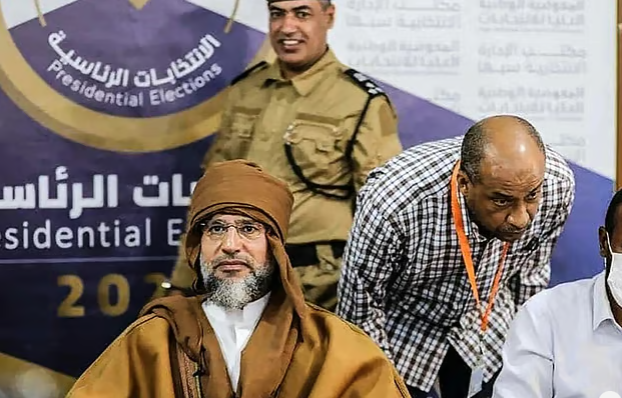
Saif al-Islam Gaddafi, the most influential son of Libya’s late ruler Muammar Gaddafi, has been killed in a targeted shooting carried out by four armed assailants. He was 53 years old.
The attack took place in the city of Zintan, around 136 kilometers (85 miles) southwest of the capital, Tripoli. According to a source close to the Gaddafi family quoted by Saudi-owned broadcaster Al Arabiya, the gunmen struck on Tuesday evening inside the garden of Saif al-Islam’s residence before fleeing the scene.
The report said the attackers had disabled security cameras at the property prior to the assault. Saif al-Islam was confronted face to face and shot at close range. He later died from his injuries late at night.
No official details have yet been released regarding the motive behind the killing. However, one of Saif al-Islam’s close associates described the incident as a deliberate assassination.
His death was confirmed by Abdullah Osman, one of his political advisers, in a Facebook post. “We belong to God and to Him we shall return. Mujahid Saif al-Islam Gaddafi is now under God’s protection,” Osman wrote. He had been involved in political activities during 2020–21.
A Life Shaped by Power and Conflict
Saif al-Islam Gaddafi led a life marked by dramatic shifts. Once widely viewed as his father’s heir, he played a key role in Libya’s political decision-making during Muammar Gaddafi’s four-decade rule. He was deeply involved in high-level diplomacy, including negotiations that led Libya to abandon its weapons of mass destruction program and discussions over compensation for the families of victims of the 1988 Lockerbie bombing.
Educated at the London School of Economics and fluent in English, Saif al-Islam was often seen by Western governments as a reform-minded and internationally acceptable face of the Libyan regime. He publicly advocated constitutional reform, improved human rights, and stronger engagement with the West.
Fall from Power and Years in Captivity
When the 2011 uprising erupted against his father’s rule, Saif al-Islam chose loyalty to his family over his international connections. He harshly denounced the rebels and became one of the key figures planning the crackdown. In an interview at the time, he famously declared that the family would “fight and die in Libya.”
After Tripoli fell, he attempted to flee the country disguised as a Bedouin but was captured by a militia group and taken to Zintan. He remained in detention there for six years—far removed from the lavish lifestyle he once enjoyed.
In 2015, a court in Tripoli sentenced him to death by firing squad on war crimes charges. Although he was released in 2017 under a general amnesty, he lived in hiding for years due to security concerns.
Failed Political Comeback
In 2021, Saif al-Islam attempted a political return by submitting his candidacy for Libya’s presidential election. His bid sparked intense controversy, with strong opposition from victims of the former regime and powerful armed groups that emerged after the revolution.
Legal disputes over his eligibility—linked to his previous conviction—became a major flashpoint. The controversy ultimately contributed to the collapse of the election process, pushing Libya back into political deadlock.
Saif al-Islam’s killing now marks another violent chapter in Libya’s long struggle with instability following the fall of the Gaddafi era.
Publisher: Mustakim Nibir
Copyright © 2026 The Times OF Dhaka. All rights reserved. প্রিন্ট করুন
 সেভ করুন