Dhaka 4:25 am, Tuesday, 3 March 2026

What Weapons Is Iran Using in Its War Against the United States and Israel?

Staff Correspondent :
  • Update Time : 07:35:43 am, Monday, 2 March 2026
  • / 66 Time View

Following the joint strikes by the United States and Israel last Saturday that reportedly killed Iran’s Supreme Leader, Ayatollah Ali Khamenei, Tehran has begun retaliatory actions. Iranian officials say they have targeted Israel as well as U.S. military bases across the Gulf region.

Here is an overview of the weapons Iran is believed to be using—or has available—as the conflict escalates.

Long-Range Missiles

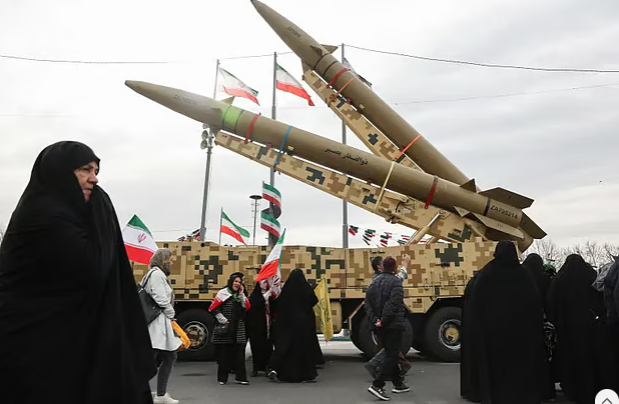
Missiles are considered Iran’s primary military tool in this confrontation. Defense analysts often describe Iran as possessing one of the largest and most diverse missile arsenals in the Middle East. Its inventory includes both ballistic and cruise missiles.

Iran has developed this missile capability in part to compensate for its aging air force. Many of its combat aircraft are decades old, so long-range missile systems provide Tehran with the ability to strike distant targets without relying heavily on advanced fighter jets.

Western governments have long argued that Iran’s missile program contributes to regional instability and could potentially support future nuclear capabilities—an allegation Tehran denies.

Some of Iran’s long-range ballistic missiles are believed to have ranges of roughly 2,000 to 2,500 kilometers, putting Israel and U.S. bases across the Gulf within reach.

Short-Range Ballistic Missiles

Iran also maintains short-range ballistic missiles capable of striking targets between approximately 150 and 800 kilometers away.

These weapons are designed for rapid, early strikes against nearby military targets. They can be launched in large numbers at once, reducing the reaction time available to opposing air defense systems.

Systems in this category reportedly include missiles from the Fateh family, as well as Zulfiqar, Qiam-1, and older Shahab-1 and Shahab-2 models.

Medium-Range Ballistic Missiles

Medium-range ballistic missiles extend Iran’s reach further across the region. With ranges estimated between 1,500 and 2,000 kilometers, they are capable of striking more distant targets.

Missiles such as Shahab-3, Emad, Ghadr-1, Khorramshahr, and Sejjil form a significant part of this capability. Newer systems like Kheibar Shekan and Haj Qasem have also been introduced to enhance precision and reach.

Taken together, these missiles could potentially target locations in Israel and U.S.-linked infrastructure in countries such as Qatar, Bahrain, Kuwait, Saudi Arabia, and the United Arab Emirates.

Cruise Missiles

Unlike ballistic missiles, cruise missiles fly at relatively low altitudes and can follow the terrain, making them more difficult to detect and intercept. When launched alongside drones or ballistic missiles, they can place heavy strain on air defense networks.

Iran is believed to operate cruise missiles capable of targeting both land and maritime objectives. Reported systems include Soumar, Ya Ali, the Quds series, Hoveyzeh, Paveh, and Raad. Some assessments suggest that the Soumar missile may have a range of up to 2,500 kilometers.

Drones

Unmanned aerial vehicles (UAVs), or drones, are another key element of Iran’s arsenal. Although slower than missiles, drones are cheaper to produce and can be launched in large numbers.

One-way attack drones can be used in waves to overwhelm air defenses. Continuous drone operations can also disrupt airports, ports, and energy facilities for extended periods—sometimes more effectively than single missile strikes.

Analysts suggest that if the conflict deepens, drone warfare could become increasingly central to Iran’s strategy.

Underground Missile Facilities

Beyond the number of missiles it possesses, a critical question in a prolonged conflict is how long Iran can sustain its operations.

Over the years, Tehran has invested in underground tunnels, concealed bases, and hardened launch sites—often referred to as “missile cities.” These facilities are designed to protect launch systems and make it more difficult for adversaries to eliminate Iran’s strike capabilities quickly.

The Strait of Hormuz and Maritime Leverage

Iran’s strategy is not confined to land-based warfare. The Persian Gulf and the Strait of Hormuz play a major strategic role. A significant portion of global oil and gas shipments pass through this narrow waterway.

Without formally declaring a blockade, Iran could still disrupt shipping by deploying anti-ship missiles, naval mines, drones, and fast-attack boats. Even issuing warnings through the Islamic Revolutionary Guard Corps could slow tanker traffic, increase insurance costs, and drive up global energy prices.

Iran has also showcased what it describes as “hypersonic” systems, such as the Fattah series, claiming they can travel at extremely high speeds. Independent verification of these claims, however, remains limited.

Signals of a Broader Conflict

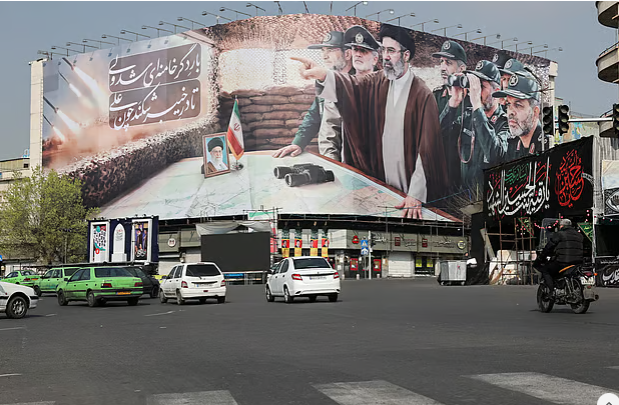
Iranian officials have repeatedly warned that any direct attack on Iranian territory by the United States or Israel would trigger a wider war rather than a limited response. Following the reported killing of Khamenei, that rhetoric has intensified.

The Islamic Revolutionary Guard Corps has vowed further retaliation, suggesting that Iran may pursue sustained, ongoing operations rather than a single large-scale strike. Iran-aligned groups in the region are also reportedly becoming more involved, raising concerns about a broader and prolonged confrontation.

Tag :

Please Share This Post in Your Social Media

What Weapons Is Iran Using in Its War Against the United States and Israel?

Update Time : 07:35:43 am, Monday, 2 March 2026

Following the joint strikes by the United States and Israel last Saturday that reportedly killed Iran’s Supreme Leader, Ayatollah Ali Khamenei, Tehran has begun retaliatory actions. Iranian officials say they have targeted Israel as well as U.S. military bases across the Gulf region.

Here is an overview of the weapons Iran is believed to be using—or has available—as the conflict escalates.

Long-Range Missiles

Missiles are considered Iran’s primary military tool in this confrontation. Defense analysts often describe Iran as possessing one of the largest and most diverse missile arsenals in the Middle East. Its inventory includes both ballistic and cruise missiles.

Iran has developed this missile capability in part to compensate for its aging air force. Many of its combat aircraft are decades old, so long-range missile systems provide Tehran with the ability to strike distant targets without relying heavily on advanced fighter jets.

Western governments have long argued that Iran’s missile program contributes to regional instability and could potentially support future nuclear capabilities—an allegation Tehran denies.

Some of Iran’s long-range ballistic missiles are believed to have ranges of roughly 2,000 to 2,500 kilometers, putting Israel and U.S. bases across the Gulf within reach.

Short-Range Ballistic Missiles

Iran also maintains short-range ballistic missiles capable of striking targets between approximately 150 and 800 kilometers away.

These weapons are designed for rapid, early strikes against nearby military targets. They can be launched in large numbers at once, reducing the reaction time available to opposing air defense systems.

Systems in this category reportedly include missiles from the Fateh family, as well as Zulfiqar, Qiam-1, and older Shahab-1 and Shahab-2 models.

Medium-Range Ballistic Missiles

Medium-range ballistic missiles extend Iran’s reach further across the region. With ranges estimated between 1,500 and 2,000 kilometers, they are capable of striking more distant targets.

Missiles such as Shahab-3, Emad, Ghadr-1, Khorramshahr, and Sejjil form a significant part of this capability. Newer systems like Kheibar Shekan and Haj Qasem have also been introduced to enhance precision and reach.

Taken together, these missiles could potentially target locations in Israel and U.S.-linked infrastructure in countries such as Qatar, Bahrain, Kuwait, Saudi Arabia, and the United Arab Emirates.

Cruise Missiles

Unlike ballistic missiles, cruise missiles fly at relatively low altitudes and can follow the terrain, making them more difficult to detect and intercept. When launched alongside drones or ballistic missiles, they can place heavy strain on air defense networks.

Iran is believed to operate cruise missiles capable of targeting both land and maritime objectives. Reported systems include Soumar, Ya Ali, the Quds series, Hoveyzeh, Paveh, and Raad. Some assessments suggest that the Soumar missile may have a range of up to 2,500 kilometers.

Drones

Unmanned aerial vehicles (UAVs), or drones, are another key element of Iran’s arsenal. Although slower than missiles, drones are cheaper to produce and can be launched in large numbers.

One-way attack drones can be used in waves to overwhelm air defenses. Continuous drone operations can also disrupt airports, ports, and energy facilities for extended periods—sometimes more effectively than single missile strikes.

Analysts suggest that if the conflict deepens, drone warfare could become increasingly central to Iran’s strategy.

Underground Missile Facilities

Beyond the number of missiles it possesses, a critical question in a prolonged conflict is how long Iran can sustain its operations.

Over the years, Tehran has invested in underground tunnels, concealed bases, and hardened launch sites—often referred to as “missile cities.” These facilities are designed to protect launch systems and make it more difficult for adversaries to eliminate Iran’s strike capabilities quickly.

The Strait of Hormuz and Maritime Leverage

Iran’s strategy is not confined to land-based warfare. The Persian Gulf and the Strait of Hormuz play a major strategic role. A significant portion of global oil and gas shipments pass through this narrow waterway.

Without formally declaring a blockade, Iran could still disrupt shipping by deploying anti-ship missiles, naval mines, drones, and fast-attack boats. Even issuing warnings through the Islamic Revolutionary Guard Corps could slow tanker traffic, increase insurance costs, and drive up global energy prices.

Iran has also showcased what it describes as “hypersonic” systems, such as the Fattah series, claiming they can travel at extremely high speeds. Independent verification of these claims, however, remains limited.

Signals of a Broader Conflict

Iranian officials have repeatedly warned that any direct attack on Iranian territory by the United States or Israel would trigger a wider war rather than a limited response. Following the reported killing of Khamenei, that rhetoric has intensified.

The Islamic Revolutionary Guard Corps has vowed further retaliation, suggesting that Iran may pursue sustained, ongoing operations rather than a single large-scale strike. Iran-aligned groups in the region are also reportedly becoming more involved, raising concerns about a broader and prolonged confrontation.