
Wealthy Elites Rushing to Leave Dubai, Private Jet Rates Soar Multiple Times
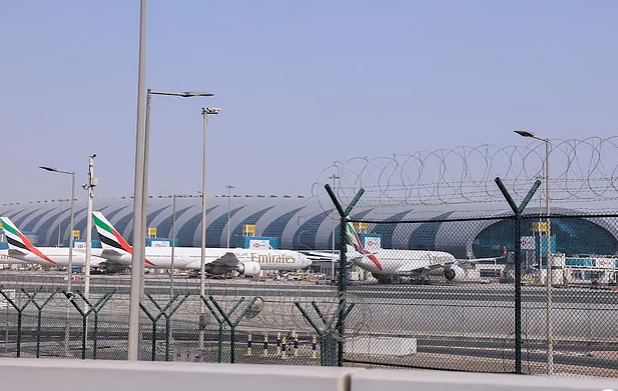
Following joint strikes on Iran by Israel and its close ally the United States, Tehran retaliated by targeting American military facilities in Dubai and elsewhere in the region. The escalation, along with the temporary shutdown of Dubai’s airport, has left many wealthy residents scrambling for a way out.
With commercial flights heavily disrupted, private jets have become the primary escape option for those eager to leave the United Arab Emirates’ commercial hub. The rush to secure alternative routes has driven charter prices to unprecedented levels.
Known as a playground for billionaires, high-profile figures and millions of tourists, glittering Dubai has turned into a city gripped by anxiety. In response to the attacks by Washington and Tel Aviv, Iran has launched drones and missiles not only toward Dubai but also at U.S. bases across the Middle East.
Missile and drone strikes have reportedly damaged parts of Dubai International Airport, as well as several luxury hotels and key facilities in the city. The UAE Ministry of Defence said on Monday that it intercepted multiple incoming projectiles. As tensions spread across the region, the UAE also announced the closure of its embassy in Tehran.
Many residents are now driving roughly four and a half hours to neighboring Oman, which has so far been spared the worst of the violence. Muscat International Airport remains operational, though flights are experiencing delays. According to online booking platforms, most outbound commercial flights from Muscat to Europe are sold out through the end of the week.
Russian tourist Alexandra Vavilova, who had been vacationing in Dubai, said she managed to secure a ticket late Monday night after repeated attempts. However, it was not to Europe but to Colombo, Sri Lanka, departing from Muscat.
Private jet prices from Oman have surged sharply due to soaring demand and limited aircraft availability in the unstable region. Muscat-based charter broker JetVIP told The Guardian that a small Nextant jet to Istanbul now costs around €85,000 — roughly triple the usual rate. Seats on private charters to Moscow are reportedly going for €20,000 per passenger.
Several private aviation firms have suspended operations entirely because of the deteriorating security environment. From Riyadh, charter flights to Europe are said to cost as much as $350,000, according to Amir Naran, CEO of Vimana Private Jets. Austrian charter operator GlobeAir has also reported limited aircraft availability, with European routes priced near €90,000. Insurance complications and aircraft owner concerns have further restricted supply.
Some travelers are enduring a 10-hour drive to Riyadh, Saudi Arabia, where the airport remains open. Meanwhile, passengers in other parts of the world, including Dhaka and Bali, have been left stranded after flights to Dubai, Doha and Abu Dhabi were canceled.
Private security companies are reportedly arranging convoys of SUVs to transport clients to Riyadh, where onward private flights are organized.
The crisis has also sparked political controversy in Italy. Defence Minister Guido Crosetto returned home from Dubai aboard a government aircraft, prompting criticism as hundreds of Italian citizens remain stranded. Reports indicate he had been vacationing in Dubai with his family when the conflict erupted. While he has since resumed duties in Rome and stated that he covered the flight costs personally, opposition parties are questioning the government’s preparedness and have called for his resignation.
For most tourists, however, options remain limited. Dubai’s tourism authorities have instructed hotels not to evict guests unable to depart due to flight disruptions and to extend stays at existing rates. Yet some Russian visitors have complained online that they were asked to pay higher fees or vacate their resorts.
The broader impact of Iran’s drone and missile campaign has extended to Gulf ports, many of which are operating at minimal capacity. Thousands of Western tourists remain stranded aboard cruise ships anchored offshore. In some cases, passengers have been instructed to stay inside their cabins and avoid balconies for safety reasons.
Footage shared online shows smoke rising after reported drone strikes near Abu Dhabi’s Zayed Port. Travelers aboard cruise ships described scenes of panic as what had been a holiday paradise suddenly felt like a conflict zone.
Confusion has also surrounded operations at Zayed International Airport in Abu Dhabi, with conflicting information about departures and cancellations. However, flight-tracking service Flightradar24 indicated that at least one passenger plane departed for London on Monday afternoon.
Dubai-based lawyer Irina Heaver wrote on social media that people she knows in the city appear divided into three camps: those rushing toward the Omani border in hopes of chartering jets to Istanbul; those insisting life will continue as normal, spending time at beaches and watching sunsets over Palm Jumeirah; and a third group strictly following official shelter-in-place instructions.
Publisher: Mustakim Nibir
Copyright © 2026 The Times OF Dhaka. All rights reserved. প্রিন্ট করুন
 সেভ করুন