
Swarms of Aquarium Gourami Fish Found in Bangladeshi Water Bodies — Experts Warn of Ecological Risk
 Swarms of Aquarium Gourami Fish Found in Bangladeshi Water Bodies — Experts Warn of Ecological Risk
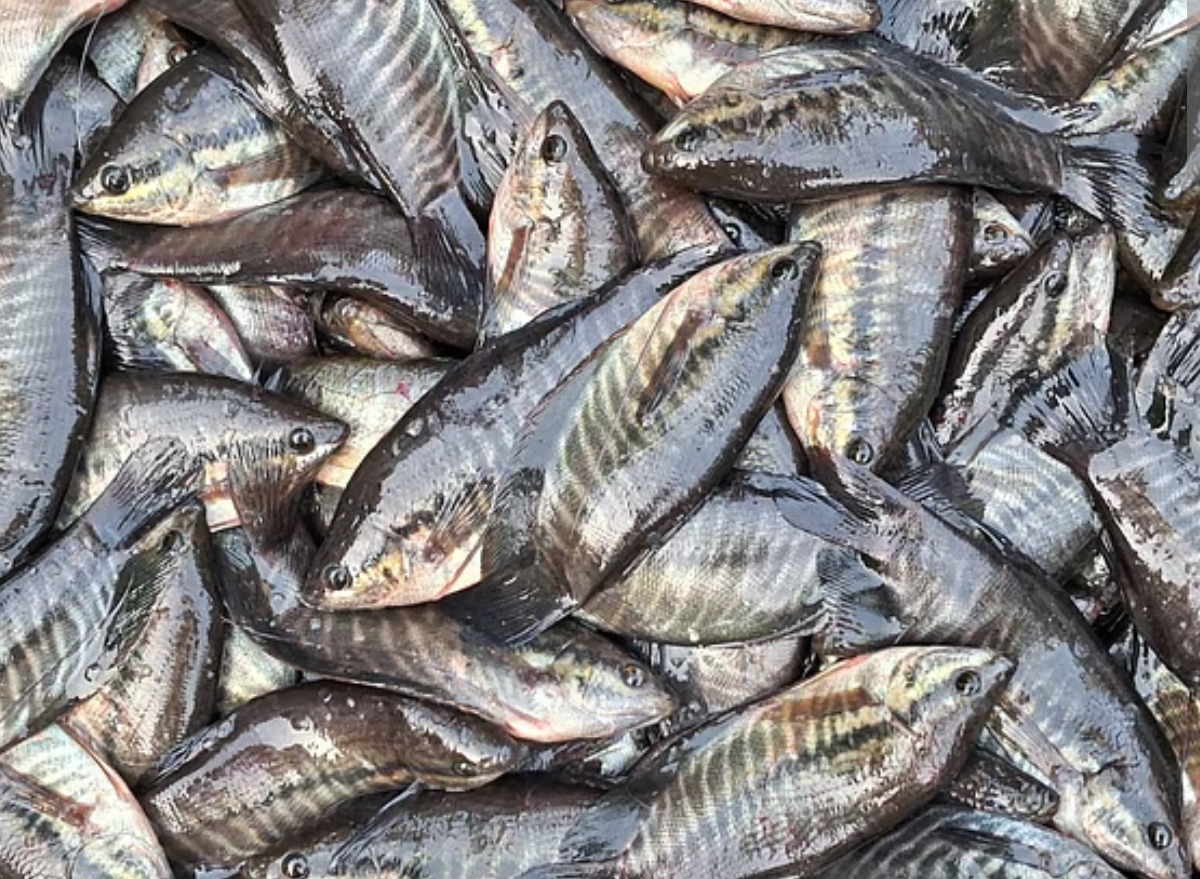
Casting a net into ponds and canals in Mirsarai, Chattogram, now often pulls up a fish unfamiliar to many locals — the snake-skin gourami, commonly known in the area as “hybrid khalsha.” These fish, once seen only in aquariums, are now appearing in large numbers in open waters, raising concerns among biologists about their impact on native species.
The fish closely resembles the native khalsha but grows slightly larger. Locals say they have no idea how the species suddenly began appearing in local ponds, ditches, and floodplains. Fisheries officials fear that the fast-spreading gourami may threaten the breeding of local fish species by outcompeting them for food and space.
According to the Upazila Fisheries Office, the species is the Snake-skin Gourami (Trichopodus pectoralis), originally native to Thailand, Cambodia, and Laos. It was first detected in Bangladesh in 2012 in the Meghna River. Unlike most fish, it can survive in low-oxygen waters, which makes it highly adaptable — and potentially invasive.
In Mirsarai’s markets, the fish has become popular among low-income consumers due to its cheap price. Wholesale traders sell it for around Tk 75–90 per kilogram, with the highest recorded price being Tk 80 per kg at the Bartakia Bazar on Monday.
Local traders say the fish spread widely after the severe floods of 2024, which submerged many areas near the Feni River. “After the flood, these fish began appearing in almost every pond and canal,” said Shuklal Das, owner of Satata Fish Market. “Now, it’s one of the cheapest and most available fish in the area.”
Vendors and villagers report that the gourami is now abundant across ponds, canals, and rice fields. “It’s hardy and survives almost anywhere,” said Md. Iktiar Uddin, a primary school teacher from Mithanala Union. “After the flood, it started spreading rapidly. You can find it everywhere now.”
While safe to eat and similar in taste to tilapia, experts warn that the fish’s aggressive nature poses a long-term ecological threat. It competes for food and breeding space with native fish and thrives in polluted or shallow waters.
Dr. Md. Manjurul Kibria, Professor of Zoology at the University of Chittagong, said, “The gourami itself isn’t toxic, but its spread can disrupt local biodiversity. Before approving aquarium fish imports, authorities should conduct proper biological assessments. Otherwise, native fish species may gradually disappear.”
Mirsarai Upazila Fisheries Officer Arifur Rahman confirmed that reports of the fish have sharply increased. “We have already informed higher authorities,” he said. “This species poses a real threat to native fish populations.”
Chattogram District Fisheries Officer Salma Begum added that further investigation will be conducted with the help of fisheries scientists to determine necessary control measures.
Publisher: Mustakim Nibir
Copyright © 2026 The Times OF Dhaka. All rights reserved. প্রিন্ট করুন
 সেভ করুন