
Gujarat’s Hilsa Wins Over Bangladesh as Supply Shortage Deepens
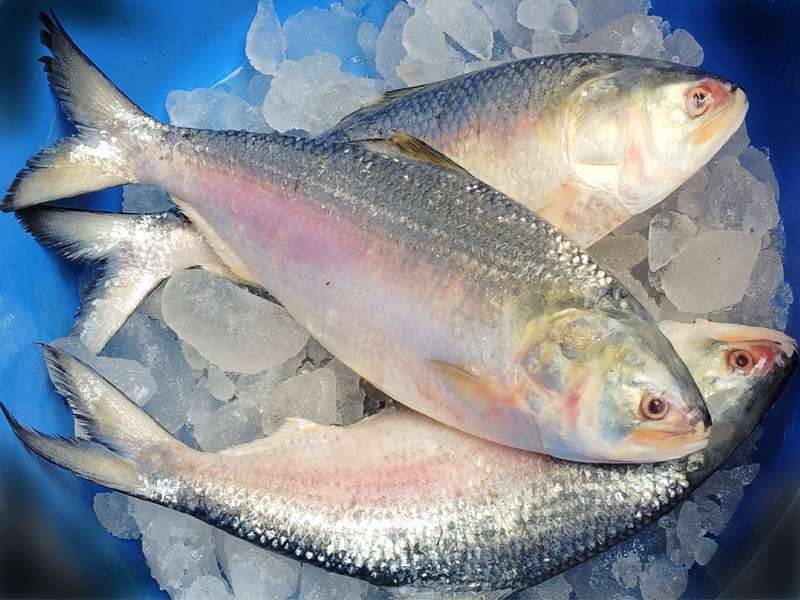 Bangladesh has begun importing hilsa fish from India’s western state of Gujarat to address a domestic supply shortage, marking an unusual shift for the country known globally as the home of the prized fish.
According to industry sources, nearly 500 tonnes of hilsa have already entered Bangladesh over the past two to three months, with an additional 150 to 200 tonnes expected to arrive within the next two weeks.
The fish are being sourced primarily from Gujarat’s Bharuch port and the Howrah wholesale fish market in India before being transported into Bangladesh through legal import channels.
Ahsadul Alam, an inspector at the Fisheries Quarantine Office in Benapole, confirmed that importers are bringing in hilsa alongside other fish species through approved procedures. However, he did not provide an official figure regarding the total volume imported so far.
Meanwhile, Syed Anwar Maqsood, General Secretary of the Howrah Wholesale Fish Market Association and the Fish Importers Association of India, said approximately 500 tonnes of hilsa have already been shipped to Bangladesh.
“We usually export fish such as boal, rohu, parshe, and tengra from Bangladesh to India. But this year, due to a shortage of hilsa in Bangladesh, hilsa is being sent from India for the first time,” he said.
Maqsood noted that Bangladeshi consumers particularly prefer hilsa containing roe (eggs), and Gujarat’s hilsa varieties meet that demand.
In India, hilsa currently sells for around 700 to 800 Indian rupees per kilogram, although prices can fall to 300–400 rupees per kilogram when supplies are abundant. Exporters say the fish is being sold to Bangladeshi buyers at an average of 600 rupees per kilogram, excluding transportation costs.
The development comes as Indian importers are also seeking permission to import Bangladeshi hilsa ahead of the upcoming Durga Puja festival. According to Maqsood, India’s Fish Importers Association submitted letters earlier this month to Bangladesh’s Prime Minister’s Office, Ministry of Foreign Affairs, and Ministry of Commerce requesting both short-term and long-term approval for hilsa exports.
Several Bangladeshi companies have also reportedly applied for permission to export hilsa to India.
Indian importers say that in recent years the actual volume of hilsa exported from Bangladesh has fallen far below approved quotas. Last year, only 150 tonnes were exported despite approval for 1,200 tonnes. In 2024, Bangladesh approved exports of 2,420 tonnes, but only 577 tonnes reportedly reached India.
The growing cross-border trade highlights both the continued demand for hilsa in South Asia and concerns over fluctuating production levels in Bangladesh, where the fish remains a cultural and economic symbol.
Publisher: Mustakim Nibir
Copyright © 2026 The Times OF Dhaka. All rights reserved. প্রিন্ট করুন
 সেভ করুন