
Bangladesh PM Tarique Rahman Heads to Japan for Four-Day Visit, Seeks Investment and Lower Metro Rail Costs
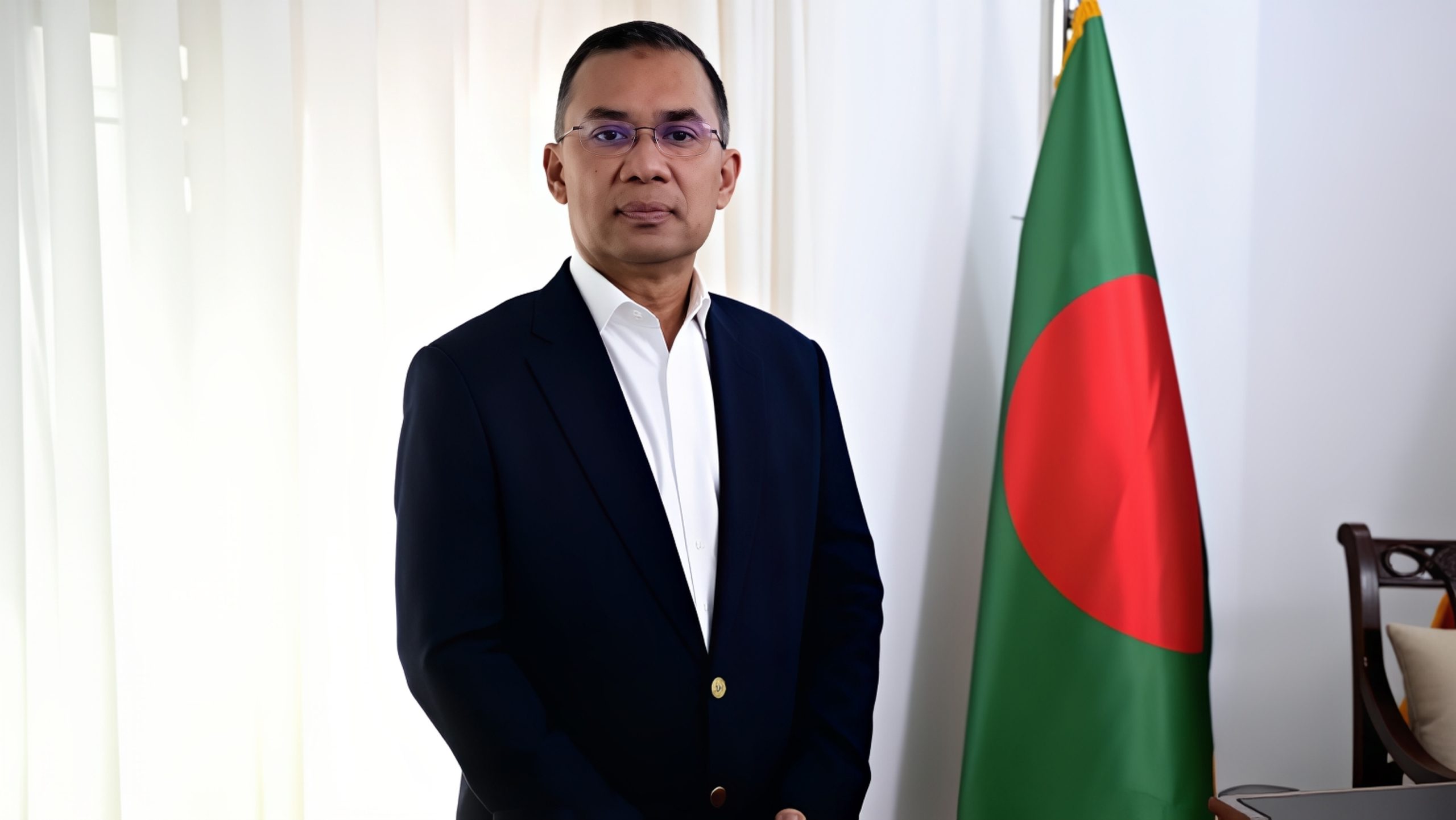 Bangladesh Prime Minister Tarique Rahman is scheduled to leave Dhaka on Sunday night for a four-day official visit to Japan at the invitation of Japanese Prime Minister Sanae Takaichi, with discussions expected to focus on boosting bilateral ties, attracting Japanese investment, expanding trade and economic cooperation, and reducing the costs and interest rates of loans for major infrastructure projects, including Dhaka’s metro rail.
During his stay from October 26 to 29, Rahman is expected to hold high-level talks with Takaichi, meet Japanese business leaders and visit major industrial and energy facilities.
According to the official itinerary, the Biman Bangladesh Airlines flight carrying the prime minister is scheduled to arrive at Tokyo’s Narita International Airport at 9:25 a.m. local time on Monday. Japanese State Minister for Foreign Affairs Yasutaka Nakasone is expected to welcome him at the airport. Rahman will stay at Tokyo’s Imperial Hotel.
High-Level Meetings and Bilateral Talks
On Monday afternoon, Rahman is scheduled to meet Taro Aso, president of the Japan-Bangladesh Parliamentary Friendship League. Senior members of the league and Japan’s Minister of Land, Infrastructure, Transport and Tourism, Tatsunori Ibayashi, are also expected to attend.
The prime minister will separately meet Masumi Kakinoki, chairman of the Japan-Bangladesh Committee for Commercial and Economic Cooperation, and Dr Akihiko Tanaka, president of the Japan International Cooperation Agency (JICA).
In the evening, he will attend a dinner hosted by Yohei Sasakawa, honorary chairman of the Nippon Foundation and the Sasakawa Peace Foundation.
The main summit between Rahman and Takaichi is scheduled for October 27 at the Japanese prime minister’s office. Rahman will receive a ceremonial guard of honour before the meeting, and the two leaders are expected to hold a joint press conference afterwards. He will also attend a luncheon hosted by Takaichi.
Their discussions are expected to cover strengthening the strategic partnership, expanding trade and investment, infrastructure development, development assistance, and regional and international issues of mutual interest.
A key priority for Bangladesh will be reducing the cost of Dhaka’s metro rail project and lowering interest rates on loans obtained from Japan. The two sides are also expected to discuss accelerating other infrastructure projects and ensuring that they are completed on schedule.
Visits to Energy and Logistics Facilities
On the same day, Rahman is scheduled to visit JERA’s onshore liquefied natural gas (LNG) terminal and power plant in Futtsu, Chiba Prefecture. He will also visit the Nittsu Logistics Hub in Ichikawa.
On October 28, the prime minister will meet Kazuhiko Amakawa, governor of the Japan Bank for International Cooperation (JBIC).
He is also scheduled to visit the headquarters of Japanese clothing retailer Uniqlo and meet its president and members of the board.
Other meetings will include discussions with Susumu Kataoka, president of the Japan External Trade Organization (JETRO), followed by a luncheon hosted by Kataoka. Rahman is also expected to meet representatives of Mitsui & Co., Sumitomo Corporation and JERA separately.
Two group meetings are planned with representatives from 14 additional prominent Japanese companies.
The discussions are expected to explore opportunities for Japanese companies to increase investment in Bangladesh, establish factories, create jobs, support industrialization, transfer technology and contribute to workforce development.
In the afternoon, Rahman will deliver the keynote address at the Bangladesh-Japan Economic Forum at JETRO’s Tokyo headquarters. The forum will focus on strengthening business connections between the two countries, expanding trade and identifying new investment opportunities.
In the evening, he will attend an event at the Bangladesh Embassy with signatories to memorandums of understanding on education and human resource development. He will later join a community gathering with expatriate Bangladeshis at Hotel New Otani in Tokyo.
Toyota Visit Before Return to Dhaka
On the final day of the visit, October 29, Rahman is scheduled to travel from Tokyo to Nagoya by Shinkansen, Japan’s bullet train.
In Nagoya, he will visit Toyota Motor Corporation’s Motomachi plant and attend a luncheon hosted by Toshimitsu Imai, president and chief executive officer of Toyota Tsusho Corporation. He is also scheduled to visit the Toyota Commemorative Museum of Industry and Technology.
The prime minister will then return to Tokyo by bullet train and depart for Dhaka from Narita International Airport on a Biman Bangladesh Airlines flight. He is expected to arrive in Dhaka at 10:35 p.m. on Thursday.
Eight Cooperation Agreements Under Discussion
The governments of Bangladesh and Japan formally announced the visit on Tuesday.
Foreign Secretary Asad Alam Siam said discussions would cover expanded cooperation in agriculture, fisheries, human resource development and skills training, civil aviation, marine environmental protection, and modernization of local government systems.
Around eight memorandums of understanding are under discussion across these areas, according to the Foreign Ministry, with three or four potentially being signed during the visit. Additional agreements related to education and human resource development are also planned for exchange.
Siam said Bangladesh would seek detailed discussions on Japanese support for factory establishment, job creation and workforce development in line with the country’s priorities.
Other potential areas for expanded cooperation include renewable energy, environmental protection, science, technology, digital innovation and research.
The signing of an Economic Partnership Agreement (EPA) between Bangladesh and Japan in February has created new opportunities to expand trade and investment. During the visit, the two sides are also expected to discuss improving access for Bangladeshi products to the Japanese market, removing investment barriers and strengthening business confidence.
Japan’s Longstanding Role in Bangladesh’s Development
Japan has been one of Bangladesh’s major development partners since independence. It has supported important infrastructure and connectivity projects, including Dhaka’s metro rail, the third terminal at Hazrat Shahjalal International Airport and the Matarbari deep-sea port.
High-level visits have played a significant role in strengthening relations between the two countries. Former President Ziaur Rahman visited Japan in 1978 and 1980, while former Prime Minister Khaleda Zia travelled to the country in 1994 and 2005.
The upcoming visit is also expected to provide an opportunity to discuss a sustainable and peaceful resolution to the Rohingya crisis, regional and international peace and stability, and cooperation in addressing energy challenges.
Rahman will be accompanied by his wife, Dr Zubaida Rahman; Finance Minister Amir Khasru Mahmud Chowdhury; Finance and Planning Adviser Rashed Al Mahmud Titumir; State Minister for Foreign Affairs Humayun Kabir; State Minister for Power, Energy and Mineral Resources Anindya Islam Amit; Adviser on Posts, Telecommunications and Information Technology Rehan Asif Asad; BIDA Chairman Ashik Chowdhury; and the prime minister’s special assistant, Mohammad Shakirul Islam Khan. Relevant government officials and media representatives will also join the delegation.
Bangladesh Prepares $13.8 Billion Investment Proposal
Separately, Bangladesh is preparing a proposed $13.8 billion investment and cooperation package with Japan for 2026–2031, targeting 12 priority sectors to expand investment, trade and employment. Some of the proposed initiatives fall under the Bay of Bengal Industrial Growth Belt (BIG-B) initiative.
The proposal includes $3.45 billion for transport and urban connectivity, $3.14 billion for integrated industrial, port and commercial hubs, including Matarbari, $1.57 billion for manufacturing and electronics, $1.26 billion for energy and green transformation, and $940 million for climate-resilient infrastructure.
A further $3.45 billion is proposed for other sectors, including agriculture, pharmaceuticals, information and communication technology, the blue economy, tourism, and small and medium-sized enterprises.
The visit is expected to provide an important opportunity for Bangladesh to present its investment priorities and seek stronger Japanese participation in infrastructure, manufacturing, energy and other areas of economic development.
Publisher: Mustakim Nibir
Copyright © 2026 The Times OF Dhaka. All rights reserved. প্রিন্ট করুন
 সেভ করুন