Dhaka 12:20 pm, Thursday, 2 April 2026

Road Construction Cartel Broken After Years, Says Dr. Sheikh Moinuddin

Reporter Name
  • Update Time : 01:01:00 pm, Tuesday, 13 January 2026
  • / 147 Time View

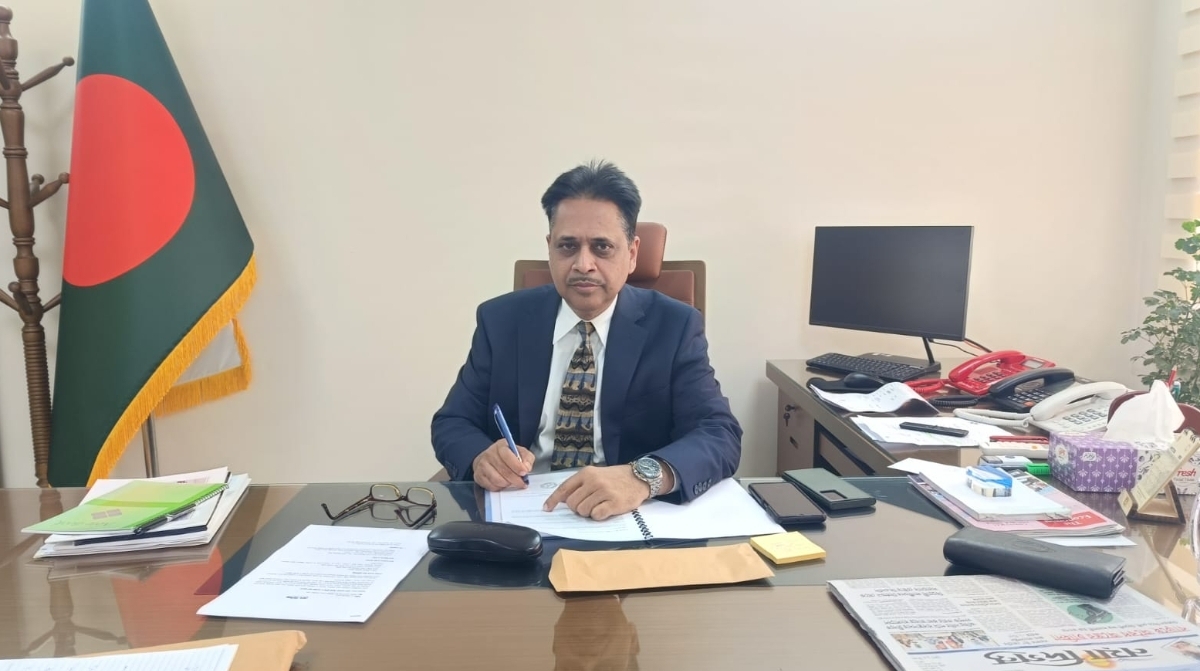
Dr. Sheikh Moinuddin, Special Assistant to the Chief Adviser in charge of the Ministry of Road Transport and Bridges, has said that the long-standing cartel system in road construction contracting under the Roads and Highways Department has been dismantled, allowing genuine contractors to participate in government development projects.

He made the remarks in an exclusive interview with Bangladesh Sangbad Sangstha (BSS) at his office in the Secretariat on Monday.

Dr. Moinuddin said that over the past 17 years, a small group of contracting firms had dominated nearly 75 to 80 percent of road development projects across the country. “That monopoly no longer exists,” he said, adding that reforms have been introduced to ensure fair competition.

According to him, a new contracting mechanism has been implemented to prevent any bidder from being certain of securing a project in advance. The system, which came into effect on November 28, includes a clear indexing process that determines work orders regardless of how large a company may be. As a result, no single firm can now obtain multiple projects exclusively.

Alongside reforms in road contracting, Dr. Moinuddin said the government is also bringing toll collection from bridges and ferry crossings nationwide under a structured and transparent system. Automated machines will be installed at all toll plazas, and vehicles will be equipped with software-enabled SIMs. Toll charges will be deducted automatically from the vehicle owner’s mobile financial service account or online bank account as the vehicle passes through. Vehicles will stop automatically if insufficient funds are available.

He acknowledged that in the past, most projects were concentrated in the hands of a few contractors. “We are now closely monitoring workload distribution,” he said, explaining that firms already handling excessive projects are being excluded from new allocations to ensure better progress and quality. “Every contractor has a capacity limit. When that is exceeded, work quality and speed suffer.”

He said the revised approach benefits the sector in two ways: it diversifies participation in the construction industry and improves overall project implementation by preventing delays caused by overburdened contractors.

Dr. Moinuddin noted that large infrastructure projects still require experienced and capable firms, as smaller companies may not yet have the technical or financial strength. However, the government is encouraging smaller contractors to take on minor projects so they can gradually build capacity and eventually qualify for larger works.

He also acknowledged challenges facing the sector, especially after August 5, when the construction industry experienced a significant downturn. In some areas, contractors have disappeared, while in others, heavy loan defaults mean that payments are seized by banks immediately after disbursement. Despite these obstacles, officials are working to keep ongoing projects moving.

Land acquisition delays have also slowed progress on some projects, he added, though many others have already resumed.

Dr. Moinuddin said the government has worked to stabilize the construction sector after recent disruptions and expressed hope that future administrations will continue these reforms to restore discipline and transparency in the industry.

Tag :

Please Share This Post in Your Social Media

Road Construction Cartel Broken After Years, Says Dr. Sheikh Moinuddin

Update Time : 01:01:00 pm, Tuesday, 13 January 2026

Dr. Sheikh Moinuddin, Special Assistant to the Chief Adviser in charge of the Ministry of Road Transport and Bridges, has said that the long-standing cartel system in road construction contracting under the Roads and Highways Department has been dismantled, allowing genuine contractors to participate in government development projects.

He made the remarks in an exclusive interview with Bangladesh Sangbad Sangstha (BSS) at his office in the Secretariat on Monday.

Dr. Moinuddin said that over the past 17 years, a small group of contracting firms had dominated nearly 75 to 80 percent of road development projects across the country. “That monopoly no longer exists,” he said, adding that reforms have been introduced to ensure fair competition.

According to him, a new contracting mechanism has been implemented to prevent any bidder from being certain of securing a project in advance. The system, which came into effect on November 28, includes a clear indexing process that determines work orders regardless of how large a company may be. As a result, no single firm can now obtain multiple projects exclusively.

Alongside reforms in road contracting, Dr. Moinuddin said the government is also bringing toll collection from bridges and ferry crossings nationwide under a structured and transparent system. Automated machines will be installed at all toll plazas, and vehicles will be equipped with software-enabled SIMs. Toll charges will be deducted automatically from the vehicle owner’s mobile financial service account or online bank account as the vehicle passes through. Vehicles will stop automatically if insufficient funds are available.

He acknowledged that in the past, most projects were concentrated in the hands of a few contractors. “We are now closely monitoring workload distribution,” he said, explaining that firms already handling excessive projects are being excluded from new allocations to ensure better progress and quality. “Every contractor has a capacity limit. When that is exceeded, work quality and speed suffer.”

He said the revised approach benefits the sector in two ways: it diversifies participation in the construction industry and improves overall project implementation by preventing delays caused by overburdened contractors.

Dr. Moinuddin noted that large infrastructure projects still require experienced and capable firms, as smaller companies may not yet have the technical or financial strength. However, the government is encouraging smaller contractors to take on minor projects so they can gradually build capacity and eventually qualify for larger works.

He also acknowledged challenges facing the sector, especially after August 5, when the construction industry experienced a significant downturn. In some areas, contractors have disappeared, while in others, heavy loan defaults mean that payments are seized by banks immediately after disbursement. Despite these obstacles, officials are working to keep ongoing projects moving.

Land acquisition delays have also slowed progress on some projects, he added, though many others have already resumed.

Dr. Moinuddin said the government has worked to stabilize the construction sector after recent disruptions and expressed hope that future administrations will continue these reforms to restore discipline and transparency in the industry.