
Dhaka’s New Generation Learns the Art of Buying Fish
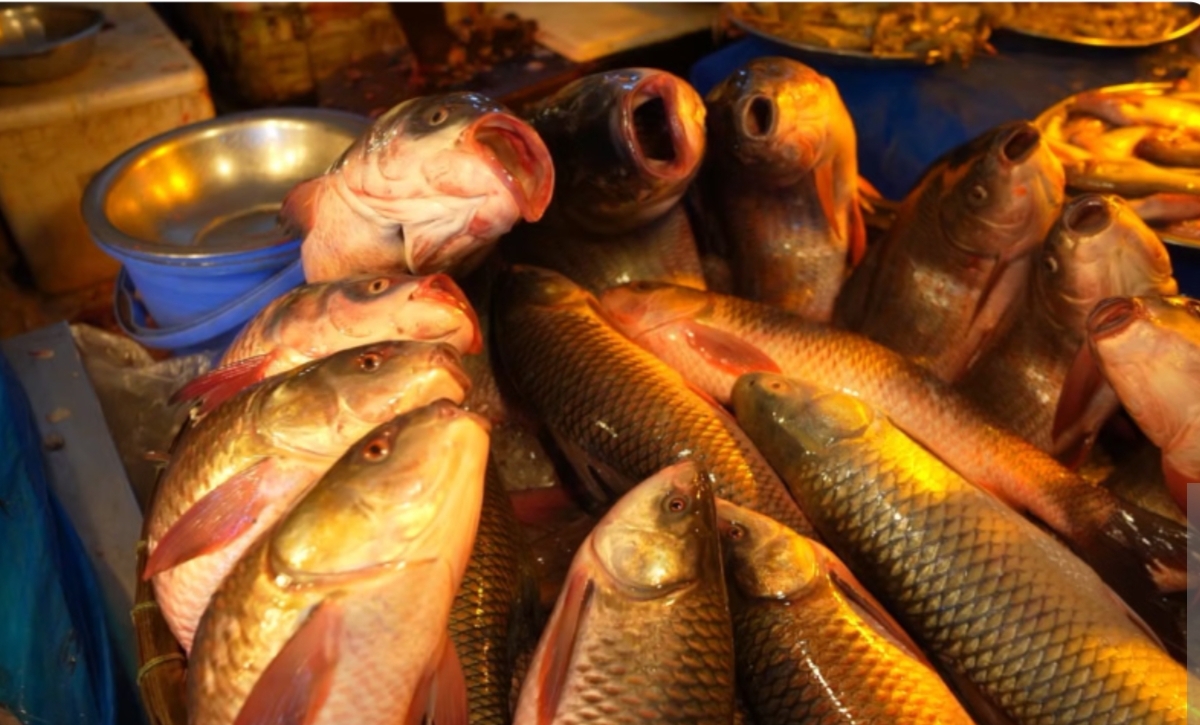 A Millennial’s Journey into Dhaka’s Fish Markets
It all began with the timeless complaint from our elders: “Young people today wouldn’t recognize a fresh fish if it jumped into their bag.” Apparently, the city-raised, screen-obsessed generation like us is doomed when it comes to navigating a good old-fashioned wet market.
Well, challenge accepted.
My grand plan was to rise before dawn—say, 4 a.m.—and reach Karwan Bazar right as the fish trucks arrived. But let’s be real: I’m a millennial, not a superhero. So instead, I set my alarm for a more reasonable hour and found myself at Mohammadpur’s Town Hall Bazar around noon.
Walking in felt like stepping into a universe made of scales, salt, and chaos. Every stall buzzed with activity, voices collided in midair, and the ground shimmered with water (and who knows what else). The smell? A cocktail of brine, metal, and determination.
My attempts to ask how to spot a good fish were met with a mix of dismissive waves and blunt replies—“If you don’t know, that’s not my problem.” Fair enough. You don’t visit a Dhaka bazar expecting a customer service desk.
And then I met my unexpected mentor — Munir bhai, stall number 17. Over a cup of tea from a nearby stall, he shared his wisdom: “The best time to buy is around 9 a.m. That’s when the freshest fish hit the stalls. Wait too long, and you’ll be left with leftovers.”
He explained that pure river fish are the top tier, followed by semi-farmed fish, and finally fully farmed ones, which are the most affordable. For hilsa, he said, “Check the neck — firm and wide is good. And the eyes — clear and bright, not dull.”
What I Learned Along the Way
1. Freshness is everything.
Your nose will tell you first. A fresh fish smells clean and mild — not swampy or sour. Clear eyes, shiny skin, firm flesh that bounces back when pressed, and reddish-pink gills — those are the marks of quality.
And yes, even the “naabhi” (fish belly end) matters. A clean one means it’s fresh; a darkened one means it’s past its prime.
2. Seasons and prices go hand in hand.
Hilsa, especially, plays hard to get. Off-season fish are pricier and often fake — cheaper species dressed up as the real deal. So, patience pays off. Wait for the season, and you’ll get the true taste.
3. Trust your seller.
Dhaka’s fish trade can be… inventive. Reputable sellers matter. Ask regular shoppers which stalls are reliable, and stick with the ones who let you inspect their catch without hesitation.
4. Handle with care.
Your fish’s journey doesn’t end at the bazar. Keep it chilled (ice helps), clean it quickly, and don’t leave it out in Dhaka’s heat. Freeze only if you must — time kills freshness.
5. Online vs. bazar experience.
When I asked Munir bhai about online fish delivery, he shrugged:
“Sure, it’s convenient. But you lose the skill. You don’t learn how to read a fish — its smell, its color, its life.”
And he’s right. Apps can bring fish to your door, but they can’t teach instinct — the feeling of standing shoulder to shoulder with strangers, negotiating, observing, learning. That’s something no algorithm can replace.
---
As I left the market, fish in hand, I felt oddly triumphant. I’d bargained (badly), learned a few tricks, and managed not to slip on the wet floor. To others, it might have looked like a mundane errand — but to me, it was a small reconnection with something real, something cultural.
Publisher: Mustakim Nibir
Copyright © 2026 The Times OF Dhaka. All rights reserved. প্রিন্ট করুন
 সেভ করুন