
Victory Gave Birth to an Independent Bangladesh
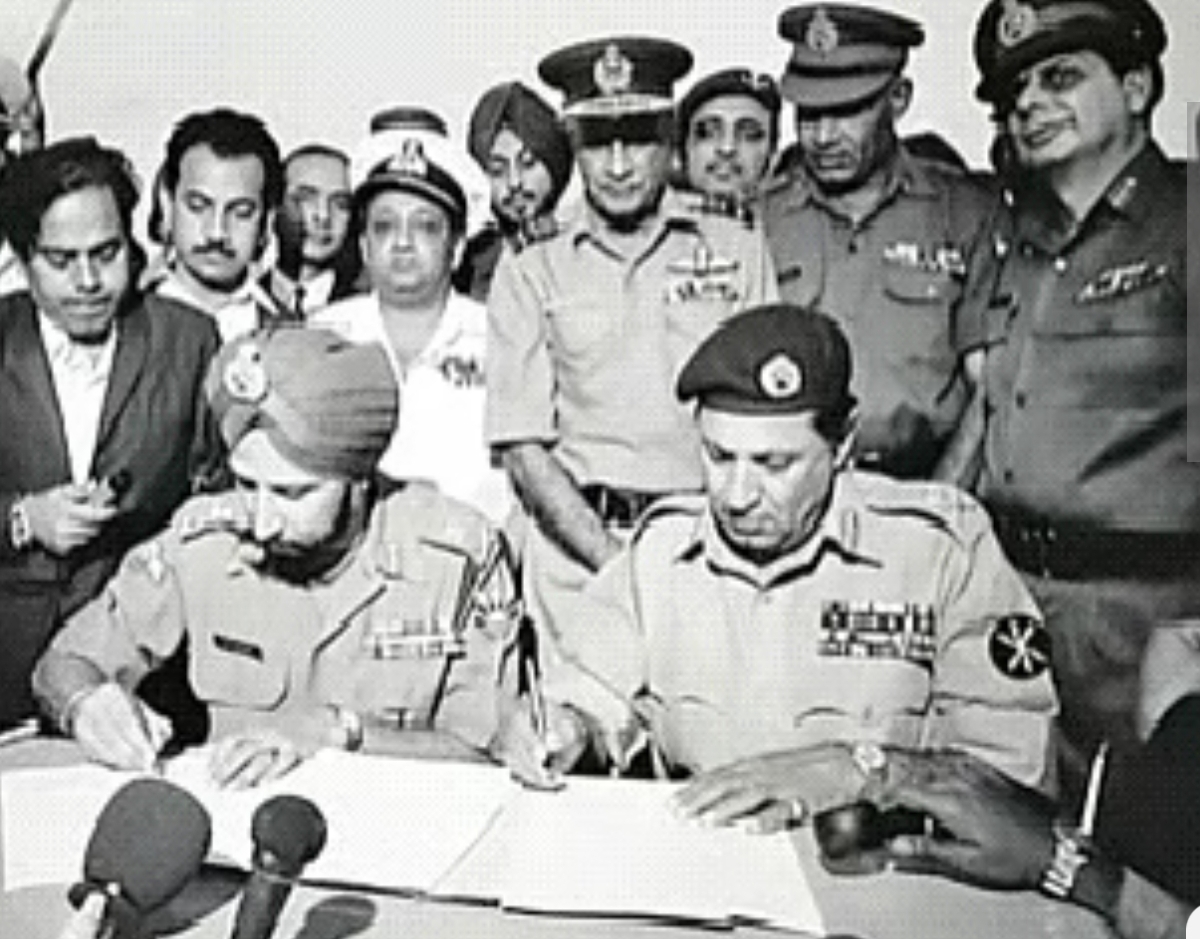 Clear signs of Pakistan’s inevitable defeat had begun to emerge as early as November 1971. Under relentless attacks by the freedom fighters, Pakistani occupation forces were steadily pushed back from multiple fronts. Their morale collapsed. Lieutenant General A. A. K. Niazi tried to boost the spirits of his demoralized troops with empty assurances—claims that Chinese assistance was imminent or that the US Seventh Fleet was heading toward the Bay of Bengal. These claims were nothing more than the last flicker of false hope, and they came to nothing.
On December 3, 1971, Pakistan launched air strikes against India. In reality, this marked the final extinguishing of its remaining hopes. China did not enter the war, and the US Seventh Fleet did not advance toward the Bay of Bengal.
Following Pakistan’s attack, India formally declared war and immediately established a joint command with the Bangladesh Liberation Forces. One by one, key areas including Jessore, Khulna, and Noakhali came under joint control. The resistance capacity of the Pakistani army collapsed rapidly. In desperation, they sought a ceasefire and even sent a proposal to India through the US Embassy in Dhaka, but the attempt failed. Within just 13 days of the war’s start on December 3, Pakistan’s forces suffered total defeat.
Inside Dhaka, senior Pakistani military officials appeared deflated and disoriented, plagued by anxiety and poor coordination. They waited helplessly for the inevitable. That moment arrived swiftly. By December 14, joint forces had reached the outskirts of the capital. On the morning of December 16, General Niazi was in a meeting with senior officers when he received a letter from Indian Major General Gandharv Singh Nagra. The letter stated that Nagra was waiting near Mirpur Bridge and asked Niazi to send a representative to receive him.
Present at the meeting were Major General Rao Farman Ali, Major General Jamshed, Rear Admiral Sharif, Brigadier Bakr Siddiqi, and army spokesperson Siddiq Salik. They were stunned at how Indian forces had reached so close to Dhaka so early in the day. By around 8:00am, Major General Nagra’s military vehicle had already entered Mirpur.
Rao Farman Ali asked Niazi whether the letter contained a ceasefire proposal. Niazi silently shook his head. He then looked at General Jamshed, who also signaled negatively. Rao Farman Ali and Admiral Sharif jointly advised Niazi to comply with Nagra’s instruction. Acting on orders, Jamshed rushed to receive the Indian general. Siddiq Salik later wrote that with only a small contingent of troops and great confidence, the Indian general entered Dhaka—at that moment, the city had effectively fallen.
What remained was formality. By midday, Lieutenant General J. F. R. Jacob of India’s Eastern Command arrived in Dhaka with the surrender documents. Some Pakistani officials preferred a private surrender and advised Niazi against a public ceremony, but he ignored their counsel. Later in the afternoon, Eastern Command chief General Jagjit Singh Aurora landed at the airport with his wife, where Niazi received him.
By then, freedom fighters and civilians had learned that victory was certain. Thousands gathered at the Racecourse Ground (now Suhrawardy Udyan) to witness the surrender. As dusk approached, the once-arrogant General Niazi arrived with his head lowered. A simple table borrowed from the Dhaka Club was placed for the signing. On that ordinary table, an extraordinary document was signed. Niazi handed over his pistol to General Aurora and removed his rank insignia. Bangladesh was represented at the ceremony by Group Captain A. K. Khandker, Deputy Chief of the Bangladesh Forces.
Recounting the atmosphere in Dhaka that day, Mofidul Hoque—trustee of the Liberation War Museum and noted writer—later recalled that although victory had seemed likely for days, uncertainty lingered until the final moment. Many feared the Pakistanis would stage a brutal last stand in Dhaka. Even on the morning of December 16, artillery fire could still be heard in parts of the city. Pakistani generals continued their threats. However, once Indian aircraft began dropping leaflets urging surrender, it became clear the war was ending—though sporadic shootings and killings still occurred that day.
From around 1:30pm, allied military vehicles entered Dhaka. Crowds poured into the streets chanting “Joy Bangla,” embracing soldiers of the Liberation Forces and their allies. Fear lingered due to the sounds of gunfire, and the city remained relatively quiet. By late afternoon, once surrender was confirmed, anxiety gave way to relief. Many rushed to the Racecourse to witness history, while others searched for relatives. As winter evening descended, Dhaka welcomed freedom.
After nine months of brutal struggle, immense bloodshed, and countless sacrifices, victory was achieved. From that victory emerged a new, independent nation—Bangladesh.
Publisher: Mustakim Nibir
Copyright © 2026 The Times OF Dhaka. All rights reserved. প্রিন্ট করুন
 সেভ করুন