Enforced Disappearance Victims Question What the Interim Government Delivered

- Update Time : 07:09:03 pm, Thursday, 5 February 2026
- / 12 Time View

With the 13th national parliamentary election scheduled for February 12, the current interim government is preparing to hand over power. As the administration formed after the fall of Sheikh Hasina’s government nears its exit, families of victims of enforced disappearances have asked what concrete steps it has taken for those affected during the previous Awami League rule.
In response, a government adviser said the interim administration has initiated judicial proceedings related to enforced disappearances and laid the groundwork for a strong legal and administrative framework based on a policy of zero tolerance. He said the measures include provisions for prosecution, compensation, and rehabilitation of victims’ families.
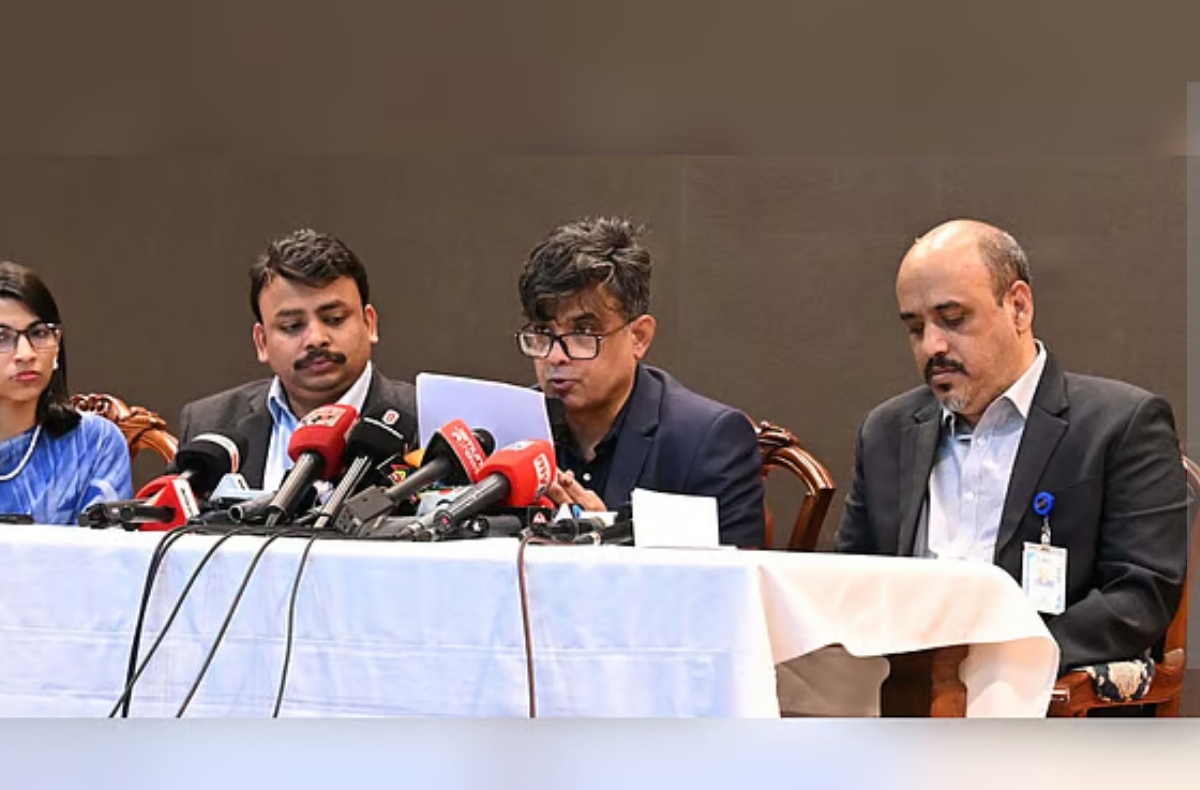
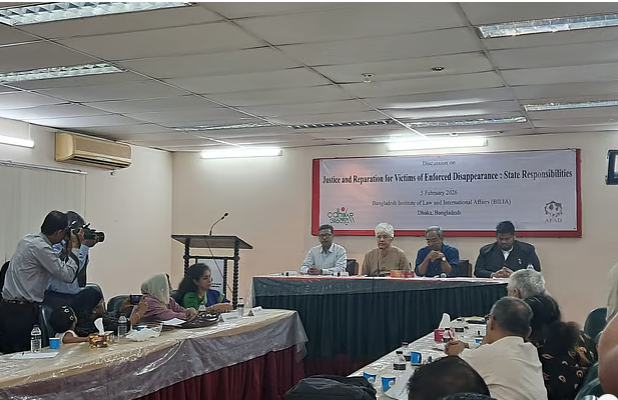
On Thursday afternoon, members of families of disappeared persons and individuals who later returned after being disappeared took part in a “lobby meeting” with two advisers of the interim government. Law Adviser Asif Nazrul joined the meeting by phone, while Industries and Housing Adviser Adilur Rahman Khan attended in person. The meeting, organized by the human rights organization Odhikar, was held at the auditorium of the Bangladesh Institute of Law and International Affairs (BILIA) in Dhanmondi.
During the discussion, participants asked what actions the interim government had taken specifically for families affected by enforced disappearances. Speaking by phone, Asif Nazrul outlined various initiatives undertaken by the government. After his remarks, Jasmine, the daughter of Habib, who was disappeared in Bagerhat in 2011, spoke with him directly. At one point, the adviser told her that after leaving office, he and others would continue supporting the families and remain by their side as members of civil society.
Later, Nasrin Jahan Smriti, the wife of BNP leader Ismail Hossain Baten, who was disappeared in 2019, questioned how alleged perpetrators were able to leave the country despite visa restrictions and why officials accused of involvement in disappearances were still serving in their posts and receiving promotions. In response, Asif Nazrul said he could not answer on behalf of other ministries but acknowledged the legitimacy of the concerns. He added that while the government had tried its best to ensure justice, the struggle would continue outside government, alongside the victims.
Nasrin Jahan also questioned how individuals accused of serious crimes were reportedly securing bail by paying large sums of money. The adviser said he was not aware of such transactions but noted that the government had faced criticism for being too strict in granting bail. He added that in many cases bail was granted by the High Court, which operates independently of the Law Ministry.
Families of the disappeared also shared their frustrations and demands. Amena Akter, the wife of Firoz Khan, a BNP activist from Barishal who was disappeared along with his brother in 2012, said the interim government had failed to check on the condition of affected families. Overcome with emotion, she asked what the government had truly done for them and urged it to leave behind measures that would ensure future governments stand by such families.
Several individuals who survived enforced disappearance also spoke at the meeting, including former diplomat and BILIA director M Maruf Zaman, teachers Iqbal Chowdhury and Rahmat Ullah, and retired Colonel Hasinur Rahman. They described the severe physical, psychological, and financial toll of enforced disappearance and demanded proper compensation, rehabilitation, and accountability for those responsible.
Speaking later, Law Adviser Asif Nazrul said Bangladesh has become a state party to the international convention on enforced disappearances. He noted that a commission led by Justice Moinul Islam Chowdhury had been formed, and based on its findings, trials related to enforced disappearances have already begun at the International Crimes Tribunal (ICT).
He also highlighted the enactment of the Enforced Disappearance Prevention and Remedies Ordinance, as well as the National Human Rights Commission Ordinance 2025, aimed at strengthening the commission in line with international standards. In addition, Bangladesh has signed the international convention against torture, under which a national preventive mechanism has been established.
Asif Nazrul said he expected the National Human Rights Commission to be formed within days and described it as potentially the strongest such body in the country’s history. He emphasized that the interim government had established a firm zero-tolerance foundation against enforced disappearances and expressed hope that future governments would continue these efforts. He added that once out of office, the advisers would continue advocating against enforced disappearances from civil society.
In his closing remarks, Adviser Adilur Rahman Khan, who is also the founder of Odhikar, said the families of the disappeared were deeply close to him. He noted that the idea of a trust fund for affected families had been raised and said the future Human Rights Commission would likely consider it.