Dhaka 12:21 pm, Monday, 6 April 2026

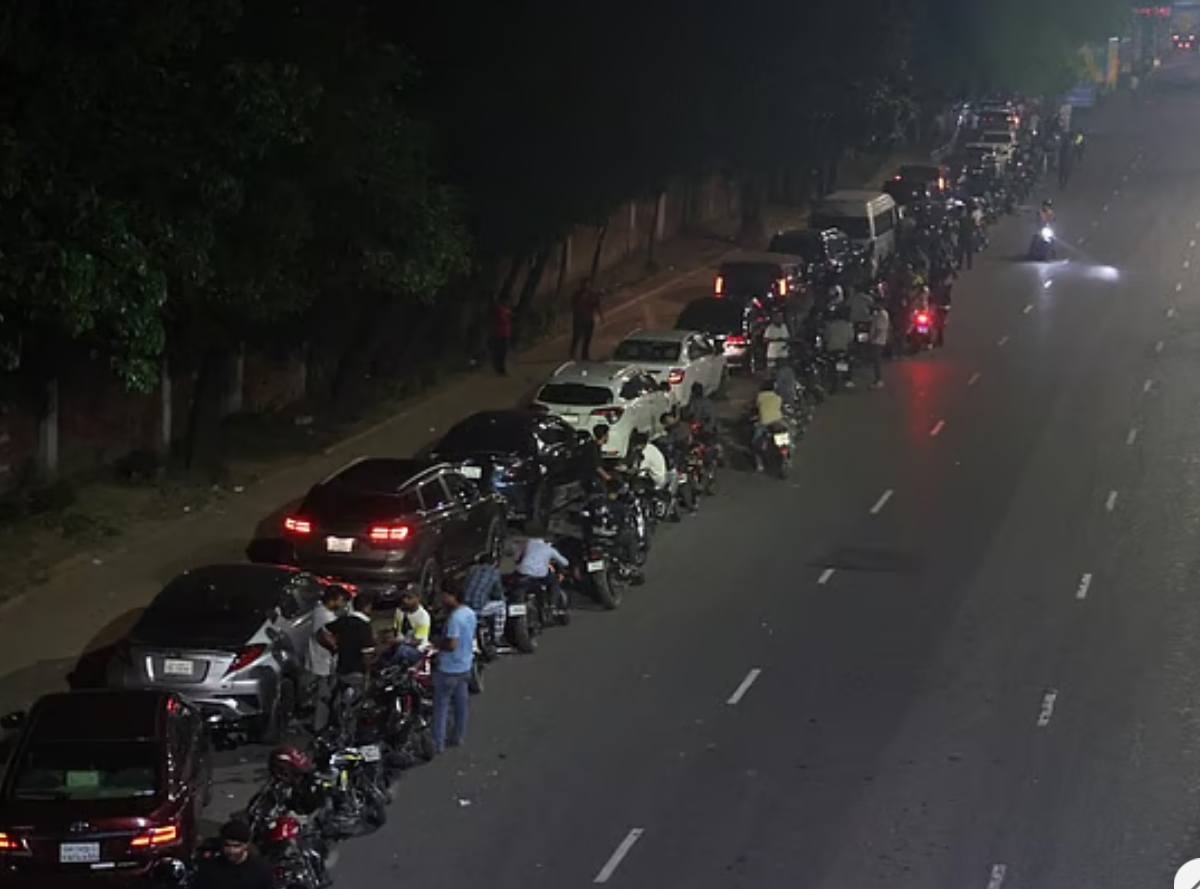
A Single Night, One Fuel Station, Hundreds Left Waiting Without Sleep

Staff Correspondent:
  • Update Time : 10:17:45 pm, Saturday, 4 April 2026
  • / 31 Time View

Supply vs Panic


Masud Kabir, an assistant sales supervisor at the pump, said their fuel supply has dropped significantly. Previously, they received around 50,000–52,000 liters per day, but now it has fallen to about 37,000–40,000 liters. He explained that due to technical requirements, they must always keep around 1,500–2,000 liters in reserve. However, public anxiety is growing—people with half-full tanks are also lining up, fearing shortages.


Staff at the station say a form of “panic buying” has taken hold. Customers are offering various urgent reasons—some claim they need to visit sick relatives in villages, while others mention emergency deliveries.


To manage the chaos, the station authorities have introduced three separate queues—for motorcycles, private cars, and trucks. Even with this system, handling the crowd has become extremely difficult.


With people waiting for hours, makeshift food stalls have sprung up nearby. Vendors are selling snacks like puffed rice mixes, samosas, and bread with vegetables. Tea and cigarette sellers are also busy serving customers late into the night.


Overcrowded Restrooms


A striking scene can be seen near the pump, located beside the Prime Minister’s Office. Due to hygiene concerns, temporary mobile toilets have been installed. However, the crowd there is so large that it resembles a public gathering.


Drivers in Distress


Shaheen Khan, an Uber driver from Demra Staff Quarters, said he had already waited three hours at another pump before arriving here, only to find the fuel had run out there. He suspects that pump owners may be creating an artificial shortage through syndication. Frustrated, he said, “Even if fuel prices were increased, at least we wouldn’t have to suffer like this. Now we’re losing both time and income.”


A similar situation was observed at another filling station in Asad Gate. Shamim, originally from Jhenaidah and currently living in Middle Badda, said he had waited from 9:00 PM until 3:30 AM just two days earlier at another pump. Now, he was again standing in line at 1:30 AM. He added that the constant worry about fuel has become exhausting for ordinary people.


Controlled Fuel Distribution


To balance demand and supply, many pumps have imposed limits. At this station, private cars are allowed fuel worth up to 2,400 taka, motorcycles up to 600 taka, and large cargo trucks up to 100 liters.


After finally getting fuel, a private car owner named Tahmidul Islam expressed his frustration: “The hardship we’re facing just to get fuel is beyond imagination. Newspapers say there is enough supply, but we’re standing here for hours. Who are we supposed to believe?”


Waiting for Relief


Even at 6:30 AM on Sunday morning, the lines had not shortened much, as new customers kept arriving. Jamil Khan, a truck driver transporting garments to Chattogram, said he had lost sleep while waiting in line. “On top of all the usual road challenges, this fuel crisis has made things worse. If I fail to deliver goods on time, I’ll face consequences from my employer,” he said.


Most fuel stations in the capital are now closed at night, leaving only a few open. As a result, crowds continue to grow at those locations. Both ordinary citizens and transport workers are hoping for a return to normal supply conditions.


As dawn breaks over the Trust Filling Station at Bijoy Sarani, hundreds of people like Kamrul Hasan and Jamil Khan are still waiting in line, hoping to secure fuel for the day ahead.

Tag :

Please Share This Post in Your Social Media

A Single Night, One Fuel Station, Hundreds Left Waiting Without Sleep

Update Time : 10:17:45 pm, Saturday, 4 April 2026

Supply vs Panic


Masud Kabir, an assistant sales supervisor at the pump, said their fuel supply has dropped significantly. Previously, they received around 50,000–52,000 liters per day, but now it has fallen to about 37,000–40,000 liters. He explained that due to technical requirements, they must always keep around 1,500–2,000 liters in reserve. However, public anxiety is growing—people with half-full tanks are also lining up, fearing shortages.


Staff at the station say a form of “panic buying” has taken hold. Customers are offering various urgent reasons—some claim they need to visit sick relatives in villages, while others mention emergency deliveries.


To manage the chaos, the station authorities have introduced three separate queues—for motorcycles, private cars, and trucks. Even with this system, handling the crowd has become extremely difficult.


With people waiting for hours, makeshift food stalls have sprung up nearby. Vendors are selling snacks like puffed rice mixes, samosas, and bread with vegetables. Tea and cigarette sellers are also busy serving customers late into the night.


Overcrowded Restrooms


A striking scene can be seen near the pump, located beside the Prime Minister’s Office. Due to hygiene concerns, temporary mobile toilets have been installed. However, the crowd there is so large that it resembles a public gathering.


Drivers in Distress


Shaheen Khan, an Uber driver from Demra Staff Quarters, said he had already waited three hours at another pump before arriving here, only to find the fuel had run out there. He suspects that pump owners may be creating an artificial shortage through syndication. Frustrated, he said, “Even if fuel prices were increased, at least we wouldn’t have to suffer like this. Now we’re losing both time and income.”


A similar situation was observed at another filling station in Asad Gate. Shamim, originally from Jhenaidah and currently living in Middle Badda, said he had waited from 9:00 PM until 3:30 AM just two days earlier at another pump. Now, he was again standing in line at 1:30 AM. He added that the constant worry about fuel has become exhausting for ordinary people.


Controlled Fuel Distribution


To balance demand and supply, many pumps have imposed limits. At this station, private cars are allowed fuel worth up to 2,400 taka, motorcycles up to 600 taka, and large cargo trucks up to 100 liters.


After finally getting fuel, a private car owner named Tahmidul Islam expressed his frustration: “The hardship we’re facing just to get fuel is beyond imagination. Newspapers say there is enough supply, but we’re standing here for hours. Who are we supposed to believe?”


Waiting for Relief


Even at 6:30 AM on Sunday morning, the lines had not shortened much, as new customers kept arriving. Jamil Khan, a truck driver transporting garments to Chattogram, said he had lost sleep while waiting in line. “On top of all the usual road challenges, this fuel crisis has made things worse. If I fail to deliver goods on time, I’ll face consequences from my employer,” he said.


Most fuel stations in the capital are now closed at night, leaving only a few open. As a result, crowds continue to grow at those locations. Both ordinary citizens and transport workers are hoping for a return to normal supply conditions.


As dawn breaks over the Trust Filling Station at Bijoy Sarani, hundreds of people like Kamrul Hasan and Jamil Khan are still waiting in line, hoping to secure fuel for the day ahead.