
Merit, Not Politics, Now Determines CU Hall Seats
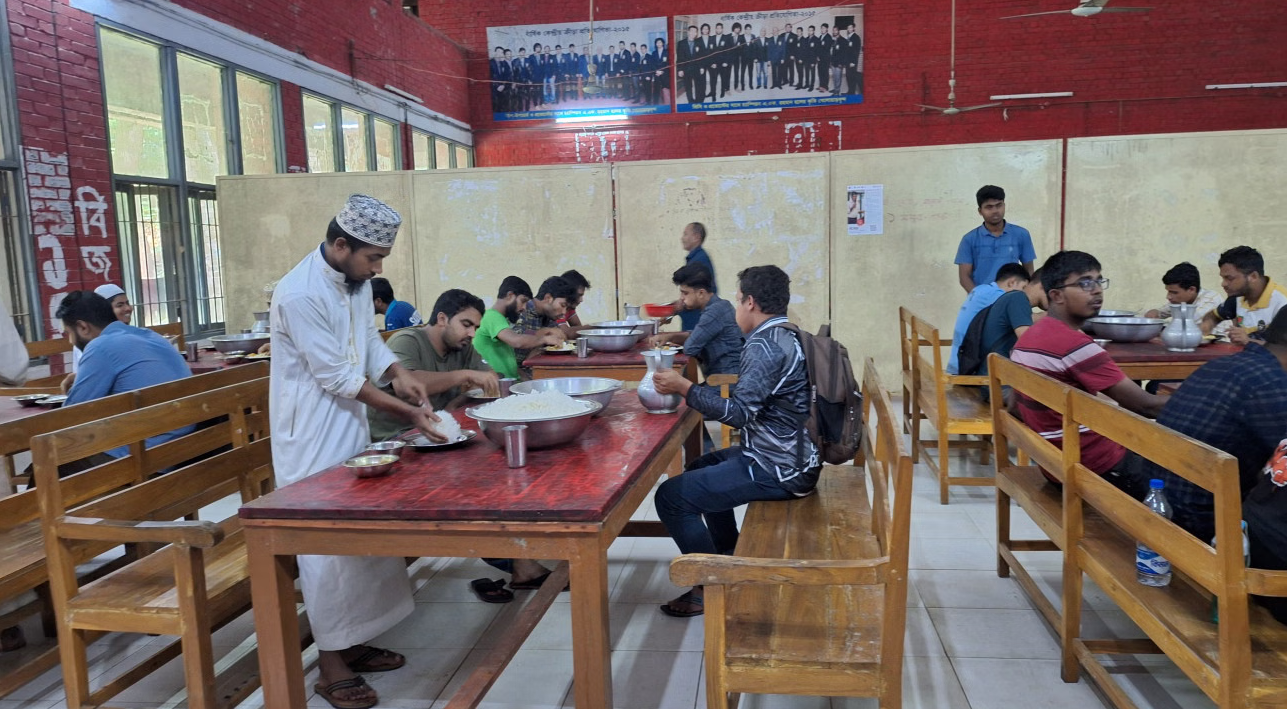
Chittagong University (CU) is seeing a shift toward more disciplined and merit-based residential hall management following political changes in 2024. For the first time in seven years, hall seats are being assigned based on academic merit rather than political connections.
Students report feeling less intimidation and more freedom in their residence halls, though issues with water supply, food quality, and hygiene continue. First-year students, in particular, have raised concerns over substandard meals and unhygienic conditions. Some halls have seen minor improvements, but many remain largely unchanged.
“The food is terrible every day, but we have no other option,” said Afrin Akter, a female resident. Similarly, Mirza Hasib from Atish Dipankar Hall noted, “Repeated complaints about food quality have gone nowhere.”
The dining manager of AF Rahman Hall explained that financial constraints are a key issue. “We provide meals for Tk 30, which makes it impossible to offer better food,” he said. Professor Dr. Fuad Hasan, provost of Shahjalal Hall, added that the administration focuses only on structural facilities like electricity, water, and furniture—not food services.
CU Pro-Vice Chancellor Professor Kamal Uddin said that previous political dominance made the halls “uninhabitable” and disrupted the study environment. “After the Chhatra League vacated the halls following the July uprising, seat allocations were reviewed, and drugs and locally made weapons were discovered in several halls,” he said.
With seats now assigned on merit, students report a more peaceful environment and a decline in past clashes. For years, most halls were controlled by the now-banned Bangladesh Chhatra League (BCL), with politically connected individuals—sometimes non-students—occupying seats, living rent-free, and consuming hall meals without payment. This created financial burdens for hall operations.
“I have run this canteen for many years. During the Chhatra League’s control, nearly Tk 300,000 in unpaid bills accumulated, which I still haven’t recovered,” said Ismail Hossain, owner of the Suhrawardy Hall canteen.
The university has taken further steps to improve living conditions. Three halls have been renamed: Bangabandhu Sheikh Mujibur Rahman, Sheikh Hasina, and Sheikh Fazilatunnesa Mujib Halls are now Shaheed Farhad Hossain Hall, Bijoy 24 Hall, and Nawab Faizunnesa Hall, respectively.
Residents report a calmer, less politically pressured atmosphere. “Students now move freely and live without interference,” said Alimul Shamim of Shaheed Farhad Hossain Hall. Sakila Akhter from Khaleda Zia Hall added, “Merit-based allocation has reduced chaos and favoritism.”
Provost Abdul Mannan confirmed that prior to 2017, halls were monopolized by the Chhatra League, leaving little room for merit-based allocation. The new administration has repaired reading rooms, washrooms, and furniture to create a more study-friendly environment.
CU currently has 15 residential halls—10 for male students and five for female students—with a total capacity of about 7,000, serving roughly 18% of its 30,000 students. Despite prioritizing first-year students, many still lack accommodation due to the limited number of seats.
Non-residential student Gias Uddin Roxy commented, “The accommodation crisis is severe. Few students get hall seats compared to other universities. Most departments only accommodate five or six students per session. Still, the environment is now peaceful.”
The university plans to begin construction of two new halls this year and renovate abandoned rooms in existing halls.
Publisher: Mustakim Nibir
Copyright © 2026 The Times OF Dhaka. All rights reserved. প্রিন্ট করুন
 সেভ করুন