
Reform Promises Fade, Students Demand Real Change at RU
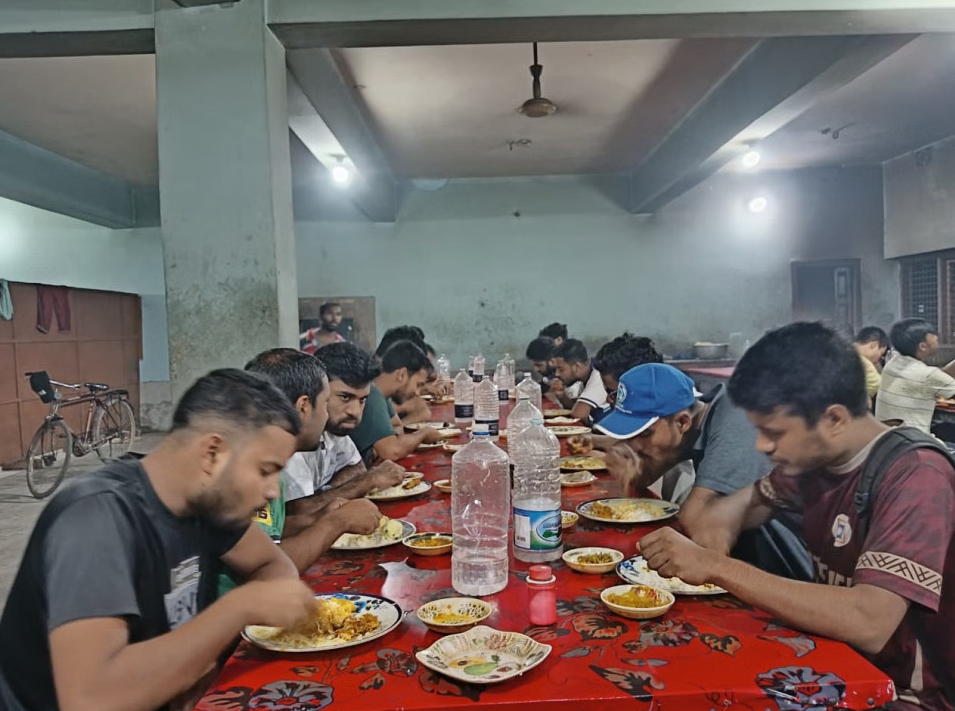
U Students Still Struggle with Food and Housing Despite Reform Pledges
After the July student uprising, Rajshahi University (RU) administrators vowed to overhaul hall management, with promises of fairer seat distribution and better dining services. But weeks later, many students say little has changed. While some transparency has been introduced in dormitory allocations, problems of overcrowding and poor food quality continue to dominate student life.
A severe shortage of space
RU enrolls around 32,000 students, yet its 17 halls can accommodate only about 10,000. As a result, nearly two-thirds are forced to live off campus. No new dormitory construction has been launched since the unrest, though two halls initiated by the previous administration have been completed.
University officials insist that seats are now awarded based strictly on merit. Still, students claim political pressure and influence remain in some cases.
Tisa Khatun, a third-year botany student staying in the Bangamata Fazilatunnesa Hall, said she has been stuck in a cramped "Gono Room" for over a year. “There is no ventilation, no personal space, and I even have to share my bed with another student,” she said.
Other students, however, report modest progress. Saida Akhter of Khaleda Zia Hall said the allocation process is now much fairer than before. Shariful Islam of Amir Ali Hall praised the end of seat trading and the inclusion of students from poorer backgrounds.
Some faculty members privately allege that vested interests discourage new dormitory projects. One professor claimed that certain teachers operate private hostels nearby and therefore benefit from keeping campus housing scarce. But Provost Council convener Prof. Zamirul Islam dismissed such allegations, stressing that since August 5 all seats are distributed using a transparent points-based system.
Dining woes unchanged
If accommodation shows mixed signs of improvement, dining remains the biggest frustration. Students complain meals are still unhygienic, repetitive, and lacking nutrition.
Women’s dormitories are especially vulnerable as they lack canteens, forcing residents to rely fully on hall dining. “At first, food quality improved when the provost supervised directly, but within days things went back to normal. Every meal has potatoes, three times a day. There is no variety, and even the hall shops don’t stock basic necessities,” said Asheka Jaima of Khaleda Zia Hall.
Shahidul Islam from Habibur Rahman Hall noted that a few new dishes were introduced but must be purchased separately. “Nothing has really changed in a meaningful way,” he said.
Dining managers blame skyrocketing prices. Shopon Ali of Sher-e-Bangla Hall explained that daily groceries, once Tk 8,000–10,000, now cost Tk 10,000–15,000. Yet meal prices remain fixed at Tk 30 for lunch and Tk 22 for dinner, with no subsidies to offset costs.
Shifting student habits
Nearby eateries highlight how campus politics used to dominate student life. Manik Hossain Babu, who runs a restaurant near Ziaur Rahman Hall, recalled how party-affiliated leaders once ate without paying. “During the Awami League era, leaders racked up Tk 8.5 lakh in unpaid bills. I even had to file a case. Now students pay properly,” he said.
Prof. Zamirul admitted dining standards were far from ideal but argued they are still better than before. He said the university supports dining indirectly by covering electricity and infrastructure costs. He also claimed that politically backed students who once ate for free no longer enjoy such privileges.
Ongoing uncertainty
For now, students concede that dormitory seat allocations have become more transparent. But the combination of overcrowded halls and poor-quality food still defines their daily experience. Many worry that unless reforms continue, the cycle of unmet promises will return.
Publisher: Mustakim Nibir
Copyright © 2026 The Times OF Dhaka. All rights reserved. প্রিন্ট করুন
 সেভ করুন