
Landslides force Tripura’s hill families to the edge of survival
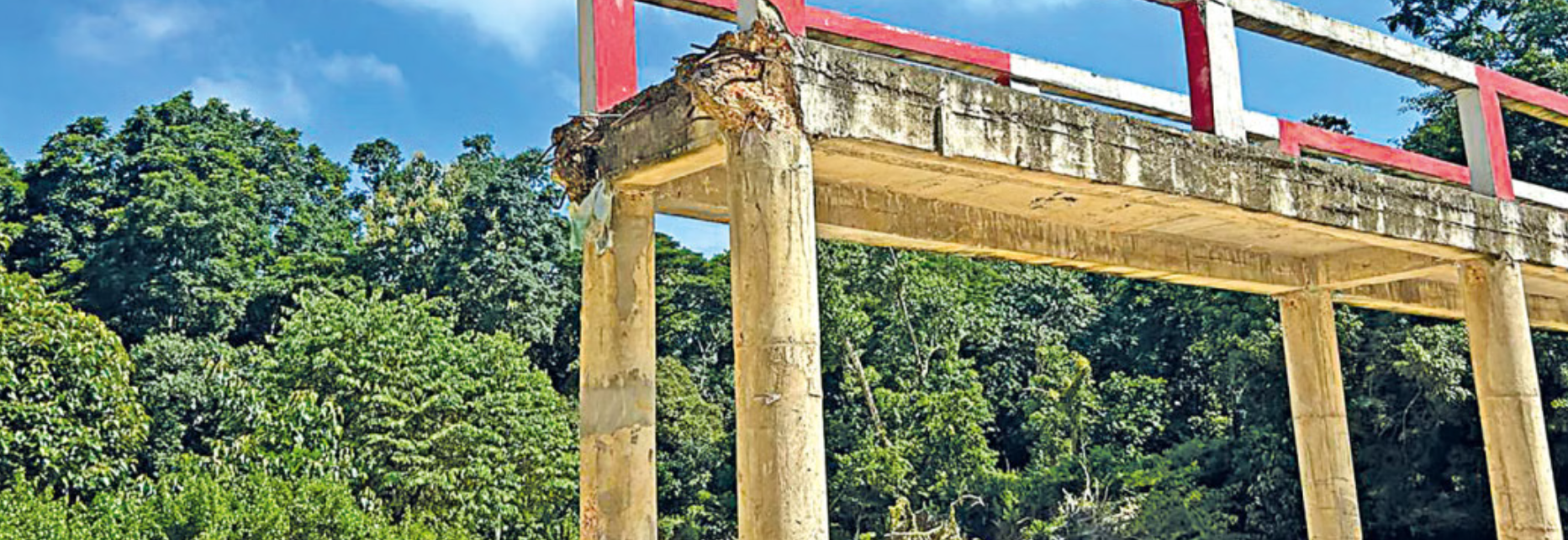
Tripura Community in Satchari Faces Displacement as Landslides Threaten Homes
At 90 years old, Mangeswari Debbarma has lived her entire life in Tripura Palli, Satchari. “This part of the village was once under the Tripura kingdom,” she recalled. “The Kachari House in Srimangal, built by the Tripura Maharaja in 1897, still stands as a reminder of our heritage — but neglect is erasing it.”
She explained that the Tripura community once thrived in the area bordering present-day India’s Tripura state. After the Partition, however, many families migrated, while those who remained faced recurring landslides that steadily eroded their homes and land.
“A few years ago, 30 families lived here. Five have already left, and just recently four more families lost everything. Year after year, the hills keep collapsing,” she said. “We live under constant fear — wondering whose home will be next.”
Erosion has gradually displaced families: two in 2018, one in 2019, another in 2021. This year’s monsoon has once again damaged houses and made the only access road almost unusable. Two more families are preparing to leave.
A Community Shrinking
Tripura Palli in Chunarughat upazila of Habiganj, once home to dozens of families, is now reduced to only 24 households. Surrounded by dense forest and tea gardens near Satchari National Park, the community lives precariously on eroded hill slopes.
Despite hardships, residents have long valued education. But frequent landslides disrupt school attendance and medical access. “When it rains, we are cut off completely,” said assistant headman Akash Debbarma. “We couldn’t even take a maternity patient to hospital on time.”
Houses now stand dangerously close to steep, collapsing slopes. Heavy rains in recent years have intensified landslides, leaving several families homeless.
“Climate change has destroyed our streams and forests,” said village headman Chittaranjan Debbarma. “We’ve lost our traditional livelihoods. Unless something is done, we’ll lose our homes too.”
Promises and Frustration
In 2020, the Water Development Board proposed a Tk 8.21 crore project to reinforce 480 metres of hillside in Tripura Palli. But the plan stalled, with officials citing high costs compared to the small population.
Locals say years of unchecked sand extraction from nearby hills worsened the erosion. Infrastructure projects have also failed to provide relief. A concrete bridge built in 2012 collapsed due to landslides, and an extension in 2022 also didn’t last.
“We desperately need a permanent bridge and guide walls,” said Sanjukta Debbarma, vice-president of the Satchari National Park Forest Management Committee. “We’ve appealed everywhere but no real solution has come.”
Women voiced particular concerns over safety. “It’s dangerous for children to go to school, and patients suffer the most,” said housewife Sandhya Debbarma.
Environmental Concerns
Environmentalists link the crisis directly to unregulated sand extraction. “These fragile hills collapse easily when destabilised,” explained Tofazzal Sohel, general secretary of Bangladesh Paribesh Andolon (BAPA) in Habiganj. “Illegal sand mining has turned landslides into an annual disaster.”
He urged urgent action: “First, stop illegal extraction. Then develop rehabilitation programmes for the displaced families, ensuring safe housing and reliable access roads. Without intervention, we are not only losing land but an entire community’s history and identity.”
Government Response
Chunarughat Upazila Nirbahi Officer (UNO) Shafiqul Islam acknowledged the problem. “A concrete bridge was built but partly collapsed. An alternative route through the Satchari tea garden has been opened. We will consult higher authorities about a lasting solution.”
For the remaining families of Tripura Palli, time is running out. Each heavy rainfall brings them closer to losing their homes — and their centuries-old ties to the land.
Publisher: Mustakim Nibir
Copyright © 2026 The Times OF Dhaka. All rights reserved. প্রিন্ট করুন
 সেভ করুন