
President Shahabuddin Mulls Resignation After Election
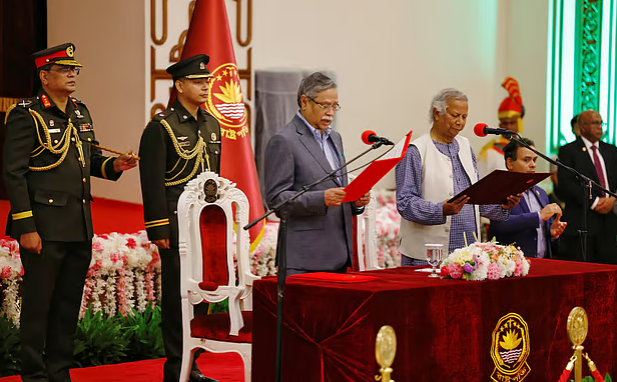
President Md. Shahabuddin has indicated that he plans to step down after the 13th national parliamentary election, saying he feels humiliated under the interim government led by Professor Muhammad Yunus.
In a WhatsApp interview with Reuters from his official residence, Bangabhaban, the President expressed his frustration with the current situation.
Although the President is constitutionally the commander-in-chief of the armed forces, the post traditionally carries mostly ceremonial authority. Executive power remains with the prime minister and cabinet.
That dynamic shifted after the student-led uprising in August 2024 forced long-time Prime Minister Sheikh Hasina to flee to New Delhi. With Parliament dissolved following the uprising, the President suddenly became the only remaining constitutional authority in office.
Shahabuddin, now 75, was elected unopposed in 2023 as the candidate of the ruling Awami League. The party is barred from contesting the upcoming February 12 national election due to restrictions placed on its political activities.
Feeling sidelined
“I want to leave. I am willing to go,” Shahabuddin told Reuters. “But I believe I should remain until the election is held. Constitutionally, I am obliged to continue.”
He said that Professor Yunus has not met him in nearly seven months and that his public relations office has been taken away from him. In September, Bangladeshi embassies around the world removed his official portrait.
“Every consulate and embassy used to display the President’s photograph. Overnight, they all disappeared,” he said. “People naturally assumed that the President was being pushed aside. I felt deeply insulted.”
Shahabuddin added that he wrote to Yunus about the removal of his portrait, but no action was taken. “My voice has been suppressed,” he claimed.
Yunus’s press team did not immediately respond to requests for comment.
Contact with the Army Chief
Shahabuddin said he maintains regular communication with Army Chief General Waker-Uz-Zaman.
During the deadly protests against Sheikh Hasina in 2024, the military remained neutral—an approach that ultimately shaped the political downfall of the long-serving leader.
According to Shahabuddin, the Army Chief has been clear that he has no intention of taking control of the state. Bangladesh has experienced military rule in the past, but General Waker-Uz-Zaman has repeatedly stated that he wants democratic governance restored.
The President said that although some student protesters initially demanded his resignation, no major political party has done so in recent months.
Recent opinion polls suggest that the Bangladesh Nationalist Party (BNP), led by former prime minister Khaleda Zia, along with Jamaat-e-Islami, is likely to emerge as the leading bloc in forming the next government. The two parties previously governed together between 2001 and 2006.
Shahabuddin declined to answer questions about whether Sheikh Hasina has tried to contact him since her departure. He said that since assuming the presidency, he has remained neutral and has no political affiliations.
Publisher: Mustakim Nibir
Copyright © 2026 The Times OF Dhaka. All rights reserved. প্রিন্ট করুন
 সেভ করুন