
Who Killed Thousands During Iran’s Protests?
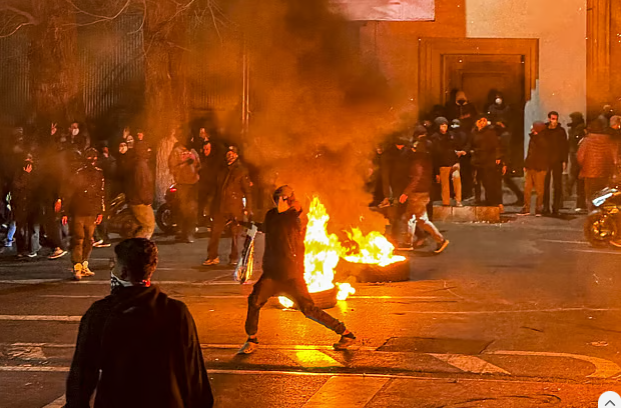
Iran’s Supreme Leader Ayatollah Ali Khamenei has acknowledged that “several thousand” people were killed during the country’s recent wave of protests—an admission seen as unusual. In previous uprisings, he had consistently avoided commenting on casualty figures.
The unrest began in late December, starting in Tehran’s main commercial district before spreading to cities and towns across the country. What began as demonstrations driven by economic frustration gradually turned into widespread anti-government protests. As tensions escalated, the situation became increasingly violent, prompting a forceful response from law-enforcement and security agencies.
However, sharply different narratives have emerged about what actually happened and what may follow. The Iranian government, opposition groups operating abroad, and former U.S. president Donald Trump have each offered conflicting versions of events.
What can be confirmed
Protests initially erupted on December 28, when traders in Tehran’s Grand Bazaar took to the streets over economic grievances. Within days, the demonstrations transformed into a broader movement opposing the government.
Accounts from Iranian officials, state and foreign media, and eyewitnesses indicate that the nights of January 8 and 9 were the deadliest. According to Iran’s chief forensic official, Abbas Masjedi Arani, many victims were shot at close range or from rooftops, with bullets hitting the chest or head—suggesting an intent to cause fatal injuries. Others, he said, were killed by stabbing.
State media reported that most protesters were young people, many in their twenties.
Communications blackout
On the night of January 8, authorities imposed a nationwide internet shutdown and cut mobile phone services. As a result, people were unable to call for emergency assistance, and information from inside the country was severely restricted.
Such a complete communications blackout was unprecedented in Iran. Although limited internet access began returning after nearly two weeks, much of the population remains uncertain about what lies ahead.
Because digital networks were disabled during the height of the unrest, very few protest videos reached audiences outside Iran. Only a small number of people managed to leave the country or access satellite internet services such as Starlink.
At present, street protests have largely subsided. Heavily armed security forces have established checkpoints and patrols across Tehran and other cities, including former protest hotspots like the Grand Bazaar.
The government’s position
Iranian political, military, and judicial officials have repeatedly accused the United States and Israel of orchestrating the unrest. They claim foreign powers armed and funded opposition groups to destabilize the country.
Ayatollah Khamenei has described Donald Trump as a “criminal,” accusing him of openly encouraging the unrest. Government officials insist that state forces were not responsible for mass killings. Instead, they argue that armed and trained “terrorists” carried out shootings and stabbings to turn peaceful protests violent.
Judicial authorities have vowed swift punishment for those involved in what they label as riots. A special joint task force has been formed to fast-track protest-related cases, with officials stating that no leniency will be shown.
What outside observers say
Human rights organizations and Iranian opposition groups abroad dispute the government’s claims, asserting that most protesters were killed by state security forces.
The U.S.-based Human Rights Activists News Agency (HRANA) says it has confirmed more than 3,300 deaths and is investigating reports of over 4,300 additional fatalities. According to HRANA, more than 2,100 people were seriously injured, and over 24,000 were arrested.
Reuters, citing an Iranian official who requested anonymity, reported that at least 5,000 people were killed, including around 500 members of the security forces. Many of the deaths reportedly occurred in Iran’s northwestern Kurdish-majority regions.
These figures could not be independently verified by Al Jazeera.
Some Iran-based media outlets operating abroad have alleged that authorities demanded “bullet fees” from families of deceased protesters in exchange for burial permits, or pressured families to sign documents identifying victims as members of the Basij militia rather than protesters. The Iranian government has denied these claims.
The U.S. and Israel
U.S. and Israeli officials have openly discussed the possibility of Iran’s religious leadership being overthrown for months, with such rhetoric intensifying during last year’s 12-day Iran-Israel conflict.
At the peak of the protests, Donald Trump urged Iranians to stay in the streets, promising that “help is coming.” He later softened his stance, praising Iran’s leadership after claiming that the country had suspended the planned executions of more than 800 political prisoners.
Iranian prosecutor Ali Salehi responded by saying Trump “talks nonsense” and warned that Iran’s response would be swift and preventive.
Despite this, Trump has continued to comment on Iran, calling for an end to Khamenei’s 37-year rule and describing him as “a sick man.”
Israeli Prime Minister Benjamin Netanyahu has not directly commented on the protests. However, Israeli public broadcaster Kan reported that he instructed officials to refrain from giving interviews on the issue. Before that directive, Israel’s heritage minister had claimed that Israeli intelligence operatives were currently active inside Iran, as they had been during the recent conflict.
Publisher: Mustakim Nibir
Copyright © 2026 The Times OF Dhaka. All rights reserved. প্রিন্ট করুন
 সেভ করুন