Dhaka 4:56 am, Monday, 2 March 2026

Signs of Activity Despite the Ban: What Is the Awami League Calculating?

Staff Correspondent:
  • Update Time : 06:18:22 am, Saturday, 28 February 2026
  • / 38 Time View

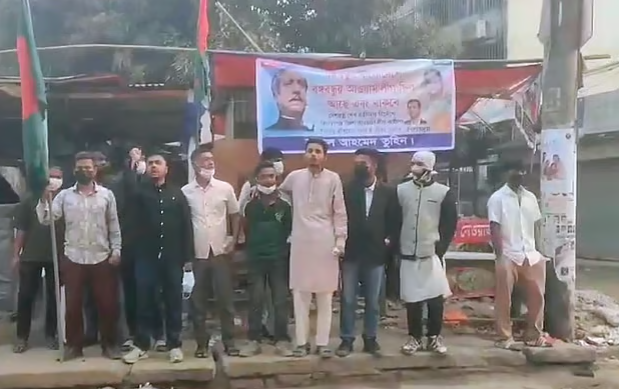
Following the national parliamentary election, more than a dozen local offices of the Awami League have been reopened across the country over the past two weeks. In some areas, party supporters gathered in front of locked offices and chanted slogans without entering. According to multiple party insiders, these moves are intended to gauge the new government’s stance toward the party, whose activities remain officially banned.

Leaders also want to assess whether the administration will create obstacles to bail or release for imprisoned members. Senior figures within the party say that its president, Sheikh Hasina, who is currently in India, has instructed leaders and activists inside Bangladesh to gradually resume limited political activity. As part of that effort, attempts are being made to reopen selected district and metropolitan offices, led mainly by mid- and lower-tier leaders. Some sources even claim that in certain locations, local figures from the Bangladesh Nationalist Party (BNP) have quietly signaled tolerance or indirect support.

Party leaders believe that if senior and mid-level figures begin securing bail, organizational activities could regain momentum. Efforts are reportedly underway to seek support from international forums and influential countries to ensure that legal processes, especially bail hearings, proceed more smoothly. If conditions normalize, some leaders currently abroad may consider returning.

However, not everyone within the Awami League favors rapid visibility. Some leaders argue that although parts of the interim administration may be cautious, the BNP could adopt a tougher line if political pressure intensifies—particularly from opposition forces in parliament. BNP Secretary General Mirza Fakhrul Islam Alamgir recently said the party did not support the reopening of offices and emphasized that, since the Awami League’s activities are legally prohibited, the matter would be handled accordingly.

After the Awami League government fell during the August 5, 2024 uprising, many leaders, including Sheikh Hasina, left the country. The interim administration formally banned the party’s activities by executive order on May 10, 2025, and its registration remains suspended, preventing it from contesting the 13th parliamentary election. The BNP went on to win decisively in the February 12 election and formed the government.

Within Awami League ranks, some believe the transition from an interim to an elected government has created a slightly less tense environment for grassroots members. They note that despite the party’s call to abstain from voting, many supporters participated in the election and, in some cases, informally backed candidates from other parties. As a result, leaders hope for at least limited tolerance from the current administration. Still, policymakers within the party acknowledge that expecting overt cooperation from the BNP would be unrealistic. The government may choose a strategy of selective enforcement—ignoring minor activities while reacting firmly if necessary.

Bail developments have also drawn attention. While many lower-level activists arrested after the government’s fall have secured release, senior leaders and former lawmakers have faced more difficulty, often remaining detained in multiple cases. Recently, several prominent figures obtained bail, raising hopes among party members that elderly or ill detainees might receive leniency, potentially paving the way for broader legal relief.

Symbolically, reopened offices have displayed national and party flags and portraits of founding leader Sheikh Mujibur Rahman. In Dhaka and other districts, supporters have staged small gatherings in front of damaged or abandoned offices—many of which were burned or vandalized following the government’s collapse.

Political observers say the Awami League appears to be pursuing a dual strategy: demonstrating limited presence on the ground while carefully observing the government’s reaction. Writer and analyst Mahbub Uddin Ahmed notes that the party still retains a support base. Even though it did not contest the election, many sympathizers voted, sometimes through informal understandings with other candidates. Expecting a degree of political space, therefore, is not entirely unreasonable.

Analysts argue that for the Awami League to re-enter mainstream politics, it must rebuild effective leadership within the country, as much of its senior leadership remains abroad. Conducting politics entirely from outside Bangladesh would be difficult in the long run. Whether the party can reach some form of understanding with those currently in power—and under what terms—remains to be seen.

Tag :

Please Share This Post in Your Social Media

Signs of Activity Despite the Ban: What Is the Awami League Calculating?

Update Time : 06:18:22 am, Saturday, 28 February 2026

Following the national parliamentary election, more than a dozen local offices of the Awami League have been reopened across the country over the past two weeks. In some areas, party supporters gathered in front of locked offices and chanted slogans without entering. According to multiple party insiders, these moves are intended to gauge the new government’s stance toward the party, whose activities remain officially banned.

Leaders also want to assess whether the administration will create obstacles to bail or release for imprisoned members. Senior figures within the party say that its president, Sheikh Hasina, who is currently in India, has instructed leaders and activists inside Bangladesh to gradually resume limited political activity. As part of that effort, attempts are being made to reopen selected district and metropolitan offices, led mainly by mid- and lower-tier leaders. Some sources even claim that in certain locations, local figures from the Bangladesh Nationalist Party (BNP) have quietly signaled tolerance or indirect support.

Party leaders believe that if senior and mid-level figures begin securing bail, organizational activities could regain momentum. Efforts are reportedly underway to seek support from international forums and influential countries to ensure that legal processes, especially bail hearings, proceed more smoothly. If conditions normalize, some leaders currently abroad may consider returning.

However, not everyone within the Awami League favors rapid visibility. Some leaders argue that although parts of the interim administration may be cautious, the BNP could adopt a tougher line if political pressure intensifies—particularly from opposition forces in parliament. BNP Secretary General Mirza Fakhrul Islam Alamgir recently said the party did not support the reopening of offices and emphasized that, since the Awami League’s activities are legally prohibited, the matter would be handled accordingly.

After the Awami League government fell during the August 5, 2024 uprising, many leaders, including Sheikh Hasina, left the country. The interim administration formally banned the party’s activities by executive order on May 10, 2025, and its registration remains suspended, preventing it from contesting the 13th parliamentary election. The BNP went on to win decisively in the February 12 election and formed the government.

Within Awami League ranks, some believe the transition from an interim to an elected government has created a slightly less tense environment for grassroots members. They note that despite the party’s call to abstain from voting, many supporters participated in the election and, in some cases, informally backed candidates from other parties. As a result, leaders hope for at least limited tolerance from the current administration. Still, policymakers within the party acknowledge that expecting overt cooperation from the BNP would be unrealistic. The government may choose a strategy of selective enforcement—ignoring minor activities while reacting firmly if necessary.

Bail developments have also drawn attention. While many lower-level activists arrested after the government’s fall have secured release, senior leaders and former lawmakers have faced more difficulty, often remaining detained in multiple cases. Recently, several prominent figures obtained bail, raising hopes among party members that elderly or ill detainees might receive leniency, potentially paving the way for broader legal relief.

Symbolically, reopened offices have displayed national and party flags and portraits of founding leader Sheikh Mujibur Rahman. In Dhaka and other districts, supporters have staged small gatherings in front of damaged or abandoned offices—many of which were burned or vandalized following the government’s collapse.

Political observers say the Awami League appears to be pursuing a dual strategy: demonstrating limited presence on the ground while carefully observing the government’s reaction. Writer and analyst Mahbub Uddin Ahmed notes that the party still retains a support base. Even though it did not contest the election, many sympathizers voted, sometimes through informal understandings with other candidates. Expecting a degree of political space, therefore, is not entirely unreasonable.

Analysts argue that for the Awami League to re-enter mainstream politics, it must rebuild effective leadership within the country, as much of its senior leadership remains abroad. Conducting politics entirely from outside Bangladesh would be difficult in the long run. Whether the party can reach some form of understanding with those currently in power—and under what terms—remains to be seen.