Dhaka 8:36 am, Friday, 26 June 2026

Echoes of Empire in the Heart of Karwan Bazar

Reporter Name
  • Update Time : 05:58:01 am, Saturday, 1 November 2025
  • / 441 Time View

Mughal-Era Mosque in Karwan Bazar Stands as a Testament to Dhaka’s Heritage


Amid the constant rush of Karwan Bazar — one of Dhaka’s oldest and busiest commercial districts — stands the Khawaja Am Barsha Jame Mosque, a quiet reminder of the city’s Mughal legacy that has survived centuries of transformation.

Perched about twelve feet above street level, the three-domed mosque is thought to have been built in the late 17th century during the rule of Subedar Shaista Khan. Historical accounts suggest it was commissioned by his trusted associate, Khawaja Am Barsha.


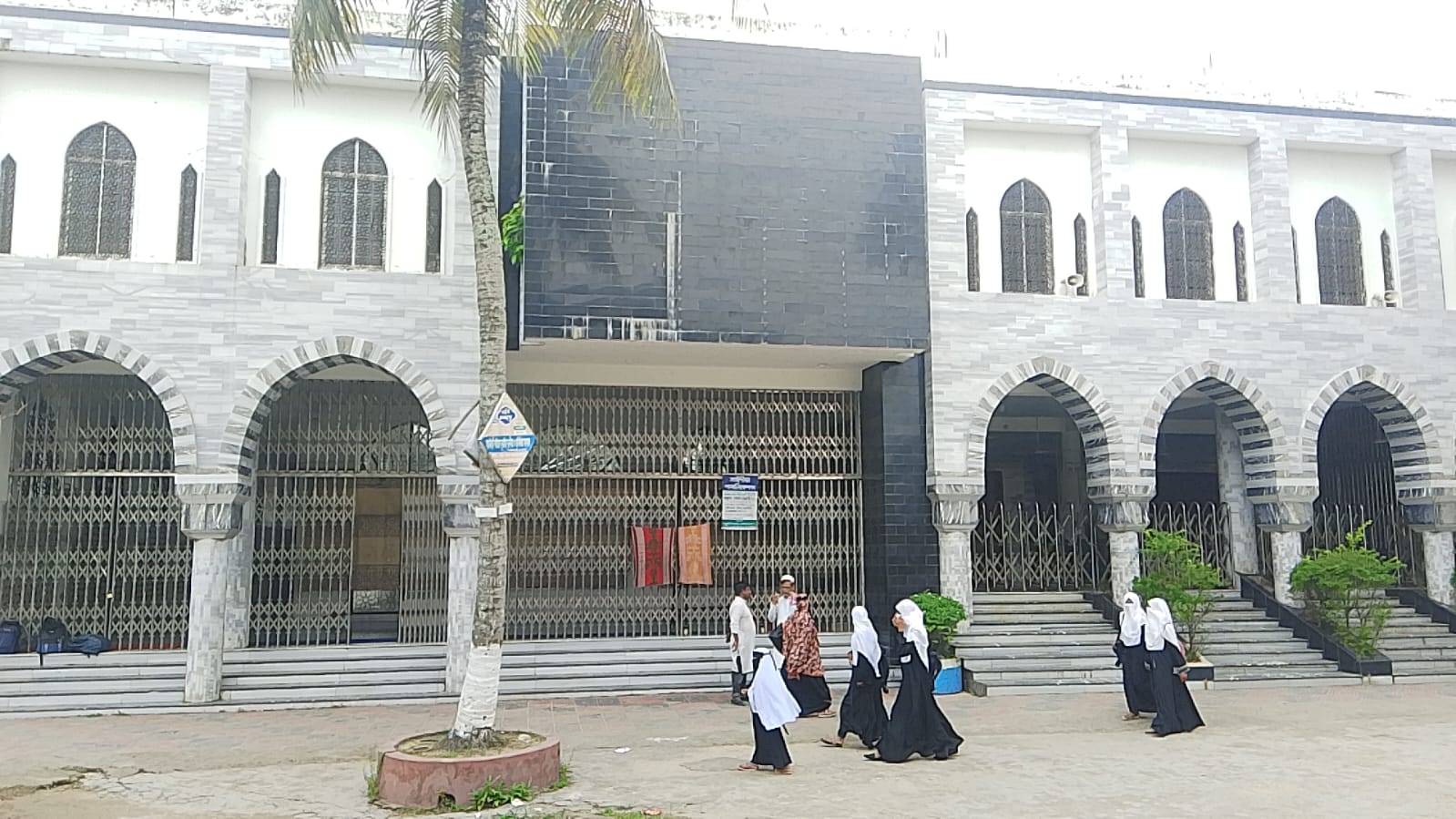
The structure’s distinct Mughal design — its domes, arches, and octagonal corner towers — still captivates visitors. Each corner of the mosque rises into a slender, dome-topped turret, while a staircase on the eastern side leads to the main prayer chamber.

During a recent visit, Mufti Tayeb Ahmed, an instructor at the adjacent madrasa, described the mosque’s long-standing presence and shared that stone inscriptions remain visible inside. One above the mihrab carries a verse from the Qur’an, while another above the entrance bears Shaista Khan’s name, though the Persian lettering has partially faded over time.

Researchers believe the mosque was constructed between 1664 and 1668, during Shaista Khan’s first term as Bengal’s governor. Despite its age, the building’s thick brick walls and sturdy domes have weathered the elements remarkably well.

Several rounds of renovation have since modernized the site. A five-storey complex now rises behind the original prayer hall, complete with marble floors, mosaic columns, air-conditioned rooms, and decorative lighting. Beneath the old mosque lies a basement chamber, once used for storage, cooking, and student lodgings.

Elderly traders recall that in earlier times, Karwan Bazar lay on the city’s outskirts, near waterways that connected to today’s Hatirjheel. Sailors and travelers would anchor nearby, pray, and rest at the mosque before continuing their journeys.

Abdus Salam, a trader who has worked beside the mosque since 1967, remembers seeing Khawaja Am Barsha’s tomb to the north and a well used for ablution. He also recalled an open prayer shed once located on the eastern side of the mosque, later cleared during President Ershad’s tenure to create a small garden that still exists today.

As Karwan Bazar evolved into a major trading hub in the 1990s, the growing number of worshippers led to the construction of the multi-storey expansion, later approved by President Ershad himself. The project turned the old market area into a five-storey mosque complex.

Today, a seven-storey madrasa building stands beside it, housing hundreds of students. The ground floor now accommodates small shops and eateries, whose rental income supports the mosque’s upkeep and education programs.

According to former madrasa student Shahidul Islam, the mosque can now host over 4,000 worshippers at once — a far cry from its humble beginnings.

Though the modern structure towers over the original building, the three-domed Mughal core remains intact — with its arched doorways, terracotta motifs, and centuries-old inscriptions still narrating the story of Dhaka’s layered past.
Tag :

Please Share This Post in Your Social Media

6

Echoes of Empire in the Heart of Karwan Bazar

Update Time : 05:58:01 am, Saturday, 1 November 2025

Mughal-Era Mosque in Karwan Bazar Stands as a Testament to Dhaka’s Heritage


Amid the constant rush of Karwan Bazar — one of Dhaka’s oldest and busiest commercial districts — stands the Khawaja Am Barsha Jame Mosque, a quiet reminder of the city’s Mughal legacy that has survived centuries of transformation.

Perched about twelve feet above street level, the three-domed mosque is thought to have been built in the late 17th century during the rule of Subedar Shaista Khan. Historical accounts suggest it was commissioned by his trusted associate, Khawaja Am Barsha.


The structure’s distinct Mughal design — its domes, arches, and octagonal corner towers — still captivates visitors. Each corner of the mosque rises into a slender, dome-topped turret, while a staircase on the eastern side leads to the main prayer chamber.

During a recent visit, Mufti Tayeb Ahmed, an instructor at the adjacent madrasa, described the mosque’s long-standing presence and shared that stone inscriptions remain visible inside. One above the mihrab carries a verse from the Qur’an, while another above the entrance bears Shaista Khan’s name, though the Persian lettering has partially faded over time.

Researchers believe the mosque was constructed between 1664 and 1668, during Shaista Khan’s first term as Bengal’s governor. Despite its age, the building’s thick brick walls and sturdy domes have weathered the elements remarkably well.

Several rounds of renovation have since modernized the site. A five-storey complex now rises behind the original prayer hall, complete with marble floors, mosaic columns, air-conditioned rooms, and decorative lighting. Beneath the old mosque lies a basement chamber, once used for storage, cooking, and student lodgings.

Elderly traders recall that in earlier times, Karwan Bazar lay on the city’s outskirts, near waterways that connected to today’s Hatirjheel. Sailors and travelers would anchor nearby, pray, and rest at the mosque before continuing their journeys.

Abdus Salam, a trader who has worked beside the mosque since 1967, remembers seeing Khawaja Am Barsha’s tomb to the north and a well used for ablution. He also recalled an open prayer shed once located on the eastern side of the mosque, later cleared during President Ershad’s tenure to create a small garden that still exists today.

As Karwan Bazar evolved into a major trading hub in the 1990s, the growing number of worshippers led to the construction of the multi-storey expansion, later approved by President Ershad himself. The project turned the old market area into a five-storey mosque complex.

Today, a seven-storey madrasa building stands beside it, housing hundreds of students. The ground floor now accommodates small shops and eateries, whose rental income supports the mosque’s upkeep and education programs.

According to former madrasa student Shahidul Islam, the mosque can now host over 4,000 worshippers at once — a far cry from its humble beginnings.

Though the modern structure towers over the original building, the three-domed Mughal core remains intact — with its arched doorways, terracotta motifs, and centuries-old inscriptions still narrating the story of Dhaka’s layered past.