Dhaka 10:47 am, Thursday, 25 June 2026

Textbook Shortfall for Secondary Students on First Day

Staff Correspondent:
  • Update Time : 05:57:58 am, Thursday, 1 January 2026
  • / 306 Time View

New Academic Year Begins Without Full Textbook Supply for Many Secondary Students

Today, Thursday, marks the first day of the Christian New Year as well as the start of Bangladesh’s new academic year. However, a large number of secondary-level students will not receive all of their textbooks on the opening day.

According to official data, more than 27 percent of secondary textbooks had not been delivered across the country by Wednesday afternoon, the final day of last year. As a result, the National Curriculum and Textbook Board (NCTB) has been unable to ensure full textbook distribution at the secondary level on day one.

NCTB officials have expressed optimism that all secondary students will receive their complete set of books by mid-January. However, sources involved in the process suggest that it could take the entire month of January—and possibly extend into February—for students to receive textbooks for all subjects.

For nearly 15 years, the NCTB had celebrated the first day of the academic year by distributing free textbooks directly to students, creating a festive atmosphere in schools nationwide. In recent years, however, this tradition has been disrupted. Last year, it took almost three months to complete textbook distribution at both primary and secondary levels, drawing criticism and affecting students’ studies.

Learning from that experience, authorities began the textbook printing process earlier this time, setting a target to complete printing and field-level delivery by November. Although tender evaluations were nearly finalized, the government decided in November to cancel tenders for printing textbooks for classes six, seven, and eight. New tenders were issued, delaying the overall process and impacting timely delivery once again.

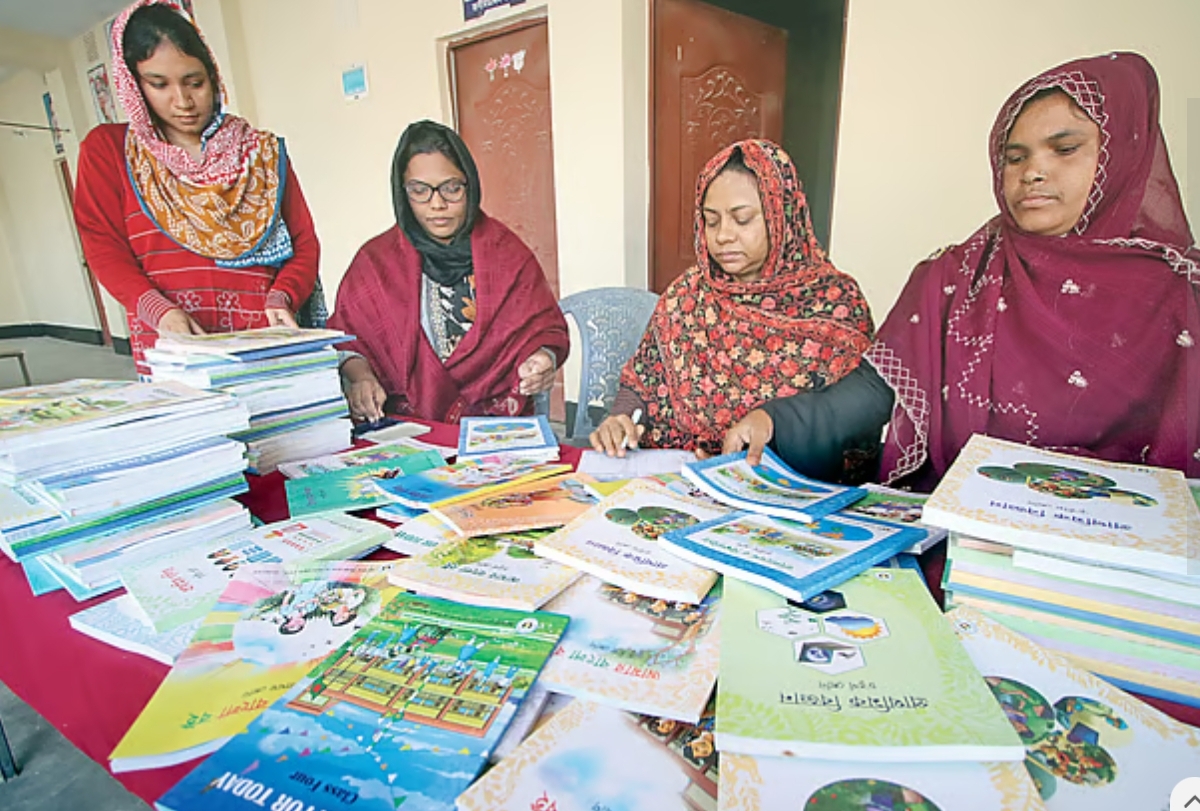
While all primary-level textbooks—over 85 million copies—have already been fully distributed, the challenge remains at the secondary level. Out of more than 214 million secondary textbooks (including Ebtedayi), around 72.7 percent had reached schools by Wednesday afternoon, even though approximately 88 percent of the books had already been printed.

Before distribution, textbooks must undergo binding and pre-delivery inspection (PDI), which has so far been completed for just over 81 percent of secondary books. Officials say that printing and distribution for classes six and nine–ten are progressing well, while class seven and eight textbooks are lagging behind.

NCTB Secretary Professor Md Sahtab Uddin stated that the goal is to ensure every student receives at least some textbooks on the first day of school. He added that full distribution for classes seven and eight will take a bit more time, though primary, Ebtedayi, and ethnic minority students have already received all their books.

Unlike previous years, textbook distribution is no longer being celebrated with large-scale events on the first day of school. Instead, books are being delivered to institutions, where school authorities will distribute them to students gradually.
Tag :

Please Share This Post in Your Social Media

4

Textbook Shortfall for Secondary Students on First Day

Update Time : 05:57:58 am, Thursday, 1 January 2026

New Academic Year Begins Without Full Textbook Supply for Many Secondary Students

Today, Thursday, marks the first day of the Christian New Year as well as the start of Bangladesh’s new academic year. However, a large number of secondary-level students will not receive all of their textbooks on the opening day.

According to official data, more than 27 percent of secondary textbooks had not been delivered across the country by Wednesday afternoon, the final day of last year. As a result, the National Curriculum and Textbook Board (NCTB) has been unable to ensure full textbook distribution at the secondary level on day one.

NCTB officials have expressed optimism that all secondary students will receive their complete set of books by mid-January. However, sources involved in the process suggest that it could take the entire month of January—and possibly extend into February—for students to receive textbooks for all subjects.

For nearly 15 years, the NCTB had celebrated the first day of the academic year by distributing free textbooks directly to students, creating a festive atmosphere in schools nationwide. In recent years, however, this tradition has been disrupted. Last year, it took almost three months to complete textbook distribution at both primary and secondary levels, drawing criticism and affecting students’ studies.

Learning from that experience, authorities began the textbook printing process earlier this time, setting a target to complete printing and field-level delivery by November. Although tender evaluations were nearly finalized, the government decided in November to cancel tenders for printing textbooks for classes six, seven, and eight. New tenders were issued, delaying the overall process and impacting timely delivery once again.

While all primary-level textbooks—over 85 million copies—have already been fully distributed, the challenge remains at the secondary level. Out of more than 214 million secondary textbooks (including Ebtedayi), around 72.7 percent had reached schools by Wednesday afternoon, even though approximately 88 percent of the books had already been printed.

Before distribution, textbooks must undergo binding and pre-delivery inspection (PDI), which has so far been completed for just over 81 percent of secondary books. Officials say that printing and distribution for classes six and nine–ten are progressing well, while class seven and eight textbooks are lagging behind.

NCTB Secretary Professor Md Sahtab Uddin stated that the goal is to ensure every student receives at least some textbooks on the first day of school. He added that full distribution for classes seven and eight will take a bit more time, though primary, Ebtedayi, and ethnic minority students have already received all their books.

Unlike previous years, textbook distribution is no longer being celebrated with large-scale events on the first day of school. Instead, books are being delivered to institutions, where school authorities will distribute them to students gradually.