PM Orders Independent Cost Checks for Major Projects

- Update Time : 12:59:32 pm, Wednesday, 25 November 2026
- / 17 Time View
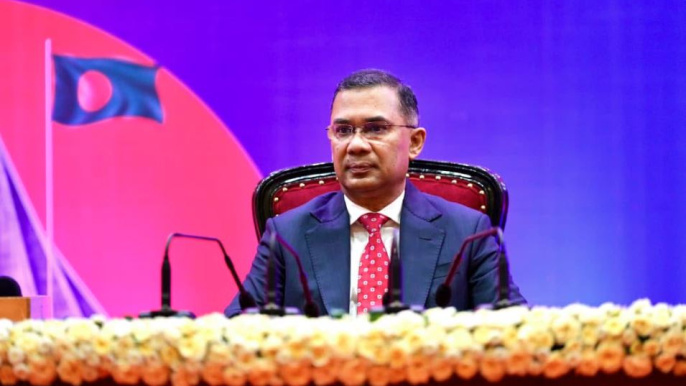

Prime Minister Tarique Rahman has directed the authorities concerned to engage independent price assessment firms to scrutinise procurement costs for major development projects, improve manpower planning and promote the use of sustainable construction materials.
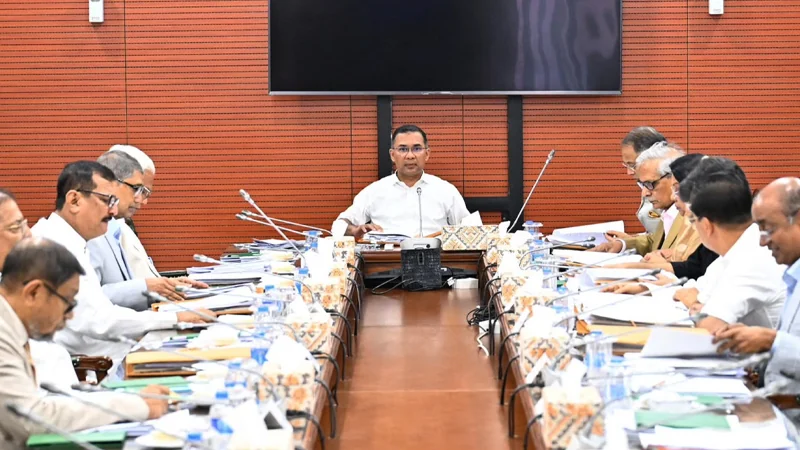
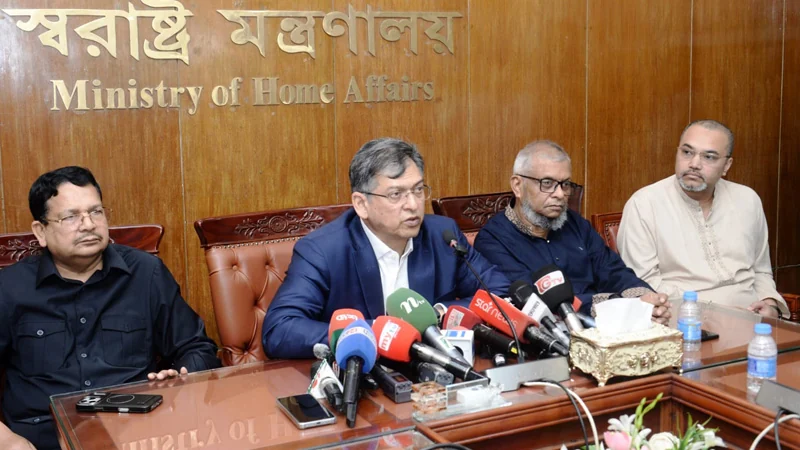
State Minister for Planning Zonayed Abdur Rahim Saki disclosed the directives while briefing journalists on 25 November at the NEC conference room following the eighth meeting of the Executive Committee of the National Economic Council (ECNEC) for the 2026–27 fiscal year. The meeting was chaired by the prime minister at the Bangladesh Secretariat.
Saki said the prime minister had approved a proposal to involve domestic or foreign price assessment firms in reviewing the costs of expensive equipment and specialised procurement items.
“Where the expenditure involves a substantial amount, we should appoint price assessment companies to verify the costs. This will introduce independent third-party scrutiny and establish an institutional system of checks and balances,” he said.
The Planning Commission has already introduced measures to involve relevant specialists in assessing equipment and procurement costs that fall outside approved rate schedules, Saki added.
The government is also developing software that will use artificial intelligence (AI) to check whether project expenditure complies with approved rates.
“Individual officials or project authorities may not always have the technical expertise to assess highly specialised equipment. We need an independent verification process so that project costs remain justified and excessive expenditure does not take place,” Saki said.
He said the prime minister had specifically instructed the authorities to apply the assessment mechanism during tender preparation and procurement for projects involving medical college hospitals and the expansion of the National Institute of Gastroenterology Hospital.
Manpower planning in healthcare projects
The prime minister also directed authorities to determine the required numbers of doctors, nurses, technicians and other skilled personnel at the initial stages of healthcare projects.
Saki said the government would no longer wait until projects approached completion to seek manpower approval, a practice that often delays the operation of newly built hospitals and leaves costly equipment unused.
“Manpower approval must come alongside project implementation. The authorities must secure the necessary approval from the Ministry of Public Administration and the Ministry of Finance at the beginning and complete the required training before the project ends,” he said, quoting the prime minister’s instructions.
The government also plans to include training requirements in procurement conditions, requiring equipment suppliers to provide specialised training to medical personnel.
Saki said investment in health education would be increased to develop doctors and technicians with the necessary specialised skills.
Review of government-NGO partnerships
The ECNEC meeting also discussed delays in projects implemented through government-non-government organisation (GO-NGO) partnerships.
Saki cited a healthcare centre project in Char Fasson upazila of Bhola district that faced repeated delays because its partner NGO failed to provide its committed 20% share of the project cost. The government was responsible for the remaining 80%.
The project has received approval for a fourth revision, including a six-month extension.
The Planning Ministry has prepared proposals to revise the existing GO-NGO partnership framework, Saki said.
“We need to examine how government-NGO partnerships should operate and establish clearer guidelines. The Planning Ministry will discuss the proposals with the relevant ministries before placing the issue at the next National Economic Council meeting,” he said.
Gradual shift towards uniblock roads
The prime minister has also directed authorities to gradually increase the use of uniblock materials in rural road construction under the Herringbone Bond (HB) road development programme.
Saki said the government planned to reduce reliance on traditional brick roads, as uniblock roads offer greater durability and could help limit environmental damage caused by brick kilns.
Under the proposed approach, the share of uniblocks would rise to 50% in the first year, alongside 50% bricks. In the second year, the ratio would increase to 60% uniblocks and 40% bricks, followed by 70% uniblocks and 30% bricks in the third year, subject to the programme’s continuation.
“Although uniblock roads may initially cost more, they offer greater durability and provide better convenience for people. We also want to reduce the environmental damage associated with the expansion of brick kilns,” he said.
The HB road programme mainly covers rural roads that have not received official identification and therefore fall outside the regular road maintenance responsibilities of the relevant agencies.
Saki said the government wanted to accelerate rural infrastructure development by revising ongoing projects and adding new components rather than spending time preparing entirely new projects.