Dr. Yunus to BBC Bangla: A fugitive group is making every effort to destabilize the country

- Update Time : 06:28:21 am, Monday, 3 March 2025
- / 1120 Time View
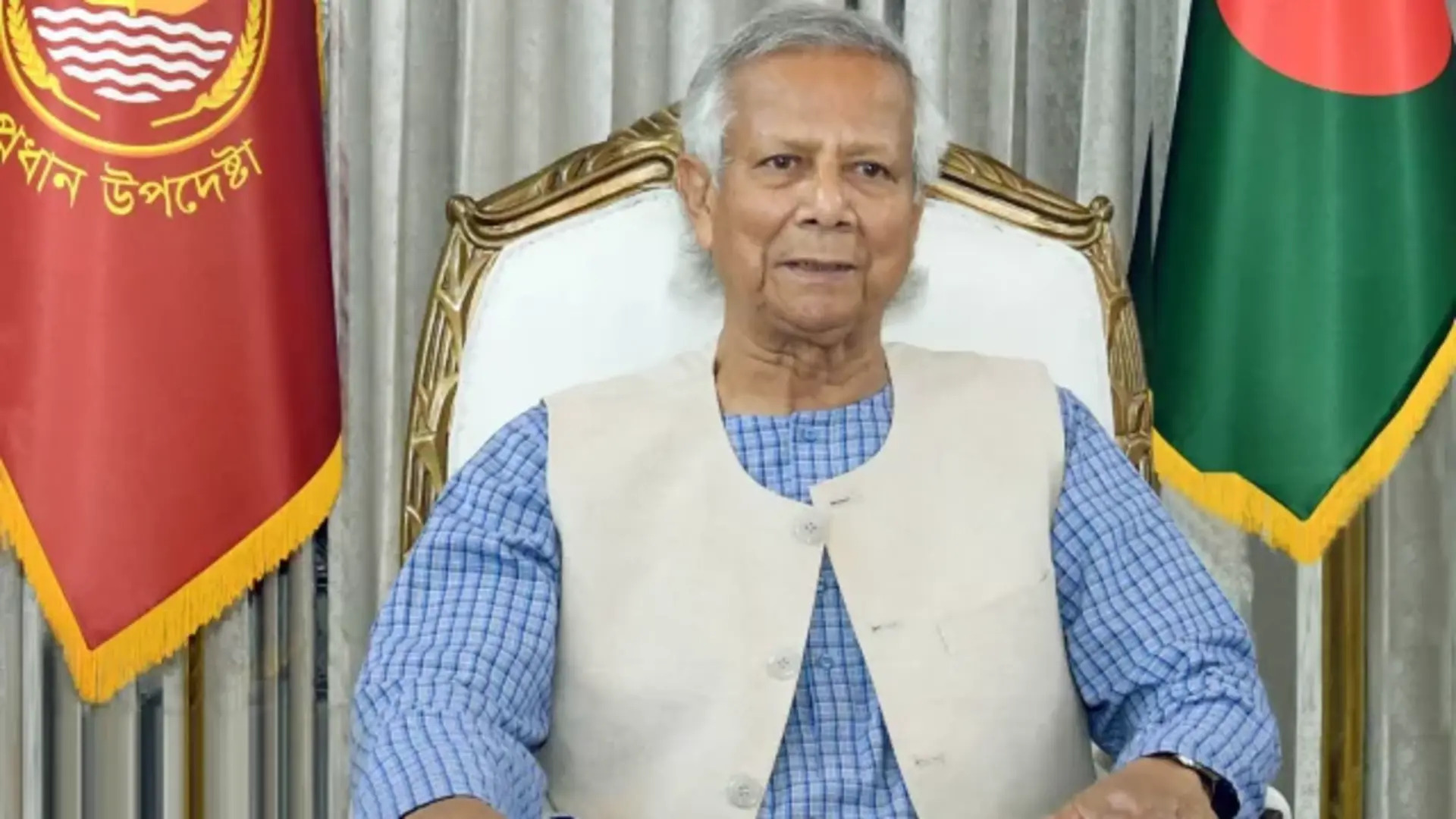

BBC Bangla: The last time I spoke with you was exactly a year ago. Since then, a massive change has taken place in Bangladesh. At that time, you were expressing concern about the possibility of being arrested. Now, you have been serving as the Chief Adviser for six months. How do you see this transition? How successful do you think you have been in fulfilling your role as Chief Adviser?
Chief Adviser: First, let me clarify something—there was no fear of arrest on my part. I simply saw it as a possibility. I was taking it easy—if they took me, they took me. There was nothing I could do. Since the country lacked proper legal mechanisms, anything could happen. That’s how I was living my life at that time. When the government was formed, I had no thoughts or expectations of suddenly becoming the head of a government and taking on such responsibilities. And in a country where everything had collapsed—where nothing was functioning properly—I had to work amidst the ruins.
So, my first effort was to bring out the real picture from that rubble and make people’s daily lives easier. That was my initial focus. Then, slowly, I started thinking about the future—how we should move forward.
The first realization was that reforms were necessary because the situation that had allowed a fascist regime to remain in power for 16 years had to be addressed. Despite multiple elections, voters had no real participation. The widespread corruption and failures—how do we pull the country out of this? The only way was through institutional reforms. That’s why we first decided…
BBC Bangla: How successful do you think you have been in this effort?
Chief Adviser: Are you asking about reforms? We haven’t even started the reforms yet.
BBC Bangla: No, I mean in terms of the situation when you took office compared to now—how much has changed?
Chief Adviser: A lot has changed. I would say that from the ruins we inherited, a new structure is emerging. We have stabilized the economy and gained the trust of the international community. No one can deny that. Every country we engage with has expressed confidence in us. They are saying, “We see that the government is functioning properly, so we will support you even more than before.” This is undeniable proof.
BBC Bangla: You speak of gaining international trust and support. But domestically, there are concerns regarding law and order. Crime rates have reportedly increased, according to police and human rights organizations. Why has your government struggled to control crime?
Chief Adviser: Let me return to the topic of trust. The most important thing is whether the people of our country trust us.
I believe they do—overwhelmingly. So that itself is a major proof of our legitimacy. Now, regarding law and order, some things may be going well, others may not. This is an unfamiliar environment for us. None of us are experts in governance—we are all trying our best. There may be mistakes along the way. Some things have worked, others have not. I am not denying that.
BBC Bangla: What do you think hasn’t worked well?
Chief Adviser: Nothing has worked perfectly. Our ambitions were high—we wanted to change the country overnight. But that hasn’t happened. It takes time.
We wanted to initiate dialogue immediately, but even that got delayed. Many of our reform commissions were supposed to submit reports within 90 days, but they couldn’t. I don’t blame them—it’s a massive task. They asked for more time—one or two more months. These delays happen when working on major reforms.
BBC Bangla: You say crime rates haven’t increased. But according to police statistics, crimes like robbery have risen by 50% in the past six months. Why is your government struggling to control this?
Chief Adviser: We are trying. You know the challenges as well as I do. Initially, the police force was hesitant to act. They were afraid to be on the streets. Only recently have they started to regain confidence. That adjustment process took a few months. But now, things are improving. We are returning to a more structured system.
BBC Bangla: Along with crime, mob violence has also become a concern. There have been incidents of public lynchings. There were also widespread attacks on buildings, such as at Dhanmondi 32. Despite the prolonged nature of these events, law enforcement did not intervene effectively. Why?
Chief Adviser: The police are still adjusting. They are slowly overcoming their hesitations.
We have made it easier for people to report crimes to the police. Citizens can now file complaints online to avoid the traditional harassment at police stations. This is part of our effort to make the system more accessible.
BBC Bangla: But ultimately, it’s the police who have to act. You admit that even after seven months, they still lack confidence. Why hasn’t this issue been fully resolved yet?
Chief Adviser: It’s improving, but not fully solved. We are working on it.
BBC Bangla: When you took office, there was broad support for your government—from student leaders, political parties, and the military. Do you think that support still exists, or has the situation changed?
Chief Adviser: I don’t see any change in the support I receive. I haven’t heard of anyone withdrawing their support. Everyone still wants the country to run smoothly. There may be differences in political rhetoric, but that doesn’t mean there is a division in overall unity.
BBC Bangla: BNP’s acting chairman, Tarique Rahman, has questioned the neutrality of your interim government.
Chief Adviser: That’s his statement. But I haven’t seen any evidence of declining support.
BBC Bangla: There are accusations that your government is helping student leaders form a new political party. Is this true?
Chief Adviser: No, the government is not assisting them. Those who wanted to engage in politics resigned from the government voluntarily. Three student representatives were part of the administration. When they decided to enter politics, they resigned. They are now private citizens—who can stop them from engaging in politics?
BBC Bangla: But you have previously said that students were your “employers.” Does that imply your government supports their political activities?
Chief Adviser: We haven’t made any decisions yet. If their activities turn out to be good, we will evaluate them accordingly. Everyone has their personal opinions on different political parties, but as a government, we have no official stance.
BBC Bangla: So you completely deny the allegations from other political parties?
Chief Adviser: Absolutely.
BBC Bangla: Are you receiving full cooperation from the military?
Chief Adviser: Yes, completely.
BBC Bangla: Recently, the army chief said that Bangladesh’s sovereignty is at risk if all stakeholders do not work together. Do you agree?
Chief Adviser: That’s his opinion. It’s not for me to endorse or reject.
BBC Bangla: But do you personally believe Bangladesh’s sovereignty is at risk?
Chief Adviser: There is always a threat. A political faction has fled the country, and their leadership is gone. They are making every effort to destabilize the country. This remains a constant threat.