Jamaat-e-Islami’s Women Take the Stage

- Update Time : 06:41:17 am, Tuesday, 18 March 2025
- / 710 Time View


Jamaat-e-Islami has, for the first time, brought its female activists into public political activities. In the past, the party’s female members were mostly confined to organizational and religious activities. However, recent developments indicate their increasing presence in diplomatic engagements and street protests, leading many to see this as a sign of Jamaat’s shift toward a more liberal stance.
Analysts suggest that Jamaat-e-Islami has historically not been supportive of women’s public roles. Given that women make up half the electorate, this could be an electoral strategy rather than an ideological shift.
Jamaat leaders, however, deny any change in their fundamental principles. They argue that during the 15-year rule of the Awami League, the party faced extreme repression, which prevented female activists from appearing in public protests. With the recent fall of Sheikh Hasina’s administration, Jamaat claims that a safer environment has allowed women to engage in political activities while adhering to Islamic principles, including modest dress codes.
Some party leaders acknowledge that the international community, particularly Western diplomats, frequently question Jamaat’s stance on women’s rights. Publicly engaging female activists is seen as a way to clarify their position. An internal debate existed on this matter, with some members opposing the move. However, a majority decision led to the change.
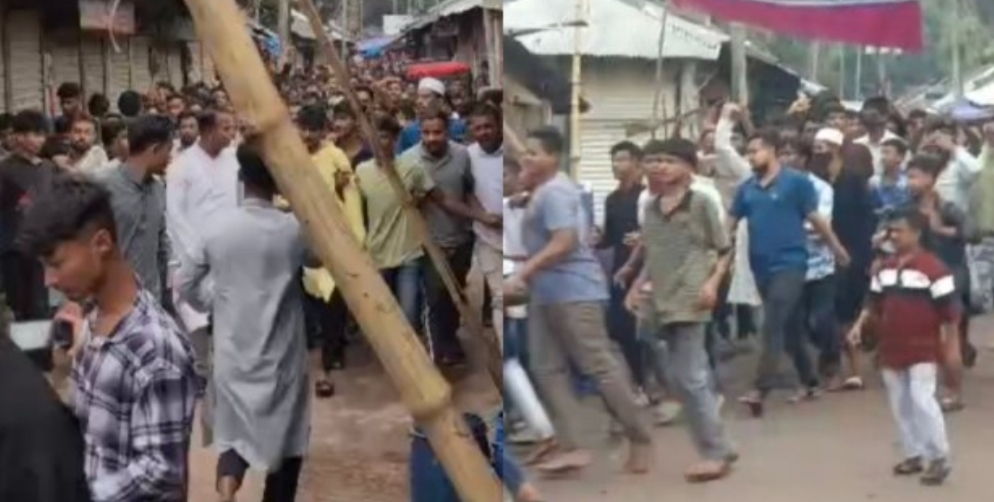
Jamaat’s recent public demonstrations have included female activists protesting against issues like sexual violence. In a significant departure from past practices, female leaders have been delivering speeches and leading chants in these events while wearing full-body coverings, including hijabs and burqas. This shift was further highlighted when four female Jamaat representatives met with British High Commissioner Sarah Cook in Dhaka—a first in the party’s history.
The party also points out that its women’s division has long been active in social and organizational work, although it operated mostly in private spaces. Jamaat claims that its governing structures already include significant female participation, with nearly 40% of its central advisory council being women. However, critics argue that numerical presence does not necessarily translate into influence in decision-making.
As Bangladesh moves toward its next elections, speculation is rising that Jamaat-e-Islami might field female candidates for parliamentary seats—something it has never done before. The party has previously nominated women in local government elections but has never put forward female candidates for national elections.
However, internal tensions remain. Some conservative Islamist groups, with which Jamaat is reportedly negotiating alliances, oppose women’s public roles. A prominent Jamaat leader admitted that openly promoting female participation might create friction with these allies. At the same time, ignoring female voters—who make up half the electorate—could also be a strategic mistake.
Observers believe that Jamaat’s new approach to women’s participation is a calculated political move rather than a genuine ideological transformation. While the party has increased female visibility, it remains to be seen whether these women will have meaningful influence within the organization or if their inclusion is merely symbolic to appeal to voters and international observers.