A Year After Hasina’s Fall, Bangladesh Wavers Between Renewal and Uncertainty

- Update Time : 07:44:47 am, Tuesday, 5 August 2025
- / 593 Time View
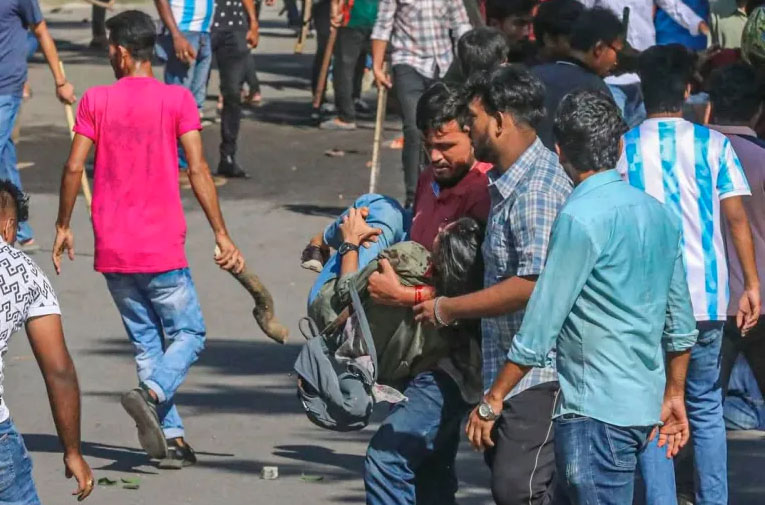

Dhaka, August 5, 2025 — A year ago, Sinthia Mehrin Sokal, a criminology student at the University of Dhaka, suffered a head injury during a massive protest against the Hasina government’s job quota policy. Struck by a ruling party activist, she needed 10 stitches and lost her memory temporarily. Today, she reflects on that day with mixed emotions — pride in the uprising, and concern over what has followed.
That July 2024 movement, sparked by students, soon engulfed the entire nation. In a wave of defiance not seen in decades, people from all walks of life—students, teachers, parents, opposition activists—joined hands to challenge Sheikh Hasina’s 15-year grip on Bangladesh.
On August 5, 2024, following a storming of her residence by protesters, Hasina boarded a military helicopter and fled to India. According to UN estimates, over 1,400 people died during the government’s crackdown on protesters, with thousands more injured.
On August 8, 2024, Nobel laureate Muhammad Yunus was named head of an interim government. By May 2025, Hasina’s Awami League was banned from politics until the deaths of protesters were fully investigated. Its student wing, the Chhatra League, was outlawed under anti-terror laws.
A Revolution at a Crossroads
Despite initial euphoria, the unity of the uprising has begun to fragment. Political groups that once marched together are now locked in disputes over the country’s direction.
“They’re selling the revolution,” said Sokal, lamenting the political jockeying ahead of national elections expected next year. “The change we fought for hasn’t come.”
Muhammad Yunus, now 85, is expected to present a “July Proclamation” today, outlining constitutional reforms and a roadmap for the future. But trust in his transitional leadership is wavering.
Sanjida Khan Deepti, whose 17-year-old son was fatally shot during the protests, expressed frustration: “We marched for a just and democratic Bangladesh. If that’s not delivered, what was the point of my son’s sacrifice?”
Others, like Khokon Chandra Barman, who lost most of his face to a police bullet, still believe in Yunus. “The old regime is gone. It will take time to heal.”
Political Fractures and Fear of Regression
Student and civil society groups such as Students Against Discrimination, once united in purpose, have begun to splinter. While the main opposition BNP demands quick elections, newer groups like the National Citizens Party and Jamaat-e-Islami insist on deep structural changes first.
In an effort to bridge differences, a National Consensus Commission was formed in February. It’s tasked with merging diverse reform agendas into a shared national charter — a binding framework for the next elected government. But infighting has stalled progress, with contentious issues such as bicameral parliament structures, proportional voting systems, and checks on executive power still unresolved.
“If they fail to agree on reforms, we risk slipping into instability,” warned political analyst Rezaul Karim Rony.
Mubashar Hasan, a fellow at Western Sydney University, believes elections will proceed, but remains skeptical of real change. “We’re seeing a surface-level reset, not deep democratic reform.”
Meanwhile, accountability for the crackdown remains elusive. “The same police and officials who committed atrocities are walking free,” said Deepti.
Sharif Osman Bin Hadi, of Inquilab Manch, a grassroots cultural group, echoed these concerns. “Elections without justice risk dragging us back into authoritarianism.”
Lawlessness, Grief, and a City in Protest
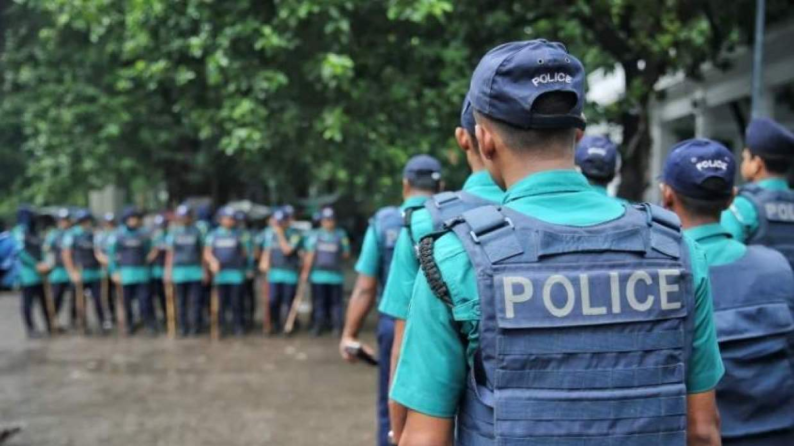
Bangladesh’s law enforcement is still reeling. Hundreds of police stations were attacked during last year’s unrest, and the force briefly vanished from the streets.
“Officers are demoralized,” said Md Ijajul Islam, head of a local rights group. “They were complicit under Hasina, and now lack legitimacy.”
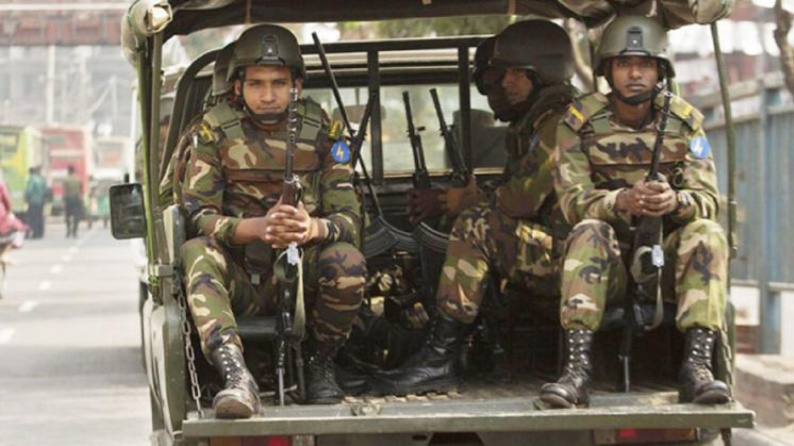
Recent data shows an uptick in political violence and crime. From April to June, 72 people were killed in political clashes, and over 1,600 were injured. Extrajudicial killings and abuses persist, especially by paramilitary units.
Police sources report that in the absence of the Awami League’s local structures — which previously mediated disputes — rival political factions are fighting for control of rural territories and public resources.
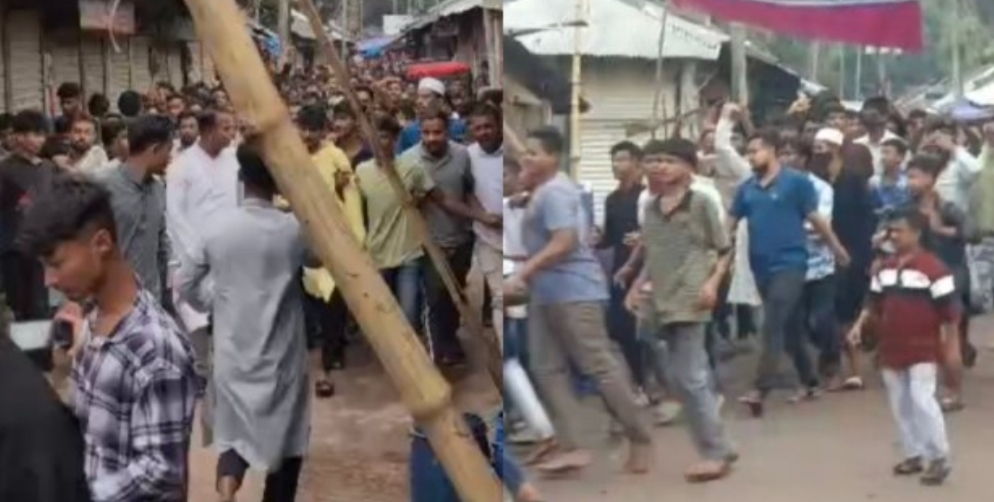
“Street protests are a daily occurrence,” said Dhaka police deputy commissioner Talebur Rahman. “It feels like the city has turned into a permanent demonstration ground.”
Glimmers of Economic Recovery Amid Social Tensions
Still, some indicators are improving. Foreign reserves have risen from $24 billion in May 2024 to nearly $32 billion in June 2025. Inflation has eased from a high of 11.7% to 8.5%. International financial support and a crackdown on capital flight have helped stabilize the economy.
However, challenges remain. Youth unemployment is high, with nearly one-third of Bangladesh’s young population neither in education nor employment. A new 20% US tariff on garments threatens millions of jobs.
Despite this, people like Atikul Gazi — a young protester who lost his arm — continue to hope.
“I may have lost a hand,” Gazi said, “but I haven’t lost faith. This country must never go back to how it was. We must remember the sacrifices.”
BNP Joins July Declaration Commemoration
Today, the opposition Bangladesh Nationalist Party (BNP), led by Secretary General Mirza Fakhrul Islam Alamgir, will officially attend the July Declaration ceremony at Manik Mia Avenue in Dhaka. The event, led by Yunus, is expected to be the symbolic centerpiece of the revolution’s anniversary.
Other BNP leaders including Mirza Abbas, Dr Abdul Moyeen Khan, Nazrul Islam Khan, and Salahuddin Ahmed are part of the five-member delegation. Student leaders from the Jatiyatabadi Chhatra Dal have also been invited.
At 5:00 pm, Yunus is set to read out the July Declaration from the South Plaza of the National Parliament, reaffirming his government’s commitment to reform — though the path ahead remains anything but certain.