Dhaka 7:23 am, Monday, 20 April 2026

The Final Days of Hasina’s Regime: A Chronicle of Collapse

Niloy Mridha
  • Update Time : 08:10:55 am, Tuesday, 5 August 2025
  • / 320 Time View

After nearly 15 years in power, Sheikh Hasina’s rigid grip on Bangladesh ended in dramatic fashion — not with a transition, but with a stunning collapse. Her unwillingness to relinquish control, intolerance of dissent, and reliance on filtered intelligence sealed the fate of her government and destabilized her political legacy.

A Fortress Falls

The downfall came swiftly. Widespread brutality, excessive force, and relentless state propaganda could not suppress a wave of public outrage. By the time Hasina recognized the depth of the crisis, it was already too late. Her administration had lost control. Mass protests overwhelmed the capital, and her support network within the state and security apparatus began to fracture.

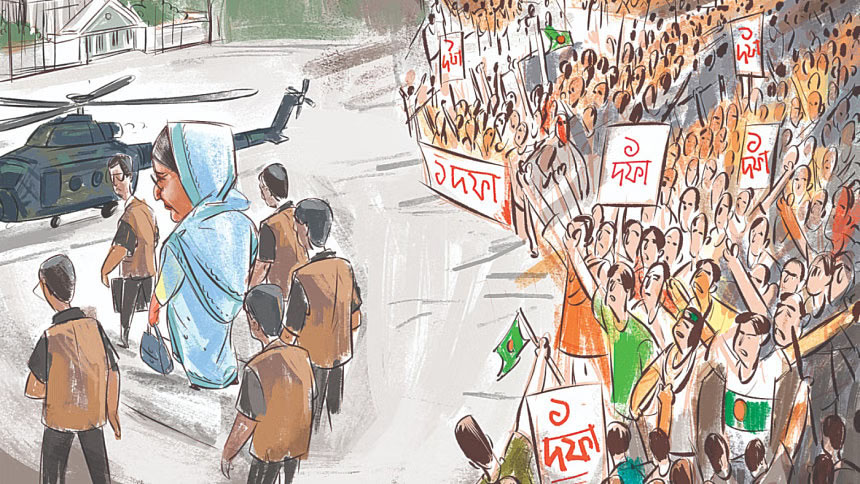
Exactly one year before this report, Hasina fled to India as massive protests breached Dhaka and overran her official residence, the Gono Bhaban. Protesters raised the national flag atop the rooftop, marking what they saw as a historic victory.

Interviews with senior figures within the Awami League, top police officials, and contents of a UN fact-finding report collectively paint a vivid picture of the regime’s final days.


Countdown to Collapse

August 5, 2024: The Last Day

By 9:00am, Hasina had descended to the Gono Bhaban’s ground floor to head for the Bangabhaban — her goal: to request a state of emergency. Her movement was cleared by the police, with the Special Security Force referring to her by the code “Victor-2” in communications. But the departure never happened.

After 40 minutes of waiting, a new message arrived: “Victor-2 will not move now.” She was persuaded by top security personnel to stay put — they assured her everything was under control.

Preparations were underway for a national address. BTV crews were on standby, but Hasina later opted to speak off-script. Some of her closest aides were barred from entering the building.

Meanwhile, in Uttara, the massive “March to Dhaka” demonstration successfully broke through all barriers and poured into the city by late morning. Despite curfews and prior deployments, ruling party supporters rapidly dispersed in the face of the swelling crowds.

At around 11:00am, the last major police attempt to stop protesters failed. Two senior police officers led 200 armed personnel to Kakoli, but reinforcements never arrived. Outnumbered, they retreated. By this point, police communications began collapsing, and top brass were eventually evacuated by helicopter to the cantonment.

Senior officials from the military and police urged Hasina to flee. She initially refused, requesting instead to be taken to her ancestral home in Tungipara. Ultimately, she was escorted to a military airbase and flown to India by late afternoon.


What Triggered the Uprising

A Remark That Ignited a Nation

It all began with Hasina’s inflammatory comment on July 14, 2024, likening anti-quota student protesters to collaborators of the 1971 war. The backlash was immediate, especially across university campuses.

Two days later, the killing of a student, Abu Sayed, by police in Rangpur ignited the movement. Protests swelled nationwide.

July 18: The Turning Point

On July 18, a directive from Dhaka police instructed officers to use any means necessary for survival. That day marked a surge in state violence. A voice recording — allegedly between Hasina and ex-minister Hasanul Haq Inu — captured chilling discussions on helicopter attacks and neighborhood raids.

Later that day, Hasina told Mayor Taposh via another recorded call that she had authorized live ammunition against demonstrators. Taposh agreed and called for mass arrests.

Nightly crisis meetings were held at the home minister’s residence, where strategy and deadly orders were reportedly discussed. The UN later confirmed that lethal force was being used under state instructions.


Curfew, Surveillance, and Crackdown

July 19–21

Hasina convened a key meeting on July 19 with security chiefs. She demanded protesters be killed and their bodies hidden. A shoot-on-sight order was issued shortly thereafter. Army deployment and curfew followed. The public death toll soared past 200.

Despite the mounting death toll, Hasina ignored calls for dialogue. Intelligence reports indicated she was more concerned about property damage than civilian casualties.


Unfolding Isolation

July 27–August 1

With protests reaching fever pitch, Hasina began losing internal party support. On July 29, her coalition partners clashed over the shoot-on-sight directive. Hasina blamed Islamist opposition groups, refusing to acknowledge the students’ grievances. Under pressure, Jamaat-e-Islami was eventually banned.

On August 2, she removed Obaidul Quader as party spokesperson and replaced him with Jahangir Kabir Nanak. Hasina met with PR experts to launch a digital propaganda campaign, but the efforts were too little, too late.


The Final Blow

August 3–4

Realizing the severity of the crisis, Hasina invited protest leaders for talks. Student groups rejected the offer. A massive gathering at the Shaheed Minar called for her resignation.

In desperation, Hasina convened high-level security meetings, seeking to enforce a stricter curfew and planning a mass mobilization of loyalists. However, her own advisers warned this could lead to further bloodshed. She ignored suggestions to resign.

A final security briefing was held on August 4. By midnight, a roster-based police deployment was ordered. The government had essentially abandoned centralized command.


August 5: The End

By early August 5, state authority had broken down entirely. With protesters advancing and security forces refusing further action, Sheikh Hasina boarded a helicopter with her sister Sheikh Rehana. Their escape was quiet and unannounced.

The next day, protesters flooded the Gono Bhaban, hoisting flags in celebration.


Aftermath

The collapse of Hasina’s regime marked not just a change in leadership, but the fall of a political dynasty. Her departure left the Awami League fractured and disoriented. Thousands of party activists were left stranded, uncertain of their future.

The UN and various international bodies are now investigating potential crimes against humanity committed during the regime’s last weeks.

In the words of one former police official:
“We tried to tell the government the truth — but they only listened to what they wanted to hear.”
Tag :

Please Share This Post in Your Social Media

The Final Days of Hasina’s Regime: A Chronicle of Collapse

Update Time : 08:10:55 am, Tuesday, 5 August 2025

After nearly 15 years in power, Sheikh Hasina’s rigid grip on Bangladesh ended in dramatic fashion — not with a transition, but with a stunning collapse. Her unwillingness to relinquish control, intolerance of dissent, and reliance on filtered intelligence sealed the fate of her government and destabilized her political legacy.

A Fortress Falls

The downfall came swiftly. Widespread brutality, excessive force, and relentless state propaganda could not suppress a wave of public outrage. By the time Hasina recognized the depth of the crisis, it was already too late. Her administration had lost control. Mass protests overwhelmed the capital, and her support network within the state and security apparatus began to fracture.

Exactly one year before this report, Hasina fled to India as massive protests breached Dhaka and overran her official residence, the Gono Bhaban. Protesters raised the national flag atop the rooftop, marking what they saw as a historic victory.

Interviews with senior figures within the Awami League, top police officials, and contents of a UN fact-finding report collectively paint a vivid picture of the regime’s final days.


Countdown to Collapse

August 5, 2024: The Last Day

By 9:00am, Hasina had descended to the Gono Bhaban’s ground floor to head for the Bangabhaban — her goal: to request a state of emergency. Her movement was cleared by the police, with the Special Security Force referring to her by the code “Victor-2” in communications. But the departure never happened.

After 40 minutes of waiting, a new message arrived: “Victor-2 will not move now.” She was persuaded by top security personnel to stay put — they assured her everything was under control.

Preparations were underway for a national address. BTV crews were on standby, but Hasina later opted to speak off-script. Some of her closest aides were barred from entering the building.

Meanwhile, in Uttara, the massive “March to Dhaka” demonstration successfully broke through all barriers and poured into the city by late morning. Despite curfews and prior deployments, ruling party supporters rapidly dispersed in the face of the swelling crowds.

At around 11:00am, the last major police attempt to stop protesters failed. Two senior police officers led 200 armed personnel to Kakoli, but reinforcements never arrived. Outnumbered, they retreated. By this point, police communications began collapsing, and top brass were eventually evacuated by helicopter to the cantonment.

Senior officials from the military and police urged Hasina to flee. She initially refused, requesting instead to be taken to her ancestral home in Tungipara. Ultimately, she was escorted to a military airbase and flown to India by late afternoon.


What Triggered the Uprising

A Remark That Ignited a Nation

It all began with Hasina’s inflammatory comment on July 14, 2024, likening anti-quota student protesters to collaborators of the 1971 war. The backlash was immediate, especially across university campuses.

Two days later, the killing of a student, Abu Sayed, by police in Rangpur ignited the movement. Protests swelled nationwide.

July 18: The Turning Point

On July 18, a directive from Dhaka police instructed officers to use any means necessary for survival. That day marked a surge in state violence. A voice recording — allegedly between Hasina and ex-minister Hasanul Haq Inu — captured chilling discussions on helicopter attacks and neighborhood raids.

Later that day, Hasina told Mayor Taposh via another recorded call that she had authorized live ammunition against demonstrators. Taposh agreed and called for mass arrests.

Nightly crisis meetings were held at the home minister’s residence, where strategy and deadly orders were reportedly discussed. The UN later confirmed that lethal force was being used under state instructions.


Curfew, Surveillance, and Crackdown

July 19–21

Hasina convened a key meeting on July 19 with security chiefs. She demanded protesters be killed and their bodies hidden. A shoot-on-sight order was issued shortly thereafter. Army deployment and curfew followed. The public death toll soared past 200.

Despite the mounting death toll, Hasina ignored calls for dialogue. Intelligence reports indicated she was more concerned about property damage than civilian casualties.


Unfolding Isolation

July 27–August 1

With protests reaching fever pitch, Hasina began losing internal party support. On July 29, her coalition partners clashed over the shoot-on-sight directive. Hasina blamed Islamist opposition groups, refusing to acknowledge the students’ grievances. Under pressure, Jamaat-e-Islami was eventually banned.

On August 2, she removed Obaidul Quader as party spokesperson and replaced him with Jahangir Kabir Nanak. Hasina met with PR experts to launch a digital propaganda campaign, but the efforts were too little, too late.


The Final Blow

August 3–4

Realizing the severity of the crisis, Hasina invited protest leaders for talks. Student groups rejected the offer. A massive gathering at the Shaheed Minar called for her resignation.

In desperation, Hasina convened high-level security meetings, seeking to enforce a stricter curfew and planning a mass mobilization of loyalists. However, her own advisers warned this could lead to further bloodshed. She ignored suggestions to resign.

A final security briefing was held on August 4. By midnight, a roster-based police deployment was ordered. The government had essentially abandoned centralized command.


August 5: The End

By early August 5, state authority had broken down entirely. With protesters advancing and security forces refusing further action, Sheikh Hasina boarded a helicopter with her sister Sheikh Rehana. Their escape was quiet and unannounced.

The next day, protesters flooded the Gono Bhaban, hoisting flags in celebration.


Aftermath

The collapse of Hasina’s regime marked not just a change in leadership, but the fall of a political dynasty. Her departure left the Awami League fractured and disoriented. Thousands of party activists were left stranded, uncertain of their future.

The UN and various international bodies are now investigating potential crimes against humanity committed during the regime’s last weeks.

In the words of one former police official:
“We tried to tell the government the truth — but they only listened to what they wanted to hear.”