Dhaka 9:10 am, Monday, 20 April 2026

CPD: Crisis Avoided, But Inflation Still Burdens Low-Income Groups

Niloy Mridha
  • Update Time : 07:15:03 am, Sunday, 10 August 2025
  • / 276 Time View

The Centre for Policy Dialogue (CPD) has stated that Bangladesh escaped a potential economic crisis following the interim government’s assumption of office, but persistent inflation continues to weigh heavily on poor and low-income households.

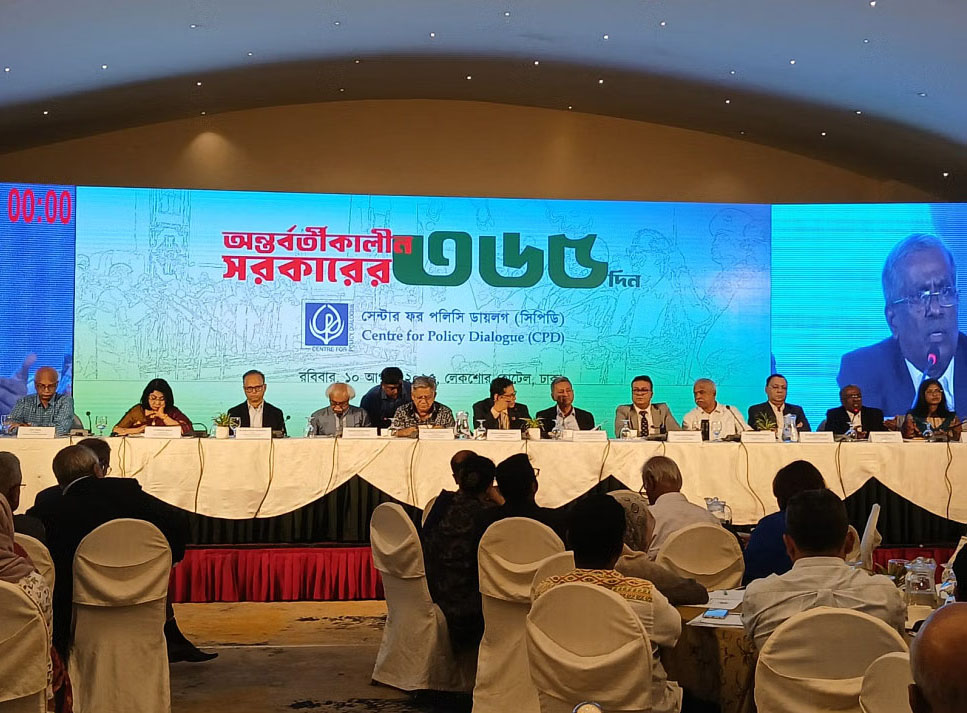
At a discussion titled “365 Days of the Interim Government” held at the Lakeshore Hotel in Dhaka today, CPD Executive Director Fahmida Khatun said economic stabilisation and recovery were among the most urgent priorities when the administration took charge.


Stabilisation Amid Fragility

She noted that the interim government inherited a fragile economy characterised by slow growth. Citizens, she said, had high expectations for restoring democratic practices, reforming state institutions, and reviving economic stability.

“The economy is now on a gradual path to recovery, and the immediate risks have eased. This is one of the most important achievements so far,” she said.


Reforms Unlikely Before 2026 Elections

With national elections set for February 2026, the CPD believes that large-scale reform initiatives are unlikely in the short term.

“The priority should be to preserve the progress already made and address the structural weaknesses of the economy,” Fahmida stressed.

She also observed that progress in reform implementation has been sluggish.


Scorecard Findings and Missed Opportunities

The think-tank evaluated 38 policy areas using a traffic light–style scorecard, rating them green, yellow, or red. Only nine issues were assessed as green.

CPD further pointed out that recommendations from both the white paper panel and the economic restrategising task force remain unexecuted, with no concrete steps taken toward implementation.

Tag :

Please Share This Post in Your Social Media

CPD: Crisis Avoided, But Inflation Still Burdens Low-Income Groups

Update Time : 07:15:03 am, Sunday, 10 August 2025

The Centre for Policy Dialogue (CPD) has stated that Bangladesh escaped a potential economic crisis following the interim government’s assumption of office, but persistent inflation continues to weigh heavily on poor and low-income households.

At a discussion titled “365 Days of the Interim Government” held at the Lakeshore Hotel in Dhaka today, CPD Executive Director Fahmida Khatun said economic stabilisation and recovery were among the most urgent priorities when the administration took charge.


Stabilisation Amid Fragility

She noted that the interim government inherited a fragile economy characterised by slow growth. Citizens, she said, had high expectations for restoring democratic practices, reforming state institutions, and reviving economic stability.

“The economy is now on a gradual path to recovery, and the immediate risks have eased. This is one of the most important achievements so far,” she said.


Reforms Unlikely Before 2026 Elections

With national elections set for February 2026, the CPD believes that large-scale reform initiatives are unlikely in the short term.

“The priority should be to preserve the progress already made and address the structural weaknesses of the economy,” Fahmida stressed.

She also observed that progress in reform implementation has been sluggish.


Scorecard Findings and Missed Opportunities

The think-tank evaluated 38 policy areas using a traffic light–style scorecard, rating them green, yellow, or red. Only nine issues were assessed as green.

CPD further pointed out that recommendations from both the white paper panel and the economic restrategising task force remain unexecuted, with no concrete steps taken toward implementation.