Dhaka 1:58 pm, Sunday, 19 April 2026

I’ve gained the admiration of my teachers

Niloy Mridha
  • Update Time : 10:52:17 am, Saturday, 16 August 2025
  • / 389 Time View

“Do you know what my little bird told me after coming home from school?” asked Umme Tamima Akhter, mother of Mariam Umme Afia, a student at Milestone School and College who tragically died in last month’s plane crash on the school premises. “She said, ‘Ammu, get me into coaching. If you don’t, the teacher won’t be nice to me.’ After seven days of enrolling her, she told me, ‘Now the teachers adore me.’”

Umme Tamima shared this in a video that has been circulating on social media. Speaking at a human chain near the school in Uttara’s Diabari on August 12, she said her daughter had been waiting for her coaching classes in the very building where the fighter jet crashed. Accusing the school authorities, she asked, “Why did they say there was no coaching? Coaching is a major part of the school.”

Her words reflect not only grief but also a troubling reality about the country’s education system, highlighting a culture that has eroded the true purpose of learning.

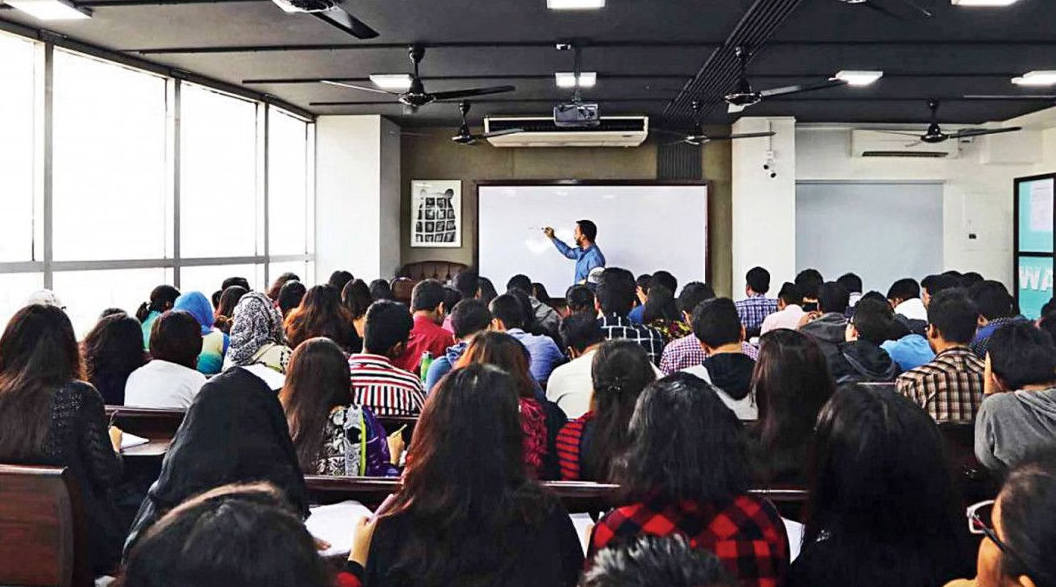
Coaching classes run by schoolteachers themselves are common in Bangladesh. These supplementary sessions, often held before or after school, aim to help students in secondary and higher secondary levels, sometimes in nearby coaching centres. But over time, this practice has morphed into a parallel “shadow education” system, increasingly dependent on fear, coercion, and financial pressure.

Parents often feel compelled to pay high fees, fearing that children who skip coaching will fall behind, receive lower marks, or face subtle harassment. Others enroll their children proactively, hoping for top results, inadvertently feeding into a system that undermines formal schooling.

Teachers argue that heavy syllabuses make it difficult to cover all material during regular school hours, especially when classrooms are overcrowded and students ask questions. Extra coaching sessions can help bridge this gap, and some educators have called for official recognition of these “shadow” classes.

Yet the exploitative nature of coaching—particularly when teachers run sessions for their own students—has raised concerns. In response, the education ministry introduced a policy on June 20, 2012, aimed at curbing the “coaching business.” Teachers were allowed to tutor only up to 10 students from other schools, or provide remedial classes for weaker students at the request of parents, with permission from school authorities. The policy included subject-wise remuneration and penalties, including cancellation of monthly pay orders (MPO) for violations.

The High Court upheld the policy in February 2019, noting the negative impact of coaching on students and parents. However, enforcement has been weak. In Dhaka and across the country, the rules are rarely followed, as the education ministry and Directorate of Secondary and Higher Education cite staff shortages to explain inaction.

As a result, coaching centres continue to dominate. In a country where qualified teachers are scarce, salaries remain low, textbooks change frequently, and the education system revolves around high-stakes exams, piecemeal policies are insufficient.

Experts argue that the crisis demands a systemic overhaul: transparent and fair teacher recruitment, better remuneration, reduced exam pressure, and more engaging classroom learning. Only by addressing these structural flaws can the cycle of dependency on exploitative coaching be broken. In a rapidly evolving world where knowledge and skills advance quickly, the future of Bangladesh’s children cannot be held hostage by an outdated system.

Tag :

Please Share This Post in Your Social Media

I’ve gained the admiration of my teachers

Update Time : 10:52:17 am, Saturday, 16 August 2025

“Do you know what my little bird told me after coming home from school?” asked Umme Tamima Akhter, mother of Mariam Umme Afia, a student at Milestone School and College who tragically died in last month’s plane crash on the school premises. “She said, ‘Ammu, get me into coaching. If you don’t, the teacher won’t be nice to me.’ After seven days of enrolling her, she told me, ‘Now the teachers adore me.’”

Umme Tamima shared this in a video that has been circulating on social media. Speaking at a human chain near the school in Uttara’s Diabari on August 12, she said her daughter had been waiting for her coaching classes in the very building where the fighter jet crashed. Accusing the school authorities, she asked, “Why did they say there was no coaching? Coaching is a major part of the school.”

Her words reflect not only grief but also a troubling reality about the country’s education system, highlighting a culture that has eroded the true purpose of learning.

Coaching classes run by schoolteachers themselves are common in Bangladesh. These supplementary sessions, often held before or after school, aim to help students in secondary and higher secondary levels, sometimes in nearby coaching centres. But over time, this practice has morphed into a parallel “shadow education” system, increasingly dependent on fear, coercion, and financial pressure.

Parents often feel compelled to pay high fees, fearing that children who skip coaching will fall behind, receive lower marks, or face subtle harassment. Others enroll their children proactively, hoping for top results, inadvertently feeding into a system that undermines formal schooling.

Teachers argue that heavy syllabuses make it difficult to cover all material during regular school hours, especially when classrooms are overcrowded and students ask questions. Extra coaching sessions can help bridge this gap, and some educators have called for official recognition of these “shadow” classes.

Yet the exploitative nature of coaching—particularly when teachers run sessions for their own students—has raised concerns. In response, the education ministry introduced a policy on June 20, 2012, aimed at curbing the “coaching business.” Teachers were allowed to tutor only up to 10 students from other schools, or provide remedial classes for weaker students at the request of parents, with permission from school authorities. The policy included subject-wise remuneration and penalties, including cancellation of monthly pay orders (MPO) for violations.

The High Court upheld the policy in February 2019, noting the negative impact of coaching on students and parents. However, enforcement has been weak. In Dhaka and across the country, the rules are rarely followed, as the education ministry and Directorate of Secondary and Higher Education cite staff shortages to explain inaction.

As a result, coaching centres continue to dominate. In a country where qualified teachers are scarce, salaries remain low, textbooks change frequently, and the education system revolves around high-stakes exams, piecemeal policies are insufficient.

Experts argue that the crisis demands a systemic overhaul: transparent and fair teacher recruitment, better remuneration, reduced exam pressure, and more engaging classroom learning. Only by addressing these structural flaws can the cycle of dependency on exploitative coaching be broken. In a rapidly evolving world where knowledge and skills advance quickly, the future of Bangladesh’s children cannot be held hostage by an outdated system.