Fish farming undergoes a quiet but significant change

- Update Time : 08:50:15 am, Saturday, 6 September 2025
- / 553 Time View
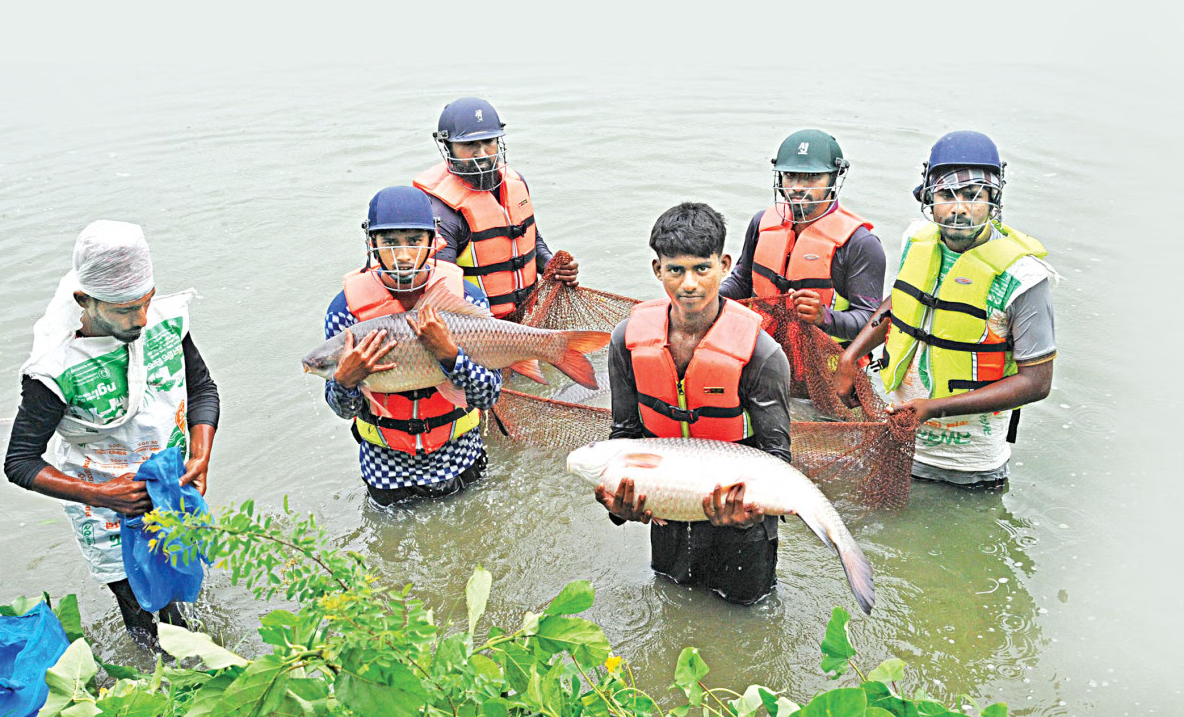

Bangladesh’s Fish Revolution: How Aquaculture Transformed a Nation
Over the years, Bangladesh has seen a dramatic decline in its natural waterbodies, putting pressure on traditional fisheries. Catches from rivers, haors, and floodplains dwindled, but rural communities clung to the saying: “Mache bhat-e Bangali” — fish and rice define the Bengali identity.
Determined to keep fish on Bengali tables, villagers dug ponds, spent hours at small hatcheries, and gradually built a thriving aquaculture sector. Their efforts ensured that fish remained central to the diet and culture of Bangladesh.
Stories of perseverance are common across rural Bangladesh. Take Abdul Jalail Bakul of Mymensingh, who started 17 years ago with two small ponds on land no larger than a football field. Skeptical locals laughed at him, yet today the 56-year-old owns 25 ponds across 35 acres, raising carp, pangas, and tilapia. Initially, he sourced fingerlings from hatcheries around Mymensingh, feed from Bhaluka, and sold fish in Dhaka’s kitchen markets. Over time, traders began visiting his farm directly. Bakul now plans to expand further if he can acquire more ponds.
Similarly, Anwar Hossain of Anandipur grew his farm from one pond to five over the past decade. Farmers like Bakul and Hossain have helped turn fish farming into a national industry, feeding millions, providing employment to lakhs, and establishing Bangladesh as one of the world’s largest inland fish producers.
The Rise of Aquaculture
In FY 2023-24, Bangladesh produced over 50 lakh tonnes of fish, with aquaculture contributing nearly 60 percent — a sharp increase from just 16 percent in the early 1980s. Natural waterbodies now provide only 28 percent of total production, but overall output has remained steady thanks to farmed fish cultivated across 8.7 lakh hectares of ponds, canals, and wetlands.
Aquaculture contributes 2.53 percent of GDP and 22 percent of agricultural GDP, supporting approximately two crore people, including 14 lakh women. Fish provides almost 60 percent of Bangladesh’s animal protein, with daily consumption averaging 67.8 grams per person, exceeding government targets. Farmed species like pangas and tilapia have become staples, replacing costlier wild fish such as hilsa and katla in many rural households.
Experts credit a combination of regulation, investment, and entrepreneurship for the sector’s success. Seasonal bans helped replenish hilsa stocks, hatcheries expanded the seed supply, and the Bangladesh Fisheries Research Institute (BFRI) introduced improved breeds and disease management techniques.
“Bangladesh’s achievements result from practical policies reaching farmers’ doorsteps,” said Farida Akhter, adviser at the Ministry of Fisheries and Livestock. She noted that feed mills, oxygenated transport tanks, and export opportunities, particularly in shrimp and frozen fish, incentivized production. Government subsidies, credit support, and research assistance reduced risks for farmers, enabling widespread adoption.
Pioneers of the Industry
ABM Shamsul Alam, a Mymensingh farmer turned consultant, recalled entering fish farming in the early 1990s, when commercial aquaculture was rare. He initially experimented with shrimp, then shifted to tilapia around 2002, which proved viable. Alam was among the first to import Thai koi and tilapia fingerlings, selling them in Dhaka’s Karwan Bazar. Over time, tilapia became a mainstay of the national diet.
Today, he advises international projects, including pilot farms in Fiji combining shrimp and tilapia.
Regional Hubs and Major Players
Mymensingh and Cumilla are now the country’s largest fish-producing districts, each harvesting over three lakh tonnes annually. Farmers cultivate around 15 species, including carp, pangas, singi, koi, pabda, and magur, often in mixed systems. Rajshahi has also seen significant growth, harvesting 1.10 lakh tonnes in FY24, valued at Tk 2,400 crore. Among the leading operators is SS Fish Farm, founded by entrepreneur Md Golam Saklayen, now spanning 800 bighas and dispatching daily consignments worth Tk 15-20 lakh.
Challenges and Uneven Growth
The boom has not benefited everyone equally. In coastal regions like Khulna and Satkhira, salinity intrusion and floods have forced farmers toward crabs and salt-tolerant species, but earnings remain volatile. Rising feed costs — from Tk 600-700 per sack to Tk 1,400-1,500 — and other expenses put pressure on small farmers, who often sell at lower margins.
Experts also warn that the nutritional quality of farmed fish can be lower due to poor feed and overuse of antibiotics. Heavy metals have been detected in some samples, raising food safety concerns. International buyers have flagged residue issues, particularly in shrimp exports, leading to repeated rejections in the EU and US.
The government and officials are addressing these issues through extension services, promoting “good aquaculture practices,” encouraging local feed production, alternative ingredients, and regular residue testing under the National Residue Control Plan.
Climate Change and Environmental Strains
Environmental challenges are increasingly affecting production. Late rainfall, heatwaves, floods, and salinity intrusion have disrupted farm schedules, with ponds drying earlier in Barind and submergence affecting haor wetlands. Climate-resilient practices, heat- and salt-tolerant species, and early warning systems are being promoted under the Blue Economy framework.
“Adaptation efforts remain small-scale and underfunded,” said Professor Md Monirul Islam of Dhaka University. Conflicts often arise between fisheries and agriculture, and international climate finance has yet to make a significant impact.
Looking Ahead
The focus now is not just on increasing output but ensuring sustainability. Cluster-based farming, certification schemes, integrated models, and biosecure pond management are being promoted alongside climate-resilient species research.
“For farmers, the challenge remains in species selection, feed management, and marketing,” said Alam. “But innovation and entrepreneurship have driven Bangladesh’s fish revolution. The next step is safe, sustainable production with minimal antibiotics and chemicals.”
Bangladesh has achieved remarkable growth in aquaculture, but the future will depend on balancing expansion with environmental protection, food safety, and climate resilience.
“The demand for fish will continue to rise,” Professor Islam said. “The real question is whether production can remain sustainable and resilient to climate challenges.”