Dhaka 3:30 pm, Saturday, 2 May 2026

Long Fuel Queues Disappear: Pump Owners Explain the Reasons

Staff Correspondent:
  • Update Time : 03:44:01 am, Saturday, 2 May 2026
  • / 28 Time View

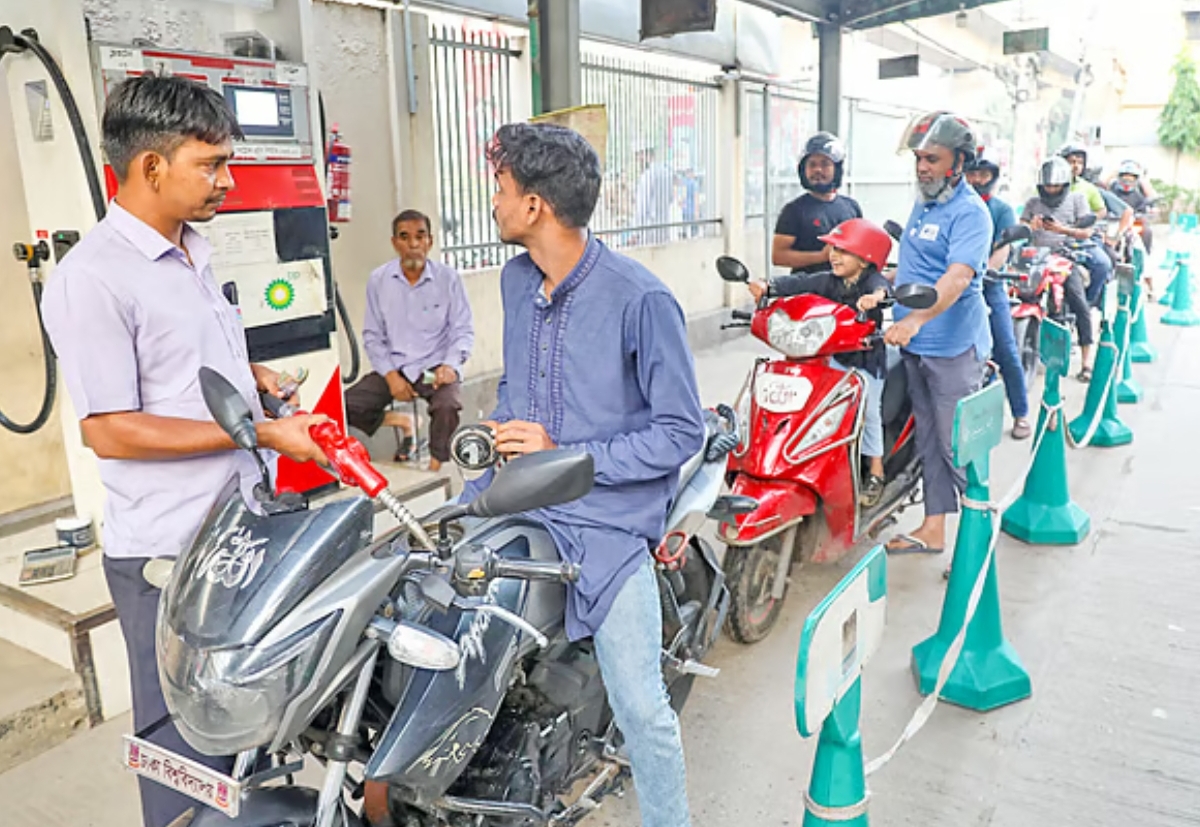
Fuel shortages have eased, and long queues at filling stations have disappeared. Extra fuel has been supplied to all pumps, and a fuel pass system has been introduced. Pump owners say that a combination of government measures has helped reduce congestion. Demand at stations has also dropped, with some outlets now selling even less than their allocated amounts.

In addition to octane, petrol is widely used in motorcycles and, in some cases, older private vehicles. It is also used to run CNG auto-rickshaws, small local transport vehicles, and equipment like grass cutters. This fuel is entirely produced within the country.

Industry insiders point out that fears of a fuel crisis have declined due to the ongoing indefinite ceasefire. To ease public hardship, the government has taken several steps simultaneously. Monitoring at filling stations has been strengthened, and awareness campaigns have been launched to counter rumors about fuel shortages. The recent price increase has also discouraged illegal stockpiling. The introduction of fuel passes has prevented the same vehicles from repeatedly collecting fuel, while enforcement drives against illegal hoarding are ongoing. Increased supply in the market has further helped normalize the situation.

At present, there is no significant fuel shortage in the country. As supply has improved, crowds at fuel stations have decreased, and conditions are returning to normal. After sales on April 28, diesel reserves stood at around 181,000 tons. About 75,000 tons of diesel are being unloaded from three ships, with another 33,000 tons awaiting discharge. The projected diesel demand for May is approximately 370,000 tons, while confirmed supply is expected to reach about 329,000 tons.

Officials say there should be no disruption in fuel supply. Tenders have already been invited to procure fuel for the July–December period.

According to the Bangladesh Petroleum Corporation (BPC), the demand for octane in May is estimated at 37,000 tons. Of this, 24,000 tons will come from local sources, with an additional 26,500 tons expected through imports. Current octane reserves stand at 42,933 tons, while petrol stocks are around 17,640 tons. Regular petrol supply continues from domestic sources, and reserves may increase further if additional diesel and octane are imported through direct purchase agreements.

BPC Chairman Md. Rezanur Rahman has stated that there will be no issues with fuel supply, as preparations are already underway to ensure sufficient stock for the second half of the year.


Tag :

Please Share This Post in Your Social Media

Long Fuel Queues Disappear: Pump Owners Explain the Reasons

Update Time : 03:44:01 am, Saturday, 2 May 2026

Fuel shortages have eased, and long queues at filling stations have disappeared. Extra fuel has been supplied to all pumps, and a fuel pass system has been introduced. Pump owners say that a combination of government measures has helped reduce congestion. Demand at stations has also dropped, with some outlets now selling even less than their allocated amounts.

In addition to octane, petrol is widely used in motorcycles and, in some cases, older private vehicles. It is also used to run CNG auto-rickshaws, small local transport vehicles, and equipment like grass cutters. This fuel is entirely produced within the country.

Industry insiders point out that fears of a fuel crisis have declined due to the ongoing indefinite ceasefire. To ease public hardship, the government has taken several steps simultaneously. Monitoring at filling stations has been strengthened, and awareness campaigns have been launched to counter rumors about fuel shortages. The recent price increase has also discouraged illegal stockpiling. The introduction of fuel passes has prevented the same vehicles from repeatedly collecting fuel, while enforcement drives against illegal hoarding are ongoing. Increased supply in the market has further helped normalize the situation.

At present, there is no significant fuel shortage in the country. As supply has improved, crowds at fuel stations have decreased, and conditions are returning to normal. After sales on April 28, diesel reserves stood at around 181,000 tons. About 75,000 tons of diesel are being unloaded from three ships, with another 33,000 tons awaiting discharge. The projected diesel demand for May is approximately 370,000 tons, while confirmed supply is expected to reach about 329,000 tons.

Officials say there should be no disruption in fuel supply. Tenders have already been invited to procure fuel for the July–December period.

According to the Bangladesh Petroleum Corporation (BPC), the demand for octane in May is estimated at 37,000 tons. Of this, 24,000 tons will come from local sources, with an additional 26,500 tons expected through imports. Current octane reserves stand at 42,933 tons, while petrol stocks are around 17,640 tons. Regular petrol supply continues from domestic sources, and reserves may increase further if additional diesel and octane are imported through direct purchase agreements.

BPC Chairman Md. Rezanur Rahman has stated that there will be no issues with fuel supply, as preparations are already underway to ensure sufficient stock for the second half of the year.