The targeted killing of intellectuals in the final phase before defeat

- Update Time : 04:28:29 am, Sunday, 14 December 2025
- / 309 Time View
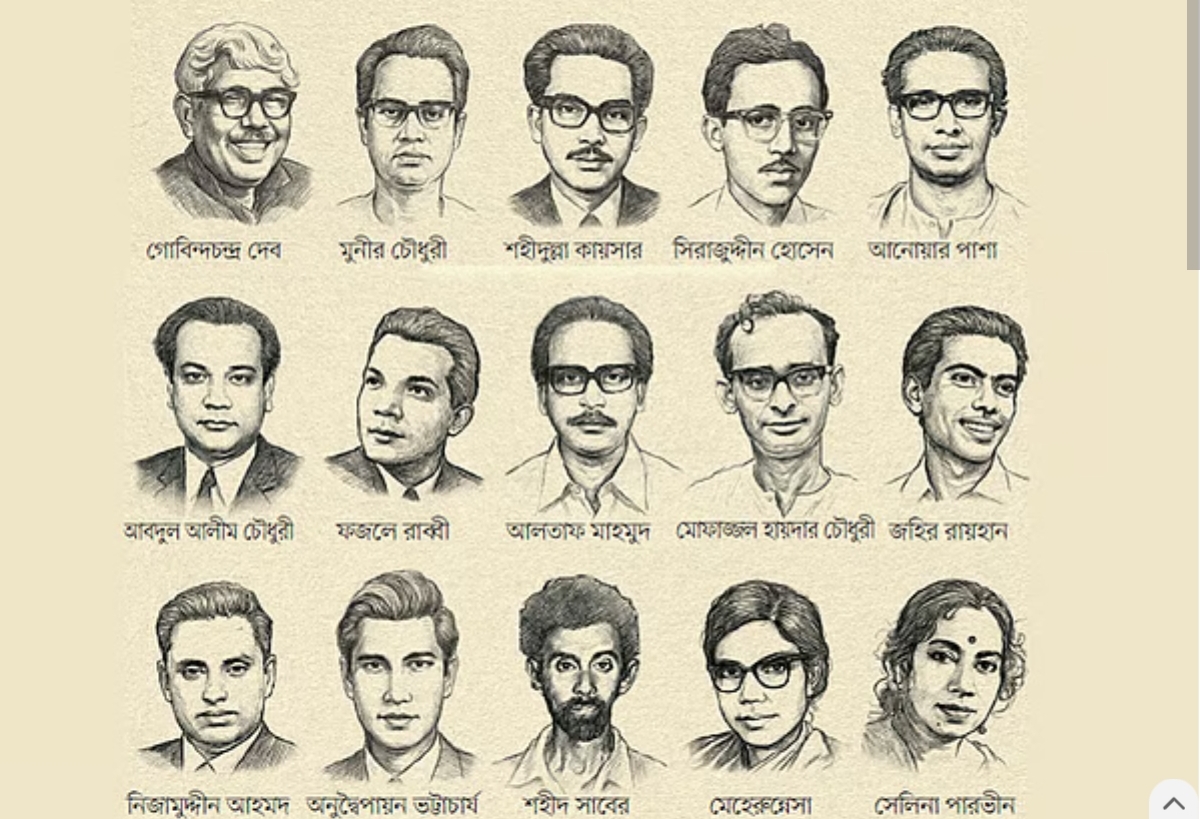

A systematic plan was drawn up to carry out the killings. In December, the Al-Badr force began implementing this plan. According to available accounts, Moinuddin was responsible for directing the operations, while Ashrafuzzaman was actively involved in the executions.
In this context, repeated reference is made to a list allegedly prepared by General Rao Farman Ali, the head of the Pakistani civil administration during the Liberation War. After independence, a diary belonging to Rao Farman Ali was recovered from Bangabhaban, which reportedly contained names of both killed and surviving intellectuals. An image published on the Liberation War–focused website Sangramer Notebook shows a handwritten list by Rao Farman Ali that includes the names of many prominent intellectuals, among them Munier Chowdhury.
Their contributions
Works such as Anwar Pasha’s novel Rifle, Bread and Woman, Munier Chowdhury’s play Kabar, and the melody of Amar Bhaiyer Rokte Rangano Ekushey February composed by Altaf Mahmud are inseparably woven into the identity of Bangladesh as a nation.
The foreword of the book Martyred Intellectuals of the Liberation War: Memory, Life, Struggle notes that these intellectuals were distinguished not only by their brilliance but by an even more powerful and dangerous force—their conscience. They responded to the call of that conscience and became the moral voice of the nation. They envisioned a modern, progressive, secular country free from discrimination and committed to the protection of human rights.
The loss of these finest minds remains an enduring wound for the nation. It is a loss that continues to be felt to this day—and one that can never truly be repaired.
References
(List retained for context and attribution)