Khaleda Zia never lost an election

- Update Time : 06:42:54 am, Tuesday, 30 December 2025
- / 737 Time View
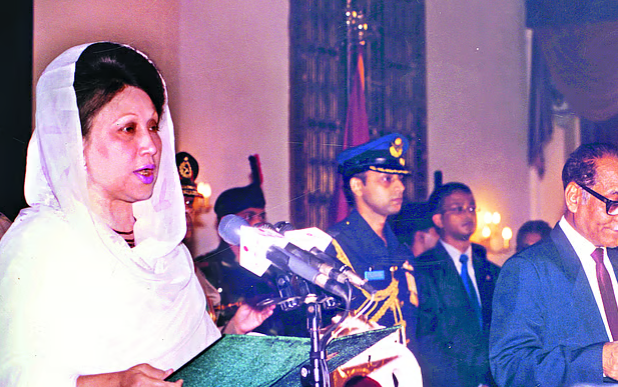

Khaleda Zia holds a unique place in Bangladesh’s electoral history as the country’s first democratically elected prime minister. Wherever she contested elections—Feni, Bogura, Dhaka, Chattogram, Lakshmipur, or Khulna—she emerged victorious. She remains the only political leader in Bangladesh to have contested 23 parliamentary seats across five general elections and won every single one.
There is no record of Khaleda Zia ever losing an election. Even in elections where the Bangladesh Nationalist Party (BNP) failed to form the government, she personally won all the constituencies she contested.
Following the mass uprising of 1990 that led to the fall of military ruler Hussain Muhammad Ershad, the fifth parliamentary election was held on 27 February 1991. In that election, Khaleda Zia ran from five constituencies—Bogura-7, Dhaka-5, Dhaka-9, Feni-1, and Chattogram-8—and won all of them by large margins. After BNP formed the government, she became Bangladesh’s first woman prime minister and the second woman ever to lead a Muslim-majority country.
In the seventh parliamentary election held in June 1996, the Awami League formed the government. However, Khaleda Zia once again proved unbeatable at the ballot box. She contested and won five seats: Bogura-6, Bogura-7, Feni-1, Lakshmipur-2, and Chattogram-1.
The eighth parliamentary election took place on 1 October 2001. Khaleda Zia ran from Bogura-6, Bogura-7, Khulna-2, Feni-1, and Lakshmipur-2, winning all five decisively. BNP’s victory in that election returned her to office as prime minister for the third time.
Earlier, in the controversial sixth parliamentary election on 15 February 1996, BNP formed a government after Khaleda Zia won from Feni-1, Feni-2, Bogura-7, Sirajganj-2, and Rajshahi-2. She was sworn in for a second consecutive term but resigned just 11 days later amid political turmoil. That parliament, however, passed the bill establishing the non-party caretaker government system, after which the legislature was dissolved.
By the 2008 election, electoral rules limited candidates to contesting a maximum of three seats. Khaleda Zia ran from Bogura-6, Bogura-7, and Feni-1—and won all three.
Political scientist and Dhaka University professor Dr. Dil Rowshan Jinnat Ara Nazneen has described Khaleda Zia as an exceptionally popular leader whose firm principles earned admiration across party lines. She noted that although many expected the Awami League to win the 1991 election, a single televised speech by Khaleda Zia dramatically shifted public opinion. According to Dr. Nazneen, Khaleda Zia’s composed manner, dignified conduct, and measured speech consistently influenced voters and contributed to her repeated electoral success.