Dhaka 11:29 am, Sunday, 22 November 2026

Faridpur Women Turn Lotus Stems into High-Value Eco-Friendly Silk for Global Market

Reporter Name
  • Update Time : 01:33:50 am, Sunday, 22 November 2026
  • / 14 Time View

The traditional Chapai Beel, also known as Padma Beel, in Ronkail village of Kanaipur Union under Faridpur Sadar Upazila is emerging as a source of new economic opportunities, as local women transform pink lotus stems into a valuable and environmentally friendly fibre known internationally as lotus silk.


The initiative has opened up prospects for rural employment and foreign exchange earnings, with women from Ronkail village producing the highly valued thread from lotus stems found in the wetland.


According to relevant sources, the women received training under a project titled “Diversity, Utilisation and Conservation of Lotus Flowers”, undertaken by research organisation BPRD at the initiative of lotus researcher Shikdar Abul Kalam Shamsuddin.


After just three days of training, they became capable of producing quality thread from lotus stems. Through regular practice, they have developed the skills to make exceptionally fine, high-quality fibre.


The lotus silk has also been used to produce attractive scarves and fabrics through Jamdani weaving by master artisans in Sonargaon.


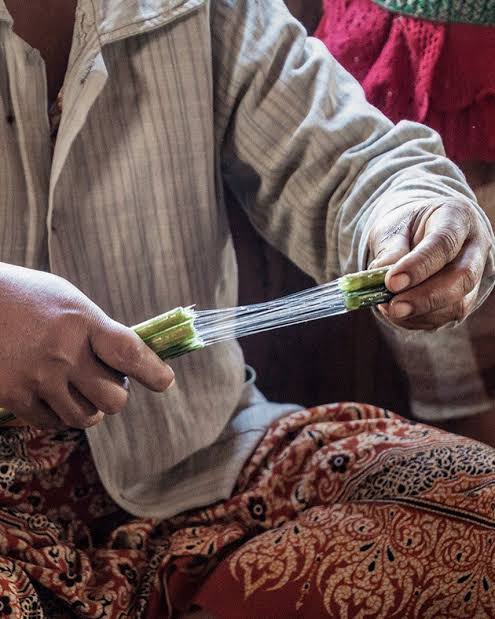
The pink lotus stems growing in Chapai Beel are considered particularly suitable for producing the fibre. The process involves gently breaking fresh lotus stems at intervals of approximately one inch and pulling them apart to extract fine, naturally adhesive fibres from their inner cavities.


The fibres dry quickly when exposed to air, eliminating the need for separate sun-drying. The women then twist the extracted fibres together using their palms to produce fine, bright yellow threads.


The production process uses no chemicals and does not harm insects, making it an environmentally friendly alternative to conventional textile fibres.


According to information from the Bangladesh Small and Cottage Industries Corporation (BSCIC) in Faridpur, producing one kilogram of lotus silk requires approximately 30,000 lotus stems in Myanmar, Vietnam and Cambodia. However, lotus plants grown in Faridpur’s fertile alluvial soil can yield the same quantity of thread from around 15,000 stems.


The wetland produces abundant lotus flowers between August and December. Moreover, new stems grow quickly even after existing ones are harvested, offering potential for continued production.


Lotus silk is reported to be more durable than conventional silk or cotton fabrics, completely water-resistant and less prone to creasing. In the international market, one kilogram of lotus silk yarn reportedly sells for between $2,000 and $3,500. Fabrics made from the fibre can fetch between $25 and $1,000 per yard, depending on quality.


Local artisans said research into the commercial potential of lotus flowers in Bangladesh began in 2022. As part of the initiative, women living near Chapai Beel in Faridpur received training in lotus silk production.


However, they said the initiative failed to progress further due to a lack of support from the government at the time. The Rajbanshi family involved in learning the craft is now facing financial hardship, while the valuable natural resources of the wetland are increasingly at risk of neglect and destruction rather than proper conservation and management.


Rekha Rani, a woman artisan from Ronkail village, said producing thread from lotus stems that had previously been neglected in the wetland had given local women an opportunity to earn additional income alongside their household responsibilities.


However, she said their earnings from the work remained below expectations.


Altaf Hossain, chairman of Kanaipur Union Parishad, said local residents had previously been unaware of the economic potential hidden within lotus flowers.


“If we can properly utilise the lotus flowers growing in this wetland, we will be able to strengthen the local economy,” he said.


Chowdhury Nayab Yusuf, Member of Parliament for Faridpur-3, recently visited the wetland and inspected the lotus flowers and the ongoing production activities.


He said the previous government had stalled the promising initiative and pledged that the current government would give the project the highest priority and extend necessary support.


“I will provide all possible assistance and work to take this industry forward in the global market,” he said.


Local stakeholders believe that government and private-sector support, modern spinning equipment and direct connections with international buyers are essential to establishing commercial-scale production and marketing of lotus silk.


They believe that with the necessary investment, infrastructure and institutional backing, Faridpur’s lotus wetlands could eventually become a major centre for the lotus silk industry.

Tag :

Please Share This Post in Your Social Media

Faridpur Women Turn Lotus Stems into High-Value Eco-Friendly Silk for Global Market

Update Time : 01:33:50 am, Sunday, 22 November 2026

The traditional Chapai Beel, also known as Padma Beel, in Ronkail village of Kanaipur Union under Faridpur Sadar Upazila is emerging as a source of new economic opportunities, as local women transform pink lotus stems into a valuable and environmentally friendly fibre known internationally as lotus silk.


The initiative has opened up prospects for rural employment and foreign exchange earnings, with women from Ronkail village producing the highly valued thread from lotus stems found in the wetland.


According to relevant sources, the women received training under a project titled “Diversity, Utilisation and Conservation of Lotus Flowers”, undertaken by research organisation BPRD at the initiative of lotus researcher Shikdar Abul Kalam Shamsuddin.


After just three days of training, they became capable of producing quality thread from lotus stems. Through regular practice, they have developed the skills to make exceptionally fine, high-quality fibre.


The lotus silk has also been used to produce attractive scarves and fabrics through Jamdani weaving by master artisans in Sonargaon.


The pink lotus stems growing in Chapai Beel are considered particularly suitable for producing the fibre. The process involves gently breaking fresh lotus stems at intervals of approximately one inch and pulling them apart to extract fine, naturally adhesive fibres from their inner cavities.


The fibres dry quickly when exposed to air, eliminating the need for separate sun-drying. The women then twist the extracted fibres together using their palms to produce fine, bright yellow threads.


The production process uses no chemicals and does not harm insects, making it an environmentally friendly alternative to conventional textile fibres.


According to information from the Bangladesh Small and Cottage Industries Corporation (BSCIC) in Faridpur, producing one kilogram of lotus silk requires approximately 30,000 lotus stems in Myanmar, Vietnam and Cambodia. However, lotus plants grown in Faridpur’s fertile alluvial soil can yield the same quantity of thread from around 15,000 stems.


The wetland produces abundant lotus flowers between August and December. Moreover, new stems grow quickly even after existing ones are harvested, offering potential for continued production.


Lotus silk is reported to be more durable than conventional silk or cotton fabrics, completely water-resistant and less prone to creasing. In the international market, one kilogram of lotus silk yarn reportedly sells for between $2,000 and $3,500. Fabrics made from the fibre can fetch between $25 and $1,000 per yard, depending on quality.


Local artisans said research into the commercial potential of lotus flowers in Bangladesh began in 2022. As part of the initiative, women living near Chapai Beel in Faridpur received training in lotus silk production.


However, they said the initiative failed to progress further due to a lack of support from the government at the time. The Rajbanshi family involved in learning the craft is now facing financial hardship, while the valuable natural resources of the wetland are increasingly at risk of neglect and destruction rather than proper conservation and management.


Rekha Rani, a woman artisan from Ronkail village, said producing thread from lotus stems that had previously been neglected in the wetland had given local women an opportunity to earn additional income alongside their household responsibilities.


However, she said their earnings from the work remained below expectations.


Altaf Hossain, chairman of Kanaipur Union Parishad, said local residents had previously been unaware of the economic potential hidden within lotus flowers.


“If we can properly utilise the lotus flowers growing in this wetland, we will be able to strengthen the local economy,” he said.


Chowdhury Nayab Yusuf, Member of Parliament for Faridpur-3, recently visited the wetland and inspected the lotus flowers and the ongoing production activities.


He said the previous government had stalled the promising initiative and pledged that the current government would give the project the highest priority and extend necessary support.


“I will provide all possible assistance and work to take this industry forward in the global market,” he said.


Local stakeholders believe that government and private-sector support, modern spinning equipment and direct connections with international buyers are essential to establishing commercial-scale production and marketing of lotus silk.


They believe that with the necessary investment, infrastructure and institutional backing, Faridpur’s lotus wetlands could eventually become a major centre for the lotus silk industry.