Dhaka 2:11 pm, Tuesday, 23 June 2026

Bangladesh Targets New Billion-Dollar Garment Markets

Reporter Name
  • Update Time : 07:05:51 am, Thursday, 23 January 2025
  • / 506 Time View

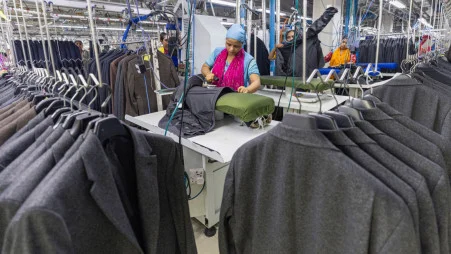
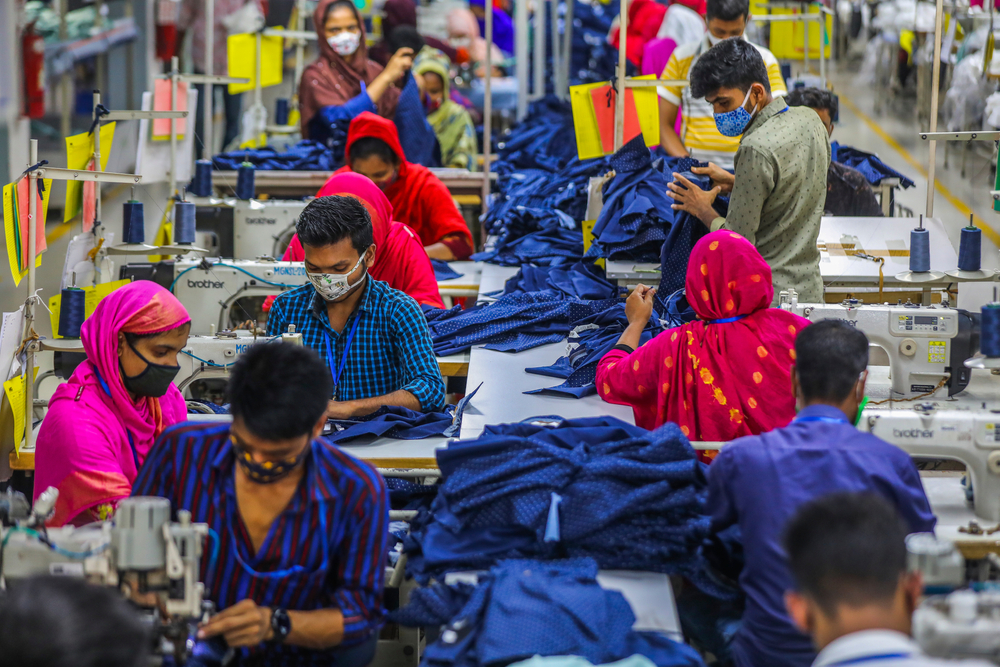
The export of ready-made garments (RMG) to emerging and unconventional markets has been steadily increasing, even amidst both local and global challenges. Currently, exports to at least three markets are approaching the $1 billion mark. Exporters believe that with consistent growth, these markets could rival major markets in terms of export value. Currently, 10 markets have reached the $1 billion export milestone.


Bangladesh’s export sector is heavily dependent on the garment industry, with a significant risk attached to over-reliance on traditional markets. To mitigate this risk, there is a push to expand into unconventional markets. The government is incentivizing exporters with a 4% cash subsidy for exports to these new markets.


According to the Export Promotion Bureau (EPB) and the Bangladesh Garment Manufacturers and Exporters Association (BGMEA), the three biggest emerging markets are Japan, Australia, and India. In 2024, Japan’s garment exports totaled $1.12 billion, and the export of knitwear and oven shirts from Japan was balanced. The U.S. and Canada remain major markets, with higher demand for oven products. Australia imported $830 million worth of garments, and India imported $610 million, with higher demand for knitwear in Australia and oven products in India.


Experts believe that these markets will surpass $1 billion in exports very soon. Mahyuddin Rubel, a former director of BGMEA and executive director of Denim Expert, explained that after the COVID-19 pandemic, demand in traditional Western markets decreased, while emerging Asian economies showed better performance, leading to increased demand and slightly better prices. Additionally, the shorter lead times from Asia have also been a significant advantage for exporters.


Russia is also identified as a potentially large market with the possibility of surpassing $1 billion in exports. The government’s role in increasing exports to these emerging markets will require diplomatic efforts to improve Bangladesh’s brand image and promote participation in roadshows, trade fairs, and exhibitions. Building connections with business leaders in these countries will also be essential.


Currently, Bangladesh’s main export markets remain the European Union (EU), the U.S., and Canada, which historically accounted for the majority of exports. However, 18 emerging countries now account for a significant portion of exports, including Japan, Australia, China, Russia, Turkey, the UAE, South Korea, and India. Last year, exports to unconventional markets represented 16.46% of the total, amounting to $6.33 billion.


Among the $1 billion export markets, the U.S., U.K., and Canada, along with EU countries like France, Germany, the Netherlands, Italy, Denmark, Spain, and Poland, continue to lead in garment exports.

 

Please Share This Post in Your Social Media

Bangladesh Targets New Billion-Dollar Garment Markets

Update Time : 07:05:51 am, Thursday, 23 January 2025

The export of ready-made garments (RMG) to emerging and unconventional markets has been steadily increasing, even amidst both local and global challenges. Currently, exports to at least three markets are approaching the $1 billion mark. Exporters believe that with consistent growth, these markets could rival major markets in terms of export value. Currently, 10 markets have reached the $1 billion export milestone.


Bangladesh’s export sector is heavily dependent on the garment industry, with a significant risk attached to over-reliance on traditional markets. To mitigate this risk, there is a push to expand into unconventional markets. The government is incentivizing exporters with a 4% cash subsidy for exports to these new markets.


According to the Export Promotion Bureau (EPB) and the Bangladesh Garment Manufacturers and Exporters Association (BGMEA), the three biggest emerging markets are Japan, Australia, and India. In 2024, Japan’s garment exports totaled $1.12 billion, and the export of knitwear and oven shirts from Japan was balanced. The U.S. and Canada remain major markets, with higher demand for oven products. Australia imported $830 million worth of garments, and India imported $610 million, with higher demand for knitwear in Australia and oven products in India.


Experts believe that these markets will surpass $1 billion in exports very soon. Mahyuddin Rubel, a former director of BGMEA and executive director of Denim Expert, explained that after the COVID-19 pandemic, demand in traditional Western markets decreased, while emerging Asian economies showed better performance, leading to increased demand and slightly better prices. Additionally, the shorter lead times from Asia have also been a significant advantage for exporters.


Russia is also identified as a potentially large market with the possibility of surpassing $1 billion in exports. The government’s role in increasing exports to these emerging markets will require diplomatic efforts to improve Bangladesh’s brand image and promote participation in roadshows, trade fairs, and exhibitions. Building connections with business leaders in these countries will also be essential.


Currently, Bangladesh’s main export markets remain the European Union (EU), the U.S., and Canada, which historically accounted for the majority of exports. However, 18 emerging countries now account for a significant portion of exports, including Japan, Australia, China, Russia, Turkey, the UAE, South Korea, and India. Last year, exports to unconventional markets represented 16.46% of the total, amounting to $6.33 billion.


Among the $1 billion export markets, the U.S., U.K., and Canada, along with EU countries like France, Germany, the Netherlands, Italy, Denmark, Spain, and Poland, continue to lead in garment exports.