Dhaka 4:55 pm, Thursday, 8 October 2026

Bangladesh Police: Armed for War, Not Peace

Niloy Mridha
  • Update Time : 06:56:20 am, Sunday, 10 August 2025
  • / 571 Time View

Weapon records reveal how lethal procurement shaped the deadly July crackdown


An Uprising Met with Live Fire

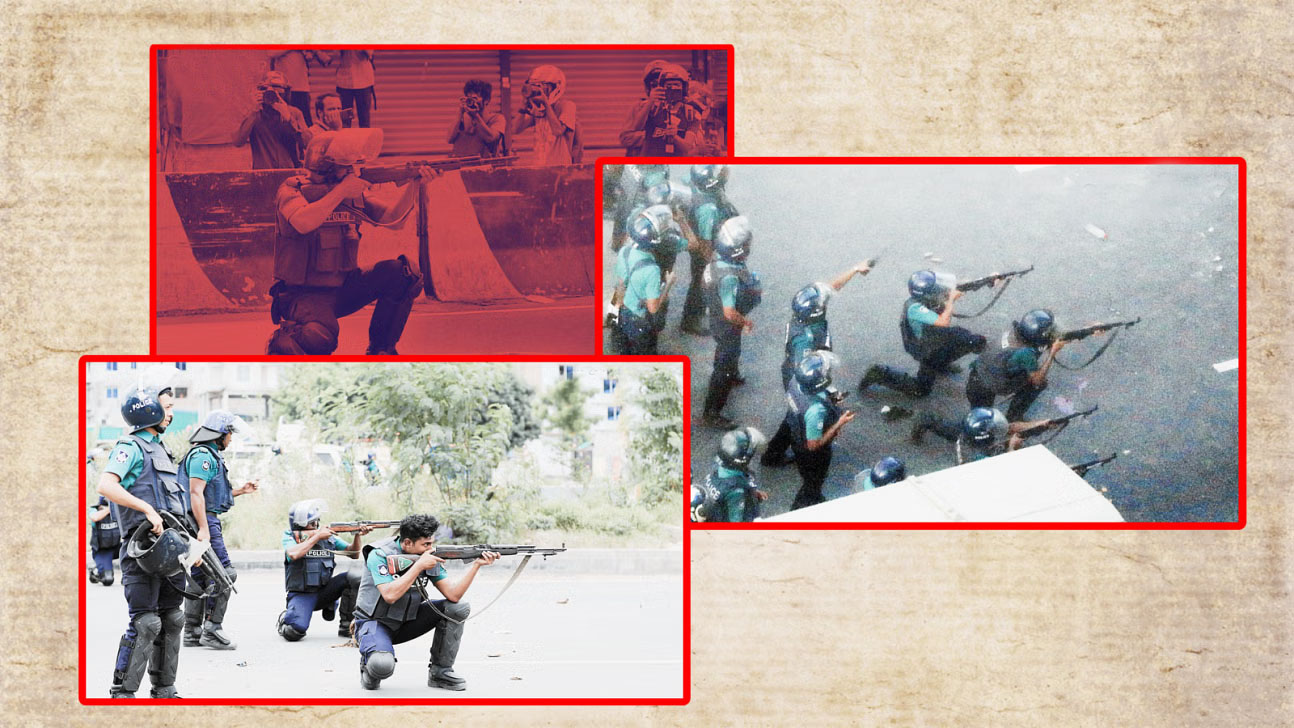
Long before the deadly gunfire of July 2024, Bangladesh Police had already transformed into a heavily armed institution. Procurement records show a clear preference for battlefield-grade weapons over standard crowd-control tools — a choice that would leave hundreds dead and thousands injured during the protests that toppled the Awami League.

The tipping point came on July 18, 2024, when then-Prime Minister Sheikh Hasina was heard instructing police to use lethal force against demonstrators. But the police’s existing arsenal suggests the outcome was inevitable.


A Force Built for Lethality

Official procurement data reviewed between 2021 and 2023 shows:

  • 24.9 million rounds of live ammunition purchased

  • Only 3 million rounds of non-lethal munitions (tear gas, rubber bullets)

  • Tk 240 crore spent on lethal weapons — 50% more than the Tk 191 crore on non-lethal gear

When protests erupted, police responded with what they had the most of: deadly ammunition.


Combat Rifles on City Streets

In 2022, police imported 18,000 semi-automatic 7.62mm rifles and 1 million live rounds.

A UN fact-finding report (Feb 2025) stated:

“This type of ammunition is intended for combat against armoured targets, not for law enforcement. It is normally restricted to military or paramilitary forces.”

Video footage from protest sites showed police firing these rifles in automatic mode — a setting typically reserved for war zones. Military analyst Brig Gen (retd) M Sakhawat Hussain called them “the best Chinese killing machines”.


Beyond Rifles: A War-Grade Arsenal

Procurement records also reveal:

  • 9mm Submachine Guns (SMGs) from Turkey — weighing 7.5 tonnes, costing Tk 51.4 crore, with rapid-fire capability.

  • 12.7x99mm NATO heavy machine guns (Browning type) — long-range, tripod-mounted, designed to engage distant targets.

Such hardware is rarely, if ever, seen in civilian policing.


Calls for Change — and Silence from Police

In January 2025, an internal police committee recommended replacing the 7.62mm rifles with pistols to “reduce casualties.”

Despite repeated requests, police headquarters declined to explain why military-grade weapons were procured, or how they plan to use them in future.


The Bigger Question

The data paints a stark picture: Bangladesh’s primary law enforcement body was armed, equipped, and ready for combat — not community safety. As the country reckons with the events of July, the unanswered question remains: Was this policing, or was it war?
Tag :

Please Share This Post in Your Social Media

Bangladesh Police: Armed for War, Not Peace

Update Time : 06:56:20 am, Sunday, 10 August 2025

Weapon records reveal how lethal procurement shaped the deadly July crackdown


An Uprising Met with Live Fire

Long before the deadly gunfire of July 2024, Bangladesh Police had already transformed into a heavily armed institution. Procurement records show a clear preference for battlefield-grade weapons over standard crowd-control tools — a choice that would leave hundreds dead and thousands injured during the protests that toppled the Awami League.

The tipping point came on July 18, 2024, when then-Prime Minister Sheikh Hasina was heard instructing police to use lethal force against demonstrators. But the police’s existing arsenal suggests the outcome was inevitable.


A Force Built for Lethality

Official procurement data reviewed between 2021 and 2023 shows:

  • 24.9 million rounds of live ammunition purchased

  • Only 3 million rounds of non-lethal munitions (tear gas, rubber bullets)

  • Tk 240 crore spent on lethal weapons — 50% more than the Tk 191 crore on non-lethal gear

When protests erupted, police responded with what they had the most of: deadly ammunition.


Combat Rifles on City Streets

In 2022, police imported 18,000 semi-automatic 7.62mm rifles and 1 million live rounds.

A UN fact-finding report (Feb 2025) stated:

“This type of ammunition is intended for combat against armoured targets, not for law enforcement. It is normally restricted to military or paramilitary forces.”

Video footage from protest sites showed police firing these rifles in automatic mode — a setting typically reserved for war zones. Military analyst Brig Gen (retd) M Sakhawat Hussain called them “the best Chinese killing machines”.


Beyond Rifles: A War-Grade Arsenal

Procurement records also reveal:

  • 9mm Submachine Guns (SMGs) from Turkey — weighing 7.5 tonnes, costing Tk 51.4 crore, with rapid-fire capability.

  • 12.7x99mm NATO heavy machine guns (Browning type) — long-range, tripod-mounted, designed to engage distant targets.

Such hardware is rarely, if ever, seen in civilian policing.


Calls for Change — and Silence from Police

In January 2025, an internal police committee recommended replacing the 7.62mm rifles with pistols to “reduce casualties.”

Despite repeated requests, police headquarters declined to explain why military-grade weapons were procured, or how they plan to use them in future.


The Bigger Question

The data paints a stark picture: Bangladesh’s primary law enforcement body was armed, equipped, and ready for combat — not community safety. As the country reckons with the events of July, the unanswered question remains: Was this policing, or was it war?