Dhaka 8:11 pm, Friday, 9 October 2026

Milestone School Survivors Receive Support for Healing

Niloy Mridha
  • Update Time : 12:47:24 pm, Friday, 15 August 2025
  • / 369 Time View

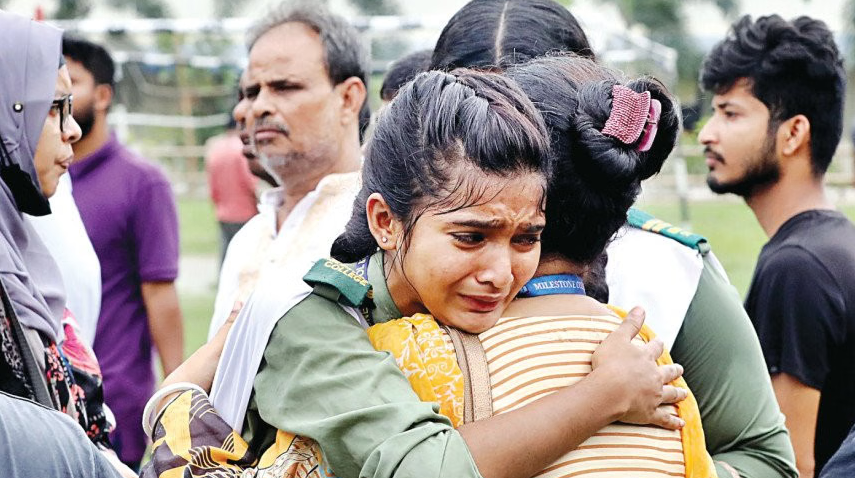
Following the recent tragic Milestone School plane crash, addressing the psychological impact on children has become a crucial priority. While not every traumatized child requires professional counselling or clinical treatment, all need the support and reassurance of parents, caregivers, and those around them.

One father of two Milestone students initially hesitated to speak, likely due to prior intrusive media inquiries. He was at his office when the incident occurred and rushed to the school upon learning that both his children were safe—his older son, a 10th-grader, was at home, while his younger son was at school.

“Since the incident, my younger son has been extremely frightened,” the father shared after assurance of anonymity. “He was in a room near the Hyder Ali Building when the plane crashed. Normally quiet, he now speaks even less and becomes anxious whenever the idea of going to school is mentioned.”

In response, the school, with support from the Bangladesh Air Force, Directorate General of Health Services (DGHS), National Institute of Mental Health (NIMH), and BRAC, set up medical camps and mental health services on campus.

Visiting the site a week after the crash, one could see parents collecting their children’s school bags, stacked neatly in rows. Each bag told a story, labeled with the student’s name, roll number, class, and branch. A blackened, burnt bag stood out, a stark reminder of the tragedy.

Even weeks later, many students visiting the medical camp were visibly shaken. One fifth-grader said, “Every time I enter the campus, my heart races, and I hear the sound of the plane in my mind.” Another student added, “Whenever I hear an airplane, I feel like I’m in danger and want to run.”

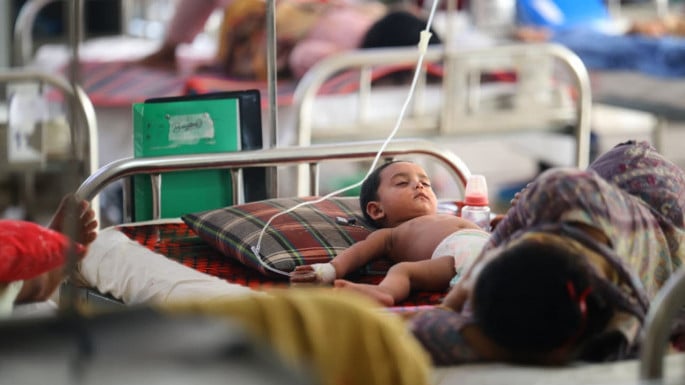
Some survivors also sustained physical injuries, including burns and ear trauma, requiring medical attention and ongoing care. Others were coping with the loss of friends; one student lost a best friend while retrieving food for him, and another lost two friends, whose presence continues to haunt his dreams.

Medical professionals emphasize that trauma in children cannot always be resolved with medication alone. Active support from parents and caregivers is vital. Encouraging children to play, socialize, and engage in creative activities is an effective way to promote healing. Age-appropriate games and art provide a safe space for expressing emotions, building resilience, and developing coping skills at their own pace.

Play therapy, guided by child psychologists, can teach children emotional regulation, problem-solving techniques, and relaxation methods. It also helps restore a sense of mastery, self-worth, and belonging. By interacting with peers and caregivers, children can rebuild social connections and reduce feelings of isolation.

Returning to school is an important step toward resuming normal life. Initially, the focus should be on social interaction, games, music, painting, and informal conversations rather than academics. As children regain confidence and emotional stability, they can gradually re-engage with study routines and assessments.

Parents and caregivers should also have access to school premises and receive emotional support themselves. Creating a nurturing, patient, and understanding environment at home and school is key to helping children navigate the aftermath of trauma and move toward recovery.


Tag :

Please Share This Post in Your Social Media

Milestone School Survivors Receive Support for Healing

Update Time : 12:47:24 pm, Friday, 15 August 2025

Following the recent tragic Milestone School plane crash, addressing the psychological impact on children has become a crucial priority. While not every traumatized child requires professional counselling or clinical treatment, all need the support and reassurance of parents, caregivers, and those around them.

One father of two Milestone students initially hesitated to speak, likely due to prior intrusive media inquiries. He was at his office when the incident occurred and rushed to the school upon learning that both his children were safe—his older son, a 10th-grader, was at home, while his younger son was at school.

“Since the incident, my younger son has been extremely frightened,” the father shared after assurance of anonymity. “He was in a room near the Hyder Ali Building when the plane crashed. Normally quiet, he now speaks even less and becomes anxious whenever the idea of going to school is mentioned.”

In response, the school, with support from the Bangladesh Air Force, Directorate General of Health Services (DGHS), National Institute of Mental Health (NIMH), and BRAC, set up medical camps and mental health services on campus.

Visiting the site a week after the crash, one could see parents collecting their children’s school bags, stacked neatly in rows. Each bag told a story, labeled with the student’s name, roll number, class, and branch. A blackened, burnt bag stood out, a stark reminder of the tragedy.

Even weeks later, many students visiting the medical camp were visibly shaken. One fifth-grader said, “Every time I enter the campus, my heart races, and I hear the sound of the plane in my mind.” Another student added, “Whenever I hear an airplane, I feel like I’m in danger and want to run.”

Some survivors also sustained physical injuries, including burns and ear trauma, requiring medical attention and ongoing care. Others were coping with the loss of friends; one student lost a best friend while retrieving food for him, and another lost two friends, whose presence continues to haunt his dreams.

Medical professionals emphasize that trauma in children cannot always be resolved with medication alone. Active support from parents and caregivers is vital. Encouraging children to play, socialize, and engage in creative activities is an effective way to promote healing. Age-appropriate games and art provide a safe space for expressing emotions, building resilience, and developing coping skills at their own pace.

Play therapy, guided by child psychologists, can teach children emotional regulation, problem-solving techniques, and relaxation methods. It also helps restore a sense of mastery, self-worth, and belonging. By interacting with peers and caregivers, children can rebuild social connections and reduce feelings of isolation.

Returning to school is an important step toward resuming normal life. Initially, the focus should be on social interaction, games, music, painting, and informal conversations rather than academics. As children regain confidence and emotional stability, they can gradually re-engage with study routines and assessments.

Parents and caregivers should also have access to school premises and receive emotional support themselves. Creating a nurturing, patient, and understanding environment at home and school is key to helping children navigate the aftermath of trauma and move toward recovery.