Dhaka 8:12 pm, Friday, 9 October 2026

Floods subside, but suffering lingers in northern areas

Niloy Mridha
  • Update Time : 10:26:08 am, Saturday, 16 August 2025
  • / 454 Time View

Floodwaters along the Teesta and Dudhkumar river basins have begun to recede, but families in Kurigram, Lalmonirhat, and Rangpur continue to face severe hardships.

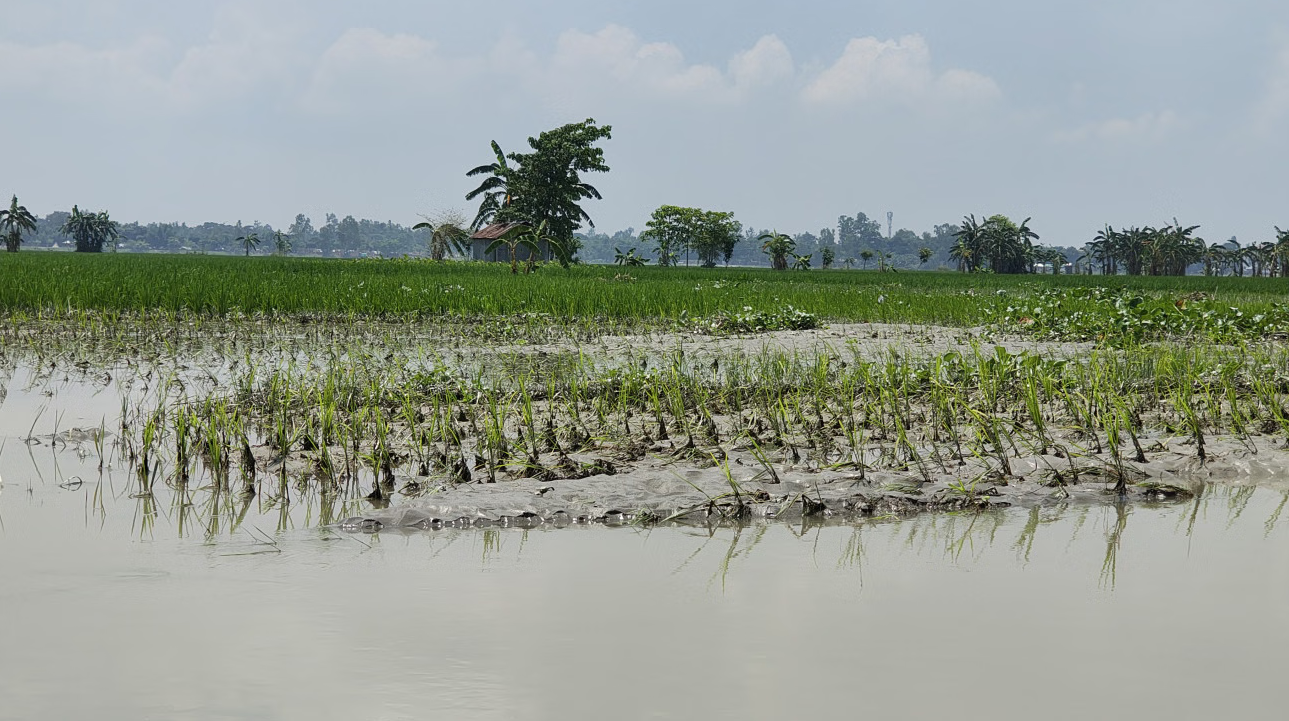
Many returning home after weeks in shelters discovered their croplands buried under sand, homes damaged, and livestock struggling for fodder. Strong currents created deep pits in yards and homesteads, washing away poultry, goats, and cattle in several areas.

Officials from the Department of Agricultural Extension said Aman paddy largely survived the floods, though vegetable crops were heavily damaged. Abdullah Al Mamun, deputy director in Kurigram, noted that the fresh silt left by the floods could even benefit Aman cultivation. “Vegetables were damaged to some extent, but where sand has accumulated, farmers can still find fertile soil underneath if cleared,” he explained.

The Water Development Board also warned of potential riverbank erosion in affected regions. “The flood situation has improved, with water levels below the danger mark since yesterday. However, as waters recede, erosion may occur,” said Shunil Kumar, executive engineer in Lalmonirhat.

For many residents, recovery remains uncertain. Soleman Ali, 60, of Char Ichli village in Rangpur’s Gangachara upazila, said, “One of my goats and several ducks and chickens were washed away. I am now struggling to feed three cows and six goats, as all the grass in nearby fields has died.”

In Lalmonirhat’s Hatibandha upazila, 65-year-old Sukchan Bewa described her home as destroyed. “The fence and door of my house were swept away, and a pit formed in my yard. I don’t have the money to rebuild. Even though the floodwater has gone, my suffering continues,” she said.

Others reported mixed outcomes for their croplands. Abdar Ali, 65, from Gangachara upazila, said five bighas of Aman paddy survived, but his vegetable fields were ruined. “Floodwaters have receded from my homestead, but surrounding fields remain submerged, leaving no fodder for livestock,” he added.

In Lalmonirhat’s Aditmari and Sadar upazilas, farmers noted both losses and gains. While sand rendered some land infertile, fresh silt deposits offered hope for future harvests. Mobarok Ali, 68, from Gobardhan village, said, “Out of my nine bighas, one is buried under sand, but four have new silt layers that could yield bumper crops. Without floods, this silt wouldn’t reach our riverbank lands.”

A similar situation was reported in Nageshwari upazila of Kurigram. Farmer Mahesh Chandra Das said, “Six bighas of Aman stayed submerged for three days but survived. Half of my vegetables were destroyed, yet the silt deposition will help ensure a good yield this year.”

Though the waters have receded, the struggle to rebuild livelihoods in northern Bangladesh has only just begun.


Tag :

Please Share This Post in Your Social Media

Floods subside, but suffering lingers in northern areas

Update Time : 10:26:08 am, Saturday, 16 August 2025

Floodwaters along the Teesta and Dudhkumar river basins have begun to recede, but families in Kurigram, Lalmonirhat, and Rangpur continue to face severe hardships.

Many returning home after weeks in shelters discovered their croplands buried under sand, homes damaged, and livestock struggling for fodder. Strong currents created deep pits in yards and homesteads, washing away poultry, goats, and cattle in several areas.

Officials from the Department of Agricultural Extension said Aman paddy largely survived the floods, though vegetable crops were heavily damaged. Abdullah Al Mamun, deputy director in Kurigram, noted that the fresh silt left by the floods could even benefit Aman cultivation. “Vegetables were damaged to some extent, but where sand has accumulated, farmers can still find fertile soil underneath if cleared,” he explained.

The Water Development Board also warned of potential riverbank erosion in affected regions. “The flood situation has improved, with water levels below the danger mark since yesterday. However, as waters recede, erosion may occur,” said Shunil Kumar, executive engineer in Lalmonirhat.

For many residents, recovery remains uncertain. Soleman Ali, 60, of Char Ichli village in Rangpur’s Gangachara upazila, said, “One of my goats and several ducks and chickens were washed away. I am now struggling to feed three cows and six goats, as all the grass in nearby fields has died.”

In Lalmonirhat’s Hatibandha upazila, 65-year-old Sukchan Bewa described her home as destroyed. “The fence and door of my house were swept away, and a pit formed in my yard. I don’t have the money to rebuild. Even though the floodwater has gone, my suffering continues,” she said.

Others reported mixed outcomes for their croplands. Abdar Ali, 65, from Gangachara upazila, said five bighas of Aman paddy survived, but his vegetable fields were ruined. “Floodwaters have receded from my homestead, but surrounding fields remain submerged, leaving no fodder for livestock,” he added.

In Lalmonirhat’s Aditmari and Sadar upazilas, farmers noted both losses and gains. While sand rendered some land infertile, fresh silt deposits offered hope for future harvests. Mobarok Ali, 68, from Gobardhan village, said, “Out of my nine bighas, one is buried under sand, but four have new silt layers that could yield bumper crops. Without floods, this silt wouldn’t reach our riverbank lands.”

A similar situation was reported in Nageshwari upazila of Kurigram. Farmer Mahesh Chandra Das said, “Six bighas of Aman stayed submerged for three days but survived. Half of my vegetables were destroyed, yet the silt deposition will help ensure a good yield this year.”

Though the waters have receded, the struggle to rebuild livelihoods in northern Bangladesh has only just begun.