Dhaka 3:04 pm, Tuesday, 23 June 2026

Prices Down Globally, Pressure Persists in Bangladesh

Niloy Mridha
  • Update Time : 09:56:47 am, Friday, 22 August 2025
  • / 485 Time View

Global Prices Drop, But Bangladesh Struggles with High Inflation

Prices of essential goods have fallen sharply in international markets, in many cases dipping below pre–Russia-Ukraine war levels. South Asian neighbors have largely been able to ease inflation as a result. Bangladesh, however, continues to experience stubbornly high price levels.

Sri Lanka, which declared bankruptcy in 2022, has now entered deflation, with prices falling slightly at a rate of 0.03 percent. Pakistan, once facing inflation above 35 percent in 2023, has reduced it to around 4 percent. India’s rate stands at 1.55 percent, while Nepal’s is 2.72 percent. By contrast, Bangladesh reported inflation above 8.5 percent in July.

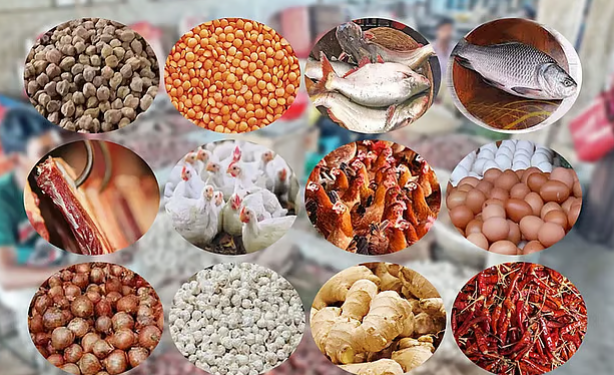
A Bangladesh Trade and Tariff Commission (BTTC) report on 18 August highlights the extent of global price drops. For example, Thailand’s 5% broken rice is now USD 381 per ton, down from USD 616 a year earlier—a fall of nearly 38 percent. Bangladesh imported 1.4 million tons of rice in the past year, yet local prices remain unchanged. Coarse rice, which cost Tk 30–35 per kg in early 2020, now sells at Tk 55–60, despite good harvests and cheaper imports.

Bangladesh also brings in edible oil, sugar, fuel, and LPG. Prices for these items have returned to pre-war levels globally, but domestic reductions have been limited. Officials argue local prices are in line with global markets, but consumers and economists say otherwise.

Commerce Secretary Mahbubur Rahman recently claimed, “Based on our data, prices are not unusually high. The spike in onion prices may have created the impression of rising costs, but that has already eased.” He also pointed to a Tk 15 per liter cut in palm oil.

Even so, consumers continue to pay more than official rates. For instance, a 12-kg LPG cylinder officially costs Tk 1,273 this month, but households are paying about Tk 1,500. A lack of monitoring means government-set prices often go unenforced.

Oil and fuel provide another example. Crude oil has fallen from USD 116 a barrel at the 2022 peak to USD 67 now. Yet diesel in Bangladesh remains at Tk 102 per liter—barely below the Tk 109 set after record hikes two years ago. Economists argue that the Bangladesh Petroleum Corporation (BPC) is profiting while taxes keep prices high, leaving little relief for the public.

Edible oils show a similar pattern. Global crude soybean oil prices have dropped 44 percent since 2022, but bottled soybean oil in Bangladesh has only fallen by 17 percent. Analysts say the market remains concentrated in the hands of a few large firms, reducing competition.

Some officials cite currency weakness as a key factor. The US dollar has risen from Tk 86 before the war to Tk 122 now. But economists counter that even with this adjustment, there is still space to lower domestic prices through stronger oversight, fairer taxation, and more imports to encourage competition.

Comparisons with regional neighbors underline the problem. Diesel is indeed cheaper in Bangladesh than in India, Pakistan, or Sri Lanka. But other staples—like sugar, rice, eggs, and cooking oil—cost much more in Dhaka markets. A dozen eggs, for instance, sells for Tk 150 locally, compared to Tk 110 in West Bengal and Tk 128 in Islamabad.

Despite a recent fall from 11.66 percent to 8.5 percent, Bangladesh’s inflation remains higher than elsewhere in South Asia. Economists argue that the absence of meaningful reform, combined with the continued dominance of a few powerful business groups, is preventing real relief for ordinary consumers.

As Dhaka University professor Rashed Al Mahmud Titumir observed, inflation in Bangladesh usually drops significantly after political change. “This time, the fall is minor,” he said. “That’s because the underlying market structure—dominated by oligarchs—has not changed. Rice prices are a clear example.”

Tag :

Please Share This Post in Your Social Media

Prices Down Globally, Pressure Persists in Bangladesh

Update Time : 09:56:47 am, Friday, 22 August 2025

Global Prices Drop, But Bangladesh Struggles with High Inflation

Prices of essential goods have fallen sharply in international markets, in many cases dipping below pre–Russia-Ukraine war levels. South Asian neighbors have largely been able to ease inflation as a result. Bangladesh, however, continues to experience stubbornly high price levels.

Sri Lanka, which declared bankruptcy in 2022, has now entered deflation, with prices falling slightly at a rate of 0.03 percent. Pakistan, once facing inflation above 35 percent in 2023, has reduced it to around 4 percent. India’s rate stands at 1.55 percent, while Nepal’s is 2.72 percent. By contrast, Bangladesh reported inflation above 8.5 percent in July.

A Bangladesh Trade and Tariff Commission (BTTC) report on 18 August highlights the extent of global price drops. For example, Thailand’s 5% broken rice is now USD 381 per ton, down from USD 616 a year earlier—a fall of nearly 38 percent. Bangladesh imported 1.4 million tons of rice in the past year, yet local prices remain unchanged. Coarse rice, which cost Tk 30–35 per kg in early 2020, now sells at Tk 55–60, despite good harvests and cheaper imports.

Bangladesh also brings in edible oil, sugar, fuel, and LPG. Prices for these items have returned to pre-war levels globally, but domestic reductions have been limited. Officials argue local prices are in line with global markets, but consumers and economists say otherwise.

Commerce Secretary Mahbubur Rahman recently claimed, “Based on our data, prices are not unusually high. The spike in onion prices may have created the impression of rising costs, but that has already eased.” He also pointed to a Tk 15 per liter cut in palm oil.

Even so, consumers continue to pay more than official rates. For instance, a 12-kg LPG cylinder officially costs Tk 1,273 this month, but households are paying about Tk 1,500. A lack of monitoring means government-set prices often go unenforced.

Oil and fuel provide another example. Crude oil has fallen from USD 116 a barrel at the 2022 peak to USD 67 now. Yet diesel in Bangladesh remains at Tk 102 per liter—barely below the Tk 109 set after record hikes two years ago. Economists argue that the Bangladesh Petroleum Corporation (BPC) is profiting while taxes keep prices high, leaving little relief for the public.

Edible oils show a similar pattern. Global crude soybean oil prices have dropped 44 percent since 2022, but bottled soybean oil in Bangladesh has only fallen by 17 percent. Analysts say the market remains concentrated in the hands of a few large firms, reducing competition.

Some officials cite currency weakness as a key factor. The US dollar has risen from Tk 86 before the war to Tk 122 now. But economists counter that even with this adjustment, there is still space to lower domestic prices through stronger oversight, fairer taxation, and more imports to encourage competition.

Comparisons with regional neighbors underline the problem. Diesel is indeed cheaper in Bangladesh than in India, Pakistan, or Sri Lanka. But other staples—like sugar, rice, eggs, and cooking oil—cost much more in Dhaka markets. A dozen eggs, for instance, sells for Tk 150 locally, compared to Tk 110 in West Bengal and Tk 128 in Islamabad.

Despite a recent fall from 11.66 percent to 8.5 percent, Bangladesh’s inflation remains higher than elsewhere in South Asia. Economists argue that the absence of meaningful reform, combined with the continued dominance of a few powerful business groups, is preventing real relief for ordinary consumers.

As Dhaka University professor Rashed Al Mahmud Titumir observed, inflation in Bangladesh usually drops significantly after political change. “This time, the fall is minor,” he said. “That’s because the underlying market structure—dominated by oligarchs—has not changed. Rice prices are a clear example.”