1 Kg Beef Costs 800 Tk, 40 Kg Tomatoes Sell for 40 Tk!

- Update Time : 04:05:58 am, Monday, 10 March 2025
- / 493 Time View
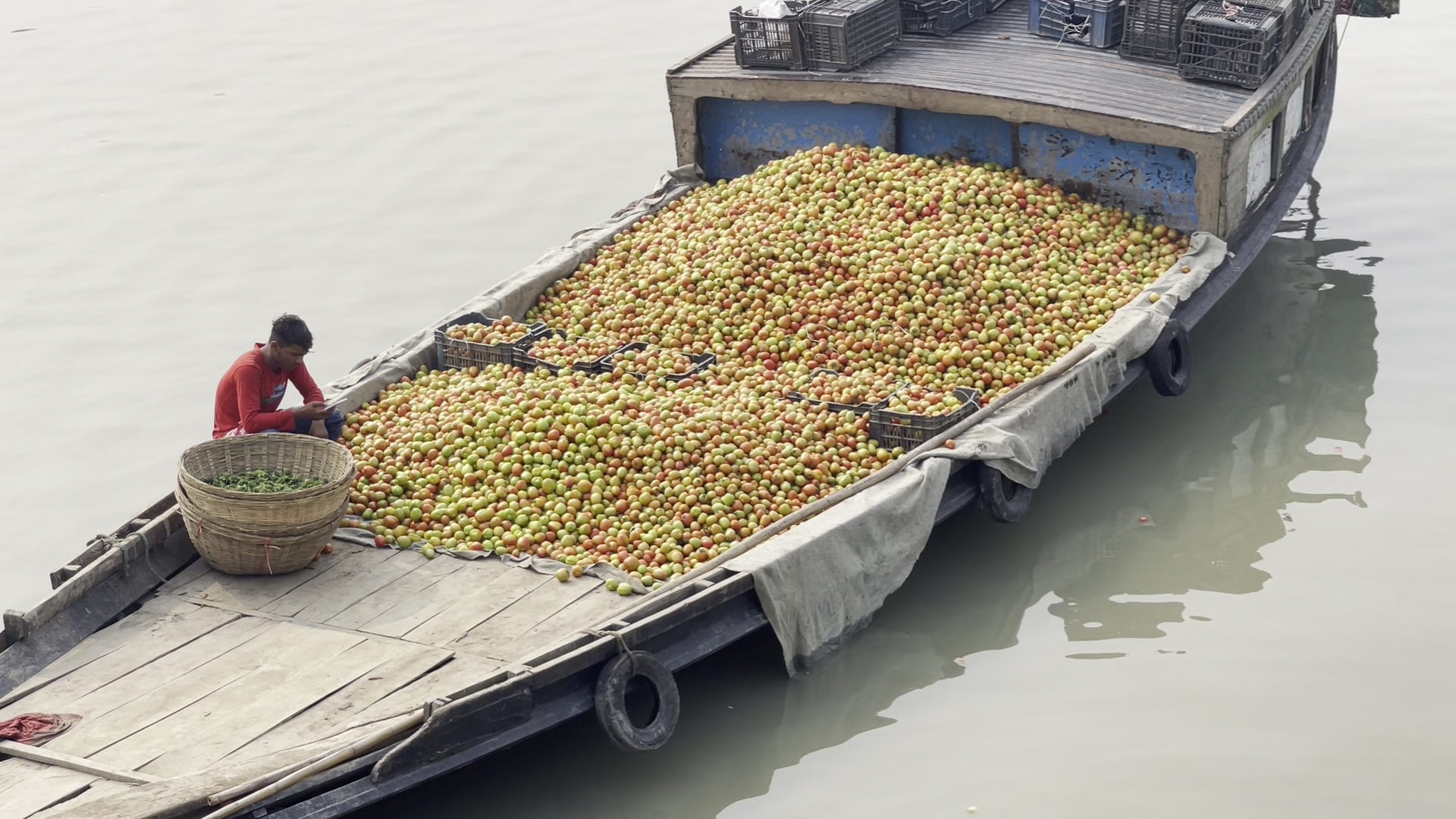

In the farmlands of Sunamganj, rows of tomato plants stand laden with ripe fruit, yet much of it is rotting on the ground. Farmers who had invested lakhs of takas in tomato cultivation had hoped for substantial profits, but instead, they now face devastating losses. Selling their produce has become nearly impossible, and many are forced to dump their tomatoes in waste pits just to clear their fields.
A farmer from Kashipur village shared that he spent around 80,000 takas per bigha on seedlings, fertilizers, pesticides, bamboo supports, and labor. Despite investing 2.4 lakh takas in cultivating tomatoes on three bighas of land, he managed to sell only a small portion for a mere 10,000 takas. The rest of the crop is decaying in the field, leading to significant financial distress.
The crisis stems from multiple factors: a lack of buyers, no cold storage facilities, and poor road connectivity preventing wholesalers from outside districts from purchasing the produce. Farmers are left with no option but to sell tomatoes at rock-bottom prices—some as low as 1-2 takas per kilogram. One farmer lamented that while beef costs 800 takas per kilogram, a full maund (40 kg) of tomatoes sells for only 40 takas. Another stated that selling one and a half maunds of tomatoes barely covers the cost of a kilogram of rice.
Many farmers had taken loans from banks and NGOs, hoping for profitable returns, but now fear they might have to abandon their homes due to mounting debts. Some question why the government imports vegetables like tomatoes and green chilies from India during shortages, yet fails to establish cold storage facilities to preserve local produce.
Despite repeated demands for cold storage facilities in Sunamganj, the government has taken no action. Currently, Sylhet Division has no vegetable cold storage except in Bhairab, Kishoreganj. A district agricultural officer acknowledged the problem, stating that farmers had planted tomatoes on former paddy fields due to last year’s high prices, leading to oversupply. He suggested growing early-yielding varieties to avoid market saturation.
Although a proposal for a cold storage facility in Sylhet has been submitted, concerns remain about ensuring an uninterrupted power supply in the flood-prone region. In the meantime, affected farmers are being promised agricultural incentives and aid for the next season. Sunamganj has cultivated tomatoes on over 2,034 hectares of land this year, with the highest production in Jamalganj and the lowest in Shalla Upazila. However, without better infrastructure and preservation facilities, farmers fear a similar crisis in the future.