With a death sentence looming, is there any chance for Hasina to come back?

- Update Time : 09:05:07 am, Monday, 24 November 2025
- / 97 Time View
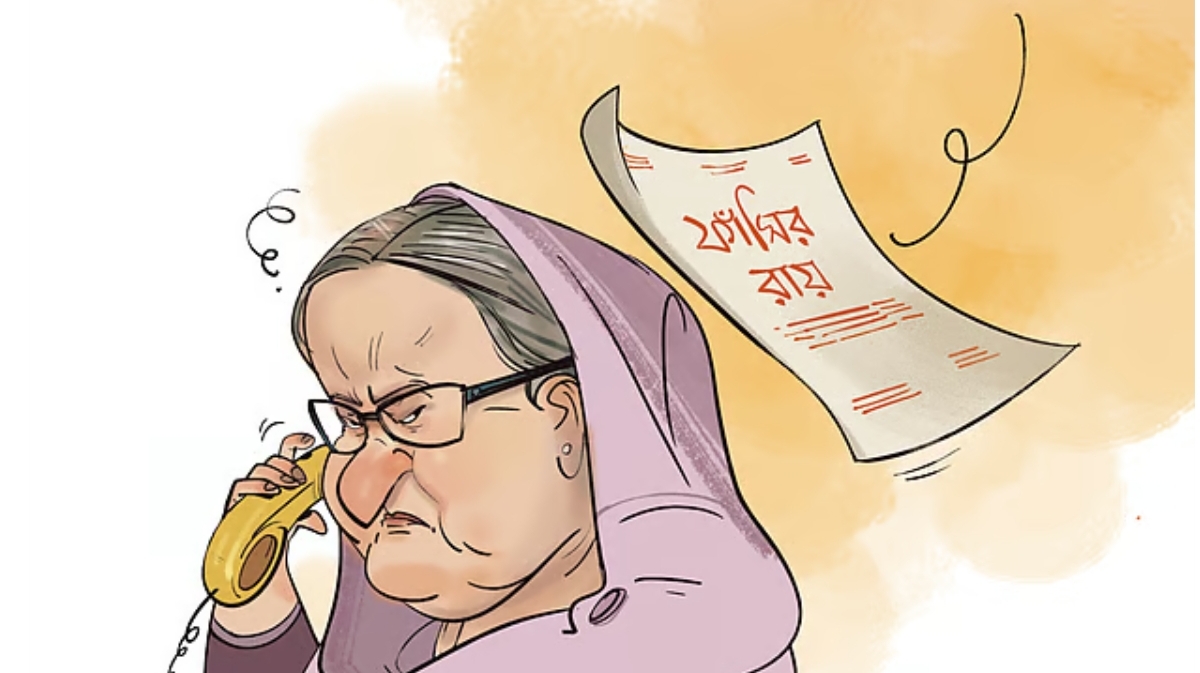

The Trial of Sheikh Hasina: Weak Defense and Flawed Judicial Reasoning
As I mentioned earlier, this verdict involving Hasina once again shows that no one is untouchable. Even many within the Awami League are beginning to realize this. From what I personally know, frustration is spreading even among party members in Gopalganj and Faridpur—areas long considered strongholds of the party. Many are now wondering: Will Sheikh Hasina ever be able to return home? Can the Awami League recover from this blow?
Now to the third question raised by the media: Will the death sentence against Sheikh Hasina actually be carried out? Will India hand her over to Bangladesh?
My view is—unlikely.
Even earlier, when Hasina was in India and openly criticizing both the 2024 uprising and the current Bangladeshi government, Dhaka had once requested her return. India refused.
India has already signaled that it intends to maintain relations with whichever government is democratically elected in Bangladesh. That is essentially a neutral stance. Diplomatically speaking, India cannot be expected to take a position beyond this.
Back then I heard that—even with an extradition treaty—if a host country believes that sending back an asylum-seeker could endanger their life, it may refuse the extradition. Now that a death sentence has been issued, India can easily invoke this reasoning to deny her return.
Suppose India refuses. What does that mean for Sheikh Hasina and the Awami League?
If you look closely at India’s official response to the verdict, you’ll notice they expressed no opinion about the judgment itself. They simply acknowledged they were aware of the sentence—an extremely detached reaction. Once Bangladesh’s election is over, how will India’s position evolve?
The Future of Awami League Politics After Hasina’s Sentencing
You may have also noticed that Bangladesh’s National Security Adviser, Khililur Rahman, met India’s NSA Ajit Doval in Delhi on Wednesday. That meeting was originally scheduled for the following day, but Rahman changed his itinerary to accommodate Doval’s availability.
After the verdict against Sheikh Hasina, India’s foreign ministry issued another statement saying that, as a close neighbor, India remains committed to peace, democracy, inclusion, stability, and the overall welfare of the Bangladeshi people. A very standard diplomatic message.
I believe the upcoming national election in Bangladesh will take place on schedule—unless some hidden factor emerges, which I have no way of knowing. And India certainly will not halt that election by declaring war on Bangladesh.
So what does that imply for Sheikh Hasina’s fate? What lies ahead for the Awami League as a political organization? India has emphasized “inclusion,” a term Bangladesh also frequently uses. But how deep is that commitment? How far can such an approach shape the future?
There will be no real resolution as long as the current government remains in power, because it has already made its stance clear: the Awami League will not be permitted to contest elections during this term.
What happens next will depend entirely on the government that comes after this one—and on the political direction it chooses for the country.