After 18 International Awards, ‘Pyare’ Finally Finds Its Way to Theatres and Wins Over Indian Audiences

- Update Time : 01:25:42 pm, Thursday, 12 November 2026
- / 30 Time View

A film about the quiet, enduring love of an elderly couple living in a remote mountain village has finally reached cinemas after a two-year wait. Despite struggling to secure a theatrical release for years after its completion, Pyare is now receiving widespread acclaim from critics and audiences across India.
The 111-minute film, titled Pyare—meaning “funeral pyre”—is the work of former journalist-turned-filmmaker Vinod Kapri. It is not simply a love story. The film also portrays the heartbreaking reality of hundreds of picturesque Himalayan villages gradually becoming deserted. It explores how younger generations leave for cities in search of work and how climate change is making weather conditions in mountainous regions increasingly harsh.
Several videos shared by Indians on social media show viewers leaving cinemas with tears in their eyes. Many have written that no recent film has moved them so deeply.
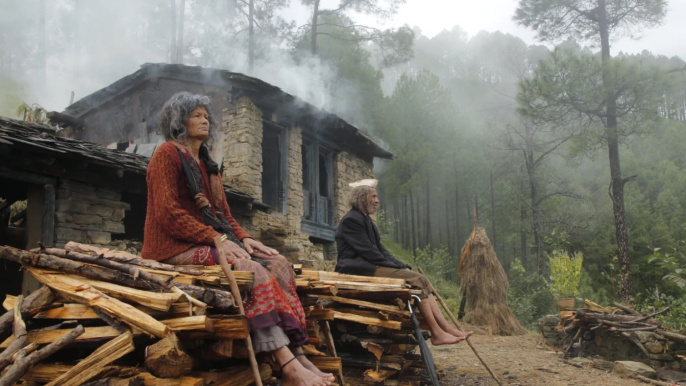
The film’s two central characters are Padam Singh, played by the director’s own uncle, and Tulsi, portrayed by Heera Devi. Known in the Kumaoni language as ‘Bubu’ and ‘Ama’, meaning grandfather and grandmother, they live in a small cottage in the remote hills of Uttarakhand.
Neither of the lead actors is a professional performer. Both are ordinary villagers who had never stood in front of a camera before. Yet their natural performances have impressed even acclaimed veteran Bollywood actors such as Naseeruddin Shah and Anupam Kher.
In the film, their ages are measured against major historical events. Padam Singh was born two years before the outbreak of the Second World War, while Tulsi was born in the year Japan suffered the atomic bombings.
Their village has no paved roads or electricity. With few resources at their disposal, danger is a constant part of their lives. Tulsi frequently falls ill and has to be carried to hospital. During emergencies, Padam Singh blows a traditional long horn to summon help from neighbouring villagers. In return, he gives them a goat.
At one point, a character voices the harsh reality of their surroundings: “There is nothing here—except mountains!”
Because of such difficult conditions and the lack of opportunities, young people leave the beautiful but neglected mountain region in search of better lives. Once they leave, very few ever return.
Speaking to the BBC, Vinod Kapri said the film is essentially a story of the emotional bond between an elderly couple approaching the final stage of their lives.
“They have been together for 65 years. For the past 28 years, they have been waiting for their only son, Hariya, to return from Mumbai, where he went to work. It is an enduring story of compassion, loneliness and endless waiting,” Kapri added.
One day, after years of waiting, a letter finally arrives from their son. Hariya says he will return home on a specific date. The long days of waiting suddenly take on a new emotional intensity as the couple eagerly anticipate his arrival.
But just as Padam Singh and Tulsi begin counting down the days, the few remaining families in the surrounding area start leaving the village one by one. Gradually, the elderly couple find themselves completely alone in the vast mountain range.
As one neighbour prepares to leave, he warns Padam Singh: “You and Tulsi should leave here as soon as possible. Otherwise, if both of you die, there won’t even be four people left in these mountains to carry your bodies down for cremation.”
He then adds jokingly, “You’d better die before we leave!”
With no one left nearby to call for help, Padam Singh takes matters into his own hands and builds two funeral pyres side by side just outside their cottage—one for his wife and the other for himself.
When Tulsi notices her husband preparing the two pyres and asks him in surprise what he is doing, Padam Singh calmly replies: “If you die, how will I carry your body down from these mountains all by myself?”
Despite its sombre setting and sensitive themes, Pyare is filled with humour. Its central couple are particularly endearing. Like many couples who have spent decades together, they have made teasing each other an essential part of their language of love.
Kapri, who hails from Uttarakhand, first conceived the idea for the film in 2018 after meeting an 84-year-old man in the picturesque hill town of Munsiyari in the state.
“I saw a photograph of an elderly man on Facebook and went to meet him. The wrinkles on his face fascinated me. His facial features were truly distinctive,” Kapri said.
He recalled asking the man and his wife about their biggest worries in life.
“The old man said, ‘My biggest concern is who will look after her if I die first.’ His wife said, ‘He doesn’t even know how to cook. If I die first, I don’t know how he will manage to feed himself.’ Their words left a deep impression on me,” Kapri said.
Initially, Kapri tried to make the film with the real-life couple. However, after about a week of shooting, he realised the project was not progressing as intended and abandoned the idea.
He then approached veteran Bollywood actors Naseeruddin Shah and Ratna Pathak, who are also a married couple, to play the lead roles.
According to Kapri, Shah greatly liked the script. However, he felt that because they were not from the region, they might struggle to do full justice to the characters.
Kapri eventually found his Padam Singh within his own family. His uncle, a retired army serviceman, expressed an interest in acting. He found his Tulsi in another village: an elderly widow named Heera Devi, who had raised her children by farming mountain land, cutting grass and looking after buffaloes.
Padam Singh and Heera Devi told the BBC that they had witnessed villages becoming deserted over the years, as younger people moved to cities in search of work, leaving their elderly parents behind. They said they were overwhelmed by the love and attention Pyare has received.
Kapri said the film began screening at some of the world’s major film festivals in 2024 and has won 18 awards so far. These include three Best Feature Film awards and 12 Audience Choice awards.
Despite its success on the festival circuit, however, Pyare spent two years without a distributor, Kapri said. Not even an OTT platform showed interest in acquiring it.
Eventually, a friend of his who is a producer stepped in and provided the funding needed for a theatrical release, finally allowing the film to reach cinemas.
The film opened in a limited release on October 30, screening in just 70 theatres. Positive word of mouth quickly spread among audiences. As demand for tickets increased, cinemas began adding more shows.
The initial fears of Padam Singh and Heera Devi about facing the camera and forgetting their lines have now disappeared.
Heera Devi said she had been worried about appearing on camera, wondering what her children would think and how society would react. Today, however, both she and Padam Singh are receiving positive reviews from critics and affection from ordinary moviegoers.
At various screenings, they have met many viewers with tears in their eyes. Some have wanted to touch their feet as a mark of respect or embrace them. Many have said the film reminded them of the parents and grandparents they left behind in their villages, small towns or cities—people who are still waiting for their loved ones to return.
Padam Singh said, “We have experienced immense joy and satisfaction. We have received a level of love and encouragement that we never could have imagined.”
But the most memorable moment of his life came when he met renowned actor Naseeruddin Shah in Mumbai.
“After watching the entire film, he could not hold back his tears. He hugged me and said, ‘Bubu, even if I tried for seven lifetimes, I could never have portrayed the character you played,'” Padam Singh recalled.
Explaining why the film has resonated with so many people, Heera Devi said, “Our villages are just like this in real life.”
“Across villages throughout India, elderly people are now left alone. Their children no longer live at home. The situation is the same for parents everywhere. They wait eagerly for their sons and daughters-in-law, hoping that their grandchildren might at least come and stay with them for a few days. This loneliness is truly unbearable,” she said.
Padam Singh also had a message for young people in Uttarakhand and across India.
“I want to tell young people never to abandon their birthplace,” he said.
He also made an appeal to the government to create educational and employment opportunities where people live, so they would not have to leave their homes in search of work.
“That way, the parents left behind would also receive proper care,” he added.