Dhaka 8:10 pm, Sunday, 29 November 2026

SpaceX Gets Approval for 1 Million Orbital AI Modules

Reporter Name
  • Update Time : 08:38:09 am, Saturday, 28 November 2026
  • / 49 Time View

The US Federal Communications Commission (FCC) has authorised SpaceX to deploy up to one million orbital computing modules under a project called “Starmind”, paving the way for the development of a space-based data centre network designed to process artificial intelligence workloads.


FCC Chairman Brendan Carr said the authorisation would help strengthen the United States’ position in artificial intelligence and combine its capabilities in space and advanced technology.


“At this pivotal time in America’s development of super intelligence [artificial intelligence], the FCC is granting SpaceX authorisation to deploy 1,000,000 orbital compute modules to process massive amounts of data to be used back here on Earth,” Carr said.


He also linked the project to the Trump administration’s efforts to maintain US leadership in AI.


How would the project work?


SpaceX describes Starmind as a low-cost, high-performance system involving satellites equipped with onboard AI computing capabilities.


Under the proposed design, the satellites would process data in orbit and transmit the results back to Earth. The company says the system would operate in a low-Earth, sun-synchronous orbit, with the aim of providing low-latency computing services.


SpaceX argues that moving some computing infrastructure into orbit could help address growing difficulties in securing sufficient electricity for data centres on Earth.


What is the deployment timeline?


The FCC authorisation outlines a phased deployment schedule extending to 2040.


SpaceX must begin deploying the initial modules by November 2033. It is required to have 10% of the planned constellation, or 100,000 modules, in place by November 2035.


The next milestone requires half of the planned constellation to be deployed by November 2038, with the full one million modules scheduled for completion by 2040.


SpaceX already operates a large satellite network through its Starlink internet service. The report says Starlink accounts for approximately 66% of the 16,928 active satellites currently in orbit.


Why put data centres in space?


The rapid expansion of artificial intelligence has driven demand for computing infrastructure, placing increasing pressure on terrestrial data centres, which require substantial amounts of land, electricity and water.


Their energy consumption, heat generation and associated emissions have also raised environmental concerns.


Water use is another major issue. A 2025 report cited by the Environmental and Energy Study Institute said large data centres could consume up to five million gallons of water a day, comparable to the daily water use of a town with 10,000 to 50,000 residents.


The expansion of data centres has also prompted public opposition in the United States. The report cited 142 protests across 42 states in July.


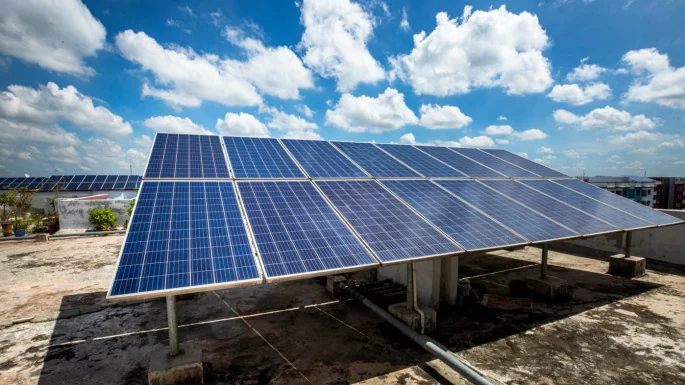
Space-based facilities could potentially reduce some pressure on terrestrial resources by using solar energy directly and avoiding competition for land and electricity supplies on Earth.


However, operating powerful computing systems in orbit presents significant engineering challenges.


One major obstacle is heat management. In the vacuum of space, conventional cooling methods based on air or water circulation are unavailable, making it difficult to remove heat generated by computing equipment.


Why are astronomers concerned?


The FCC’s decision has prompted criticism from astronomers and environmental groups, who warn that a constellation of one million satellites could substantially interfere with observations of the night sky.


The American Astronomical Society (AAS) said it was “disheartened and dismayed” by the authorisation.


The organisation warned that the proposed constellation could undermine decades of federal investment in astronomical facilities and limit the ability of scientists and the public to observe and study the night sky.


It also raised concerns about the future of publicly funded astronomical research and the potential loss of value from investments in observatories in the United States and elsewhere.


As SpaceX moves towards the planned deployment, the project will face questions over its technical feasibility, environmental implications and potential impact on astronomical research.


Tag :

Please Share This Post in Your Social Media

SpaceX Gets Approval for 1 Million Orbital AI Modules

Update Time : 08:38:09 am, Saturday, 28 November 2026

The US Federal Communications Commission (FCC) has authorised SpaceX to deploy up to one million orbital computing modules under a project called “Starmind”, paving the way for the development of a space-based data centre network designed to process artificial intelligence workloads.


FCC Chairman Brendan Carr said the authorisation would help strengthen the United States’ position in artificial intelligence and combine its capabilities in space and advanced technology.


“At this pivotal time in America’s development of super intelligence [artificial intelligence], the FCC is granting SpaceX authorisation to deploy 1,000,000 orbital compute modules to process massive amounts of data to be used back here on Earth,” Carr said.


He also linked the project to the Trump administration’s efforts to maintain US leadership in AI.


How would the project work?


SpaceX describes Starmind as a low-cost, high-performance system involving satellites equipped with onboard AI computing capabilities.


Under the proposed design, the satellites would process data in orbit and transmit the results back to Earth. The company says the system would operate in a low-Earth, sun-synchronous orbit, with the aim of providing low-latency computing services.


SpaceX argues that moving some computing infrastructure into orbit could help address growing difficulties in securing sufficient electricity for data centres on Earth.


What is the deployment timeline?


The FCC authorisation outlines a phased deployment schedule extending to 2040.


SpaceX must begin deploying the initial modules by November 2033. It is required to have 10% of the planned constellation, or 100,000 modules, in place by November 2035.


The next milestone requires half of the planned constellation to be deployed by November 2038, with the full one million modules scheduled for completion by 2040.


SpaceX already operates a large satellite network through its Starlink internet service. The report says Starlink accounts for approximately 66% of the 16,928 active satellites currently in orbit.


Why put data centres in space?


The rapid expansion of artificial intelligence has driven demand for computing infrastructure, placing increasing pressure on terrestrial data centres, which require substantial amounts of land, electricity and water.


Their energy consumption, heat generation and associated emissions have also raised environmental concerns.


Water use is another major issue. A 2025 report cited by the Environmental and Energy Study Institute said large data centres could consume up to five million gallons of water a day, comparable to the daily water use of a town with 10,000 to 50,000 residents.


The expansion of data centres has also prompted public opposition in the United States. The report cited 142 protests across 42 states in July.


Space-based facilities could potentially reduce some pressure on terrestrial resources by using solar energy directly and avoiding competition for land and electricity supplies on Earth.


However, operating powerful computing systems in orbit presents significant engineering challenges.


One major obstacle is heat management. In the vacuum of space, conventional cooling methods based on air or water circulation are unavailable, making it difficult to remove heat generated by computing equipment.


Why are astronomers concerned?


The FCC’s decision has prompted criticism from astronomers and environmental groups, who warn that a constellation of one million satellites could substantially interfere with observations of the night sky.


The American Astronomical Society (AAS) said it was “disheartened and dismayed” by the authorisation.


The organisation warned that the proposed constellation could undermine decades of federal investment in astronomical facilities and limit the ability of scientists and the public to observe and study the night sky.


It also raised concerns about the future of publicly funded astronomical research and the potential loss of value from investments in observatories in the United States and elsewhere.


As SpaceX moves towards the planned deployment, the project will face questions over its technical feasibility, environmental implications and potential impact on astronomical research.